
Breaking News
End of Q1: Have CBN’s reforms strengthened Nigeria’s economic resilience?

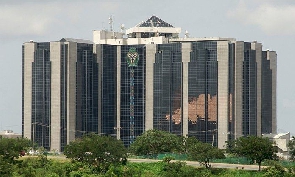
Over two years ago, the Tinubu administration and the CBN under Governor Olayemi Cardoso liberalised the foreign exchange market, ended central bank financing of the fiscal deficit, and reformed fuel subsidies. The government also strengthened revenue collection and moved to curb inflation.
Since then, international reserves have risen and access to foreign exchange in the official market has improved. Nigeria returned to the international capital markets in December 2025 and received credit rating upgrades. A new private refinery is also positioning the country higher in the value chain in a deregulated market.
The CBN’s currency reforms have drawn foreign investment inflows and reduced direct interventions in the forex market. Unifying exchange rates and clearing over $7 billion in FX backlogs improved Nigeria’s investment outlook. The World Bank described the move as a bold step toward long-term sustainability.
Nigeria’s sovereign risk spread has since fallen to its lowest level since January 2020, erasing the pandemic-era premium.
Policy focus and outlook
Governor Cardoso said collaboration between fiscal and monetary authorities is key to managing inflation and maintaining investor confidence.
“Managing disinflation amidst persistent shocks requires robust policies and coordination to anchor expectations. Our focus remains on price stability, the planned shift to an inflation-targeting framework, and restoring purchasing power,” he said.
The CBN has also moved to strengthen the banking sector with new minimum capital requirements effective March 2026, aimed at building resilience for a $1 trillion economy.
“As we shift from unorthodox to orthodox monetary policy, the CBN is committed to restoring confidence, strengthening credibility, and staying focused on price stability,” Cardoso said.
The Monetary Policy Committee recently lowered the policy rate, citing five months of sustained disinflation and projections of further decline through 2025, alongside the need to support recovery.
Capital inflows and banking sector health
Cardoso said Nigeria now receives about $600 million monthly in diaspora remittances. He added that spillover effects have been contained, reflecting gains in exchange rate stability, stronger reserves, and an improved monetary policy framework.
The banking sector remains sound. The non-performing loan ratio stays within the 5% prudential benchmark, and the liquidity ratio exceeds the 30% regulatory floor. Recent stress tests confirmed the system’s strength.
A significant number of banks have raised capital through rights issues and public offerings ahead of the 2026 deadline, putting the sector in a stronger position to fund MSMEs and key sectors.
Rising foreign capital inflows
Cardoso recently announced that Nigeria makes roughly $600 million monthly from diaspora remittance inflows to the economy.
He said Nigeria’s experience indicates that spillover effects have been relatively contained reflecting positive reform outcomes, including exchange rate stability, stronger reserve offers and an enhanced monetary policy framework.
He said recent gains, including lower inflation, FX market stability and stronger reserves, have boosted investor confidence and capital flows.
Cardoso earlier explained that within the banking sector, the sector remains robust with key indicators reflecting a resilient system.
“The non-performing loan ratio remains within the prudential benchmark of five per cent, showcasing strong credit risk management. The banking sector liquidity ratio comfortably exceeds the regulatory floor of 30 per cent, a level which ensures banks are maintaining adequate cash flow to meet the needs of customers and their operations. The recent stress test conducted also reaffirmed the continued strength of our banking system,” he said.
To ensure that our banking system can effectively support the growth of our economy, efforts to strengthen banks’ capital buffers were announced in 2023 with a two-year implementation window.
“I am pleased to note that a significant number of banks have raised the required capital through right issues and public offerings well ahead of the 2026 deadline! I believe that the banking sector is in a strong position to support Nigeria’s economic recovery by enabling access to credit for MSMEs and supporting investment in critical sectors of our economy,” he said.
Cardoso explained that the banking sector remains robust, with key indicators reflecting a resilient system.
“The non-performing loan ratio remains within the prudential benchmark of five per cent, showcasing strong credit risk management. The banking sector liquidity ratio comfortably exceeds the regulatory floor of 30 per cent, a level which ensures banks are maintaining adequate cash flow to meet the needs of customers and their operations. The recent stress test conducted also reaffirmed the continued strength of our banking system,” he said.
“I am pleased to note that a significant number of banks have raised the required capital through rights issues and public offerings well ahead of the 2026 deadline. I believe that the banking sector is in a strong position to support Nigeria’s economic recovery by enabling access to credit for MSMES and supporting investment in critical sectors of our economy,” he said.
Growth outlook
The World Bank upgraded Nigeria’s growth forecast for 2026 to 4.4%, up from 3.7% in June 2025. It expects growth to hold at 4.4% in 2027, driven by services, a rebound in agriculture, and modest gains in the non-oil industry.
“Economic reforms, including in the tax system, along with prudent monetary policy, are expected to support activity, improve investor sentiment, and reduce inflation further,” the report said.
Higher oil output is also expected to offset lower prices and boost fiscal revenue and the external balance.
The CBN’s own 2026 macroeconomic outlook projects 4.49% growth, citing gains from structural reforms and a gradually easing monetary stance.
The World Bank says Sub-Saharan Africa would achieve 4.1 per cent growth this year. It also listed risks stalling growth in the region.
In Africa Economic Update, it said geopolitical risks—including the conflict in the Middle East, high debt service burdens and longstanding structural constraints, continue to weigh on the region’s capacity to accelerate growth and create jobs.
The report, formerly titled Africa’s Pulse, finds that growth for 2026 in Sub-Saharan Africa is holding at 4.1 per cent, the same pace as in 2025, but downside risks are mounting. Rising fuel, food, and fertilizer prices, alongside tighter financial conditions, are likely to push inflation higher, disrupt economic activity, and disproportionately affect the most vulnerable households which spend a larger share of their income on food and energy.
“In the short term, governments should target scarce resources to protect the most vulnerable households. At the same time, maintaining macroeconomic stability—by controlling inflation and exercising prudent fiscal management—will be essential to navigate the current shock and position African countries for a faster recovery once the crisis subsides,” said Andrew Dabalen, World Bank Group Chief Economist for the Africa Region.
The bank said sub-Saharan Africa’s economic recovery from a decade of global shocks is showing signs of stalling, with growth projections for 2026 revised downward by 0.3 percentage points from estimates previously published in October 2025, according to the latest edition of the Africa Economic Update, the World Bank Group’s biannual economic report for the region.
High public debt and rising debt service costs continue to limit countries’ ability to fund development priorities and invest in foundational infrastructure needed to create more and better jobs.
The Global Economic Prospects report, the World Bank upgraded Nigeria’s economic growth forecast for 2026 to 4.4 per cent, from the 3.7 per cent projection it had announced for the country in June 2025.
The report said: “Growth in Nigeria is forecast to strengthen to 4.4 percent in both 2026 and 2027—the fastest pace in over a decade. This further firming of growth is anticipated to be underpinned by a continued expansion in services and a rebound in agricultural output, with a modest acceleration in non-oil industry.
“Economic reforms, including in the tax system, along with continued prudent monetary policy, are expected to continue supporting activity. They are also expected to improve investor sentiment and reduce inflation further.
Higher oil output is expected to offset lower international oil prices this year, helping to boost fiscal revenues and strengthen the external balance.”
The apex bank appeared to have set the ball rolling in terms of forecasting positive economic outlooks for the country, when in its macroeconomic outlook for 2026, released last month, it made optimistic projections for the nation’s economy.
The apex bank stated: “The year 2026 presents a realistic window of opportunity for macroeconomic stabilisation. The Nigerian economy is expected to continue expanding, with growth projected at 4.49 per cent in 2026. The projection is hinged on continued gains from broad-based structural reforms and a gradually easing monetary policy stance.”
Regional and global context
For Sub-Saharan Africa, the World Bank forecasts 4.1% growth in 2026, unchanged from 2025, but warns that rising fuel, food, and fertilizer prices, along with tighter financial conditions, could push inflation higher.
The IMF noted that oil and gas exporters like Nigeria face smaller headwinds from the Middle East crisis if exports remain uninterrupted. IMF Managing Director Kristalina Georgieva said the conflict has disrupted flows and darkened the global outlook, but the burden is uneven across countries.
A report: “How the Middle East War Has Affected Oil Exporters and Importers”, released at the weekend, explained her position, highlighting that countries directly hit by the conflict, including major oil and gas exporters in the Middle East, bear the brunt of the impact.
The report explained that countries face vastly different exposure to higher oil prices and supply uncertainty, shaped by whether they import or export, and how much policy space they have to respond.
Already, the war in the Middle East has disrupted oil and gas flows and darkened the global economic outlook.
“So, do oil-importing nations where imports loom large as a share of gross domestic product. How severe that burden becomes for these importers depends critically on their policy space, proxied in the charts below by their sovereign credit ratings,” the report said.
Explaining that most countries are net oil importers, the Fund said the war’s direct hits have fallen heavily on exporters, adding that the shock is global, but the burden is uneven.
In her Spring Meetings curtain raiser speech, Georgieva, said a resilient world economy is being tested again by the war in the Middle East.
“The conflict has caused considerable hardship around the globe. My heart goes out to all people affected by this war and all wars.
Our focus remains on how best to weather this latest shock and ease the pain on economies and people. This requires understanding the nature of the shock, the channels through which it affects the economy, the size of the impact, and the policies that can mitigate it,” she said.
👉 Are You A WhatsApp User? Do You Want To Get Our News As Fast As Possible On Daily Basis? 👉 Click This Link To Join WhatsApp Channel Now.
Follow This Instruction: If you are reading from PHOENIX App, Please kindly click the Read Original Button at the top right to read the full content of this article. God bless you.
Oil prices rose to $109.3 on Sunday amid the unending tension in the Middle East, data by Oilprice.com has shown.
This was as the United States President, Donald Trump, warned Iran that the “clock is ticking” after talks to bring the war to an end continued to stall.
From about $107 a barrel last week, oil prices continue to go higher, impacting the cost of refined petroleum products at the pump.
Recall that Trump had last week rejected the proposal by Iran to end the crisis and reopen the all-important Strait of Hormuz. Iran has remained in control of the strait since the war started in February, making oil transportation impossible.
On Sunday, Trump warned Iran to act fast or lose everything. “They better get moving FAST, or there won’t be anything left of them. TIME IS OF THE ESSENCE!” he wrote on his Truth Social platform.
The BBC reports that the message came as the president was due to speak with Israeli Prime Minister Benjamin Netanyahu on Sunday.
Trump warned earlier that the ceasefire agreed with Iran was on “massive life support” after rejecting Tehran’s demands to end the war.
Trump had labelled the Iranian response to US proposals “totally unacceptable”.
An Iranian foreign ministry spokesperson, Esmail Baghaei, insisted the response was “responsible” and “generous”.
According to Iran’s semi-official Tasnim news agency, it includes an immediate end to the war on all fronts, a reference to the continued Israeli attacks against Iran-supported Hezbollah in Lebanon, a halt to the US naval blockade of Iranian ports and guarantees of no further attacks on Iran.
It also reportedly includes a demand for compensation for war damage and an emphasis on Iranian sovereignty over the Strait of Hormuz.
Trump said Chinese President Xi Jinping had agreed Tehran must reopen the Strait of Hormuz, though China gave no indication it would weigh in.
Iranian Foreign Minister Seyyed Abbas Araghchi stated that the Strait of Hormuz remains open to commercial traffic, but ships must cooperate with the Iranian Navy and the authorities while navigating the region.
About 30 Chinese vessels transited the strait on Wednesday.
👉 Are You A WhatsApp User? Do You Want To Get Our News As Fast As Possible On Daily Basis? 👉 Click This Link To Join WhatsApp Channel Now.

Follow This Instruction: If you are reading from PHOENIX App, Please kindly click the Read Original Button at the top right to read the full content of this article. God bless you.
The Chairman of Unilever Nigeria Plc, Bolaji Balogun, has attributed the growth of the company in the 2025 financial year to operational resilience.
This followed the shareholders’ approval of dividends at the company’s Annual General Meeting held in Lagos on Friday, 15 May 2026.
During the AGM, Balogun revealed that each shareholder would receive a final dividend of N3.25 per share, in addition to the interim dividend of 50 kobo per share received earlier in the year.
Consequently, the total dividend payout per share for the 2025 financial year amounted to N3.75.
Financial results indicated that the company achieved a turnover of N214.30bn for the financial year, a significant increase from the N149.52bn reported in the corresponding period of 2024. Profit for the year also grew over twofold, reaching N32.20bn, up from N15.14bn in 2024.
The chairman noted that the results were driven by capacity-expansion investments across various categories, in line with the company’s long-term goals. He described the dividend payment as a reflection of the company’s progressive policy of rewarding shareholders while committing to a long-term strategy of continued investment in sustainable growth.
Speaking on the results, the Managing Director, Unilever Nigeria Plc, Tobi Adeniyi, described the company’s performance as a habit built on the daily execution of its operations by leveraging its power brands to ensure differentiation in the marketplace.
“This performance was driven by a strategic focus on high-growth categories and power brands, supported by sharper choices, simplified ways of working, and a stronger innovation pipeline,” Adeniyi added.
In his remarks, the Finance Director, Unilever Nigeria Plc, Ibrahim Sodipe, stated that the company’s performance over the past five years had been consistent, leading to volume growth driven by innovation and operational efficiency, which ultimately resulted in improved shareholder returns.
A shareholder who spoke at the meeting, Kolawole Durojaiye, lauded the entire management team for the discipline demonstrated in running corporate operations, noting that it had led to improved revenue, profitability, and increased dividend payments.
👉 Are You A WhatsApp User? Do You Want To Get Our News As Fast As Possible On Daily Basis? 👉 Click This Link To Join WhatsApp Channel Now.
Follow This Instruction: If you are reading from PHOENIX App, Please kindly click the Read Original Button at the top right to read the full content of this article. God bless you.
The Central Bank of Nigeria says 63.3 per cent of Nigerians want interest rates reduced ahead of the Monetary Policy Committee meeting scheduled for May 19 and 20, 2026.
The apex bank disclosed this in its April 2026 Inflation Expectations Survey Report, released by its Statistics Department under the Economic Policy Directorate on its website and obtained by The PUNCH on Sunday.
The report found that most respondents preferred lower borrowing costs despite persistent inflationary pressures across the economy. It stated, “The survey revealed high public engagement with CBN communications (92.1 per cent), a general perception of transparency (93.3 per cent), and a strong desire for a reduction in interest rates (63.3 per cent).”
According to the report, 26.0 per cent of respondents wanted interest rates retained at current levels, while 10.7 per cent supported a further rate hike. The development comes as the MPC prepares to take another decision on the Monetary Policy Rate amid concerns over inflation, exchange rate pressures, insecurity, and rising energy costs.
The survey showed that inflation perception worsened in April 2026, with 67.2 per cent of respondents describing inflation as high, up from 56.4 per cent recorded in March 2026.
The CBN noted that the Inflation Perception Index stood at 40.5 points in April, indicating that respondents still considered inflation elevated. It stated, “The Inflation Perception Index stood at 40.5 points in April 2026, suggesting that respondents still perceive inflation as high.”
The report further showed that inflation concerns were more pronounced among households than businesses. It stated that the proportion of households that perceived inflation as high increased from 61.7 per cent in March to 68.8 per cent in April, while the figure for businesses rose from 51.9 per cent to 65.9 per cent within the same period.
Analysis by business size showed that micro businesses recorded the highest inflation perception at 69.9 per cent, while medium businesses had the lowest at 63.2 per cent. The survey also revealed a sharp disparity across income groups.
According to the report, households earning below N70,000 monthly recorded the highest inflation perception at 77.9 per cent, while respondents earning between N250,001 and N350,000 reported the lowest perception of high inflation at 46.6 per cent.
Rural households were also more affected, with 70.4 per cent reporting high inflation perception compared to 67.6 per cent among urban households. On the major drivers of inflation, respondents identified energy costs, transportation, exchange rate pressures, insecurity, and infrastructure challenges as the top factors fuelling rising prices.
The report stated, “Business and household respondents identified energy, transportation, exchange rate, and infrastructure as the major drivers of their perceptions of inflation.”
Despite the current inflation concerns, respondents expressed optimism that inflationary pressures could moderate over the next six months.
Further analysis showed that 58.5 per cent of respondents expected inflation to increase next month, while 56.7 per cent and 54.4 per cent expected inflation to rise over the next three and six months, respectively. However, the proportion expecting inflation to decline increased steadily from 11.0 per cent for next month to 20.4 per cent over the next six months.
On expenditure outlook, the report showed that 67.9 per cent of respondents expected spending to rise in the current month, with businesses recording slightly higher expenditure expectations at 69.0 per cent compared to 66.7 per cent for households.
According to the report, the survey covered 3,587 respondents comprising 1,923 firms and 1,664 households selected from the National Bureau of Statistics establishment frame and the National Population Commission’s National List of Enumeration Areas.
Economist and Chief Executive Officer of the Centre for the Promotion of Private Enterprise, Muda Yusuf, said while inflationary pressures and rising liquidity ahead of the 2027 elections may push the Monetary Policy Committee towards retaining its tight stance, further monetary tightening could hurt economic growth and private sector investment.
In a statement issued on Sunday ahead of the 305th MPC meeting, Yusuf said the committee would likely consider “heightened geopolitical uncertainties and emerging fiscal liquidity risks” in taking its decision.
Yusuf stated, “Accordingly, there is a strong possibility that the Committee may be inclined towards a cautious tightening bias or a prolonged retention of the current tight monetary stance in order to contain inflation expectations, reinforce policy credibility and sustain investor confidence.”
However, he warned against additional rate hikes, saying the economy remained fragile and structurally constrained.
“The Nigerian economy remains fragile and structurally constrained. Further tightening of monetary conditions could significantly weaken credit expansion, dampen investment appetite, and undermine the fragile recovery momentum within the real sector,” he said.
According to him, Nigeria’s inflation problem is largely driven by structural and supply-side factors such as energy costs, transportation expenses, logistics bottlenecks, and infrastructure challenges, rather than excessive consumer demand.
He said, “Monetary tightening is generally more effective in addressing demand-pull inflation arising from heightened aggregate demand and liquidity expansion. Its effectiveness in addressing supply-side inflation shocks is considerably more limited.”
Yusuf added that higher interest rates would increase borrowing costs, weaken manufacturing competitiveness, suppress small business growth, and slow investments at a time when the economy required productivity-enhancing investments and job creation.
He urged the monetary authorities to adopt “a carefully calibrated and balanced monetary policy stance that preserves macroeconomic stability while avoiding excessive tightening capable of undermining economic recovery and private sector resilience.”
Analysts at United Capital Plc Research also projected that the MPC would likely retain the current monetary policy stance at its May 19–20, 2026, meeting despite rising inflationary pressures.
In its Monetary Policy Watch report dated May 14, 2026, the firm said the MPC was facing growing pressure to balance inflation control with the need to support economic growth amid global and domestic uncertainties.
The analysts noted that the ongoing United States-Iran crisis had worsened inflationary risks through higher crude oil prices, transportation costs, and logistics expenses.
The report stated, “The MPC’s upcoming decision will largely depend on striking a balance between inflation and economic growth.”
According to the analysts, although rising inflation would ordinarily justify another rate hike, the current inflationary trend is largely supply-driven, making further tightening less effective.
It stated, “Ordinarily, an inflation uptick would justify a rate hike. However, given the external and transitory nature of the current price increases, an increase in the policy rates may be less effective.”
United Capital Research added that exchange rate stability and improving oil production provided some support for maintaining the current policy stance.
The analysts also warned about weakening economic activities, citing Nigeria’s Composite Purchasing Managers’ Index, which fell into contraction territory at 49.4 points in April from 53.2 points in March.
They stated, “If the contraction continues, the outlook suggests weaker business confidence, lower investment activities, and a decline in Gross Domestic Product growth. Under this condition, an expansionary monetary policy may be appropriate.”
The firm projected that the MPC would retain the Monetary Policy Rate at 26.5 per cent, keep the Cash Reserve Ratio for commercial banks at 45 per cent, and maintain the liquidity ratio at 30 per cent. However, it expected an adjustment of the Cash Reserve Requirement on non-TSA public sector deposits to 85 per cent from 75 per cent.
He noted that rising political spending ahead of the 2027 elections, increased election-related expenditures, and improved Federation Account Allocation Committee allocations to states could worsen liquidity conditions and inflationary pressures.
👉 Are You A WhatsApp User? Do You Want To Get Our News As Fast As Possible On Daily Basis? 👉 Click This Link To Join WhatsApp Channel Now.

 Breaking News8 months ago
World’s Youngest Undergraduate is Nigerian JOSHUA BECKFORD, gained admission in Oxford University at the age of Six years

 Breaking News6 months ago
JUST IN: Finally United States President Donald Trump Revokes 80,000 Visas of Nigerians, Other Foreign Nationals

 Breaking News8 months ago
BREAKING NEWS: Woman in Trouble For Burning 7-year-old Girl’s Private Parts With Hot Knife

 Breaking News8 months ago
BREAKING NEWS: FULL DETAILS! Top Secret Leaked Why SIM Fubara Fails to Return to Government House After Reinstatement

 Breaking News6 months ago
BREAKING NEWS: Nigerian Billionaire Lawmaker Ned Nwoko, Orders Arrest of His Mother In Law Regina Daniels’ Mother, Rita
 Breaking News8 months ago
BREAKING NEWS: Federal Government Releases Proof of N25,000 Cash Transfers to 71 Million Nigerians in 8.1 Million Households

 Breaking News8 months ago
BREAKING NEWS: Another Rivers Saga: Just Reinstated Fubara Told to Sack All Sole Administrators Appointees, Seek Tinubu’s Assurance Over Impeachment

 Breaking News8 months ago
BREAKING NEWS: Finally Department of State Services (DSS) summons Sowore over post on Tinubu