
Breaking News
‘Our businesses are suffering’ – Bad roads cripple female traders’ livelihoods in Lagos community

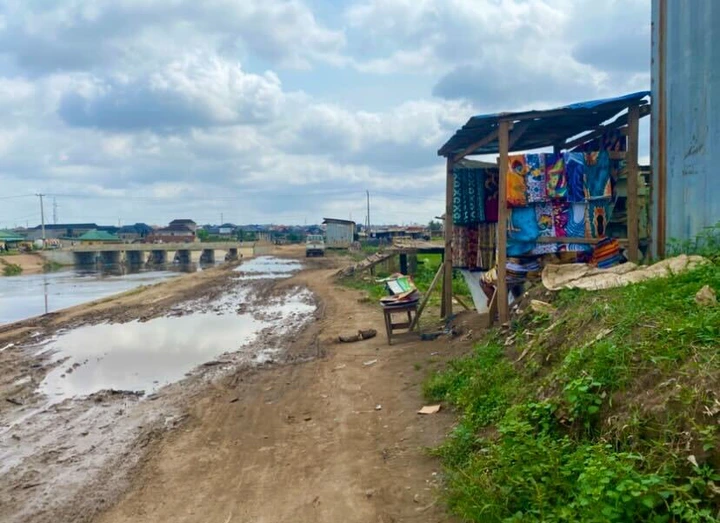
On a quiet Thursday afternoon, Aboru, a community tucked near Iyana Ipaja in the Alimosho Local Government Area of Lagos State, presented a striking contrast to the usual hustle and bustle typical of Lagos communities.
When The Guardian’s correspondent visited, just a handful of shops were open, and the streets were nearly empty.
The untarred main road remained largely silent, except for the occasional rumble of commercial tricycles, popularly called keke maruwa, as they passed through...TAP TO CONTINUE FULL READING.
Abiola Omowunmi, a resident who has been living in the community since the early 2000s, sat in a wooden kiosk where her friend sells Ankara fabrics.
Omowunmi said the road in the community has remained impassable since she moved in, as she gestured toward the untarred main road.
From conversations with residents in the community, The Guardian learnt that the roads are worse when it rains, trapping residents in the community and stopping people outside from accessing it.
Residents also said the community used to suffer from floods during peak rainy seasons, which has resulted in the deaths of some residents and the loss of properties in the community.
Omowunmi told The Guardian that she has lost one of her husband’s relatives to the flood. She added that the government began repairing the road three years ago, but it is nowhere near completion.
“It is even a bit better now. After all, they have constructed a bridge over the canal. Before, all we had was a makeshift wooden bridge, which we used to access the community. We thank God that when it rains, the flood no longer carries people away. But we need good roads,” said Omowunmi.
Bad roads stall trades in the community
The Guardian first reported in 2021 on the deplorable state of Aboru Road and other roads in Iyana Ipaja. Four years later, residents say little has changed.
The Chairman of Oki Central Community Development Association (CDA), Gbadamosi Oluwafemi Razak, told The Guardian in 2021 that the Lagos State Commissioner for Environment at the time, Tunji Bello, had handed over the project to a contractor and that the bridge over the canal from the community and Agbele to Ipaja would be made with concrete on both sides, with roads that would take vehicles.
Razak said work had started at the time and hoped that it would be completed.
The Guardian’s correspondent confirmed that a concrete bridge has been constructed over the canal, but the roads still remain in deplorable condition.
The bridge was constructed over the canal.
Despite the construction of a canal in Akinolu that links to Aboru, residents say proper road infrastructure is still missing. They still groan over the poor state of the roads as they did in 2021, and female traders lament poor sales.
In the wooden kiosk belonging to her friend who sells Ankara fabrics, Omowunmi said she met her friend sleeping when she arrived because she had no customers to attend to. Omowunmi said it was the norm around there, particularly for female traders who struggle to make sales.
“We need the roads to be repaired so we can sell our wares in our shops inside the community. If the road is good, many customers will patronise us and sales will move,” said Omowunmi.
Good roads, no doubt, are a prerequisite for good trades. This was echoed by the former corps marshal of the Federal Road Safety Corps (FRSC), Boboye Oyeyemi, in 2022.
“Roads are inevitable to economies at the micro and macro levels. In underscoring the importance of roads to building economies, the roads and road infrastructures must be designed and built to be safe, resilient, smart, and sustainable. Roads should be built in a way that would not become ‘death traps’ to the users.
“The world’s leading economies have better-built roads with networks that promote road safety and minimal socio-economic consequences,” said Boboye.
The absence of it, however, stalls trade.
A tailor in Raji Rasaki Street, who has been living there for the past seven years, Labake, said the roads have been in the same condition since she moved in. According to her, officials of the Lagos State Government have made several promises to repair the roads, but they have never fulfilled their promises.
Labake decried the state of the road, adding that many residents have moved out of the community, sold their homes, and children cannot go to school when it rains.
“Many residents have sold their houses and moved out because of the bad road. They are not glad to do it. We have seen that they have begun repairing the canal, but the work is not near perfect or completion. We want them to fix the roads. The road repair is not something the residents can do all by themselves.
A shop.
“Our children who have resumed won’t be able to go to school when it rains. We also cannot leave the community when it rains. Even those who work outside the community can’t go to work or return home on rainy days. How will businesses boom when the road is bad?” she lamented.
The tailor added that several shop owners have locked and abandoned their shops because poor road conditions have slowed businesses. The Guardian’s correspondent observed that Labake was the only trader who opened her shop in the building, while her neighbors’ shops remained locked.
Labake’s shop opened, while her neighbours’ shops are shut.
When contacted, the General Manager of Lagos State Public Works, Ayodele Somide, directed The Guardian to the agency’s public relations officer. As of press time, the spokesperson had not returned calls or text messages.
👉 Are You A WhatsApp User? Do You Want To Get Our News As Fast As Possible On Daily Basis? 👉 Click This Link To Join WhatsApp Channel Now.
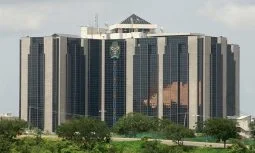
The Central Bank of Nigeria (CBN) has introduced new Bank Verification Number (BVN) rules effective from May 1, 2026, aimed at reducing fraud, especially SIM swap and identity theft cases. The regulations include stricter controls on phone number changes, age restrictions, device limits, and temporary account restrictions for suspicious activities. Here is a simple breakdown of what you need to know.
One phone number change in a lifetime – Customers can only change the phone number linked to their BVN once. Choose carefully.
24-hour watchlist for suspicious BVNs – Banks can temporarily restrict accounts flagged for suspicious activity while investigations are conducted.
BVN registration is now for adults only – Only individuals aged 18 and above can independently register for a BVN. Minors require guardian-linked arrangements.
One device per banking app – You can only use your banking app on one device at a time. Switching devices triggers a 24-hour transaction limit of N20,000.
Authorised channels only – BVN services are now limited to CBN-approved banks and financial institutions. Avoid third-party apps or unofficial agents.
The new rules may feel strict, but they are designed to protect your money and reduce fraud. Be more careful with your phone number, devices, and banking activities to avoid unnecessary restrictions...TAP TO CONTINUE FULL READING.
Sources: Nigerian Tribune
👉 Are You A WhatsApp User? Do You Want To Get Our News As Fast As Possible On Daily Basis? 👉 Click This Link To Join WhatsApp Channel Now.
Breaking News
‘Nigeria is a safe country’ Reno Omokri Tells Portuguese Ambassador Who Drives Nigeria Highways Without Escort, Calls Trips Safe

The Portuguese Ambassador to Nigeria has driven from Abuja to Bauchi and back without a security escort, describing the journeys as “very normal” and safe. Reno Omokri shared a video of the ambassador, praising Nigeria’s overall safety under President Tinubu. The ambassador also reportedly drove from Enugu to Abuja without incident. However, critics point to over 1,000 abductions since January 2026 and frequent highway kidnappings, questioning the safety claims.
Key Points:
Critics noted bandit attacks in Bauchi and other regions.
Many questioned why top Nigerian officials don’t take the same unescorted routes.
The ambassador acknowledged “some localized issues” but highlighted safety overall.
Over 1.5 million safe visitors to Lagos during the December holidays were cited.
Social media users expressed a divide between official accounts and citizens’ realities...TAP TO CONTINUE FULL READING.
The ambassador’s experience contrasts sharply with the lived reality of many Nigerians.
Sources: X
I Drove From Abuja To Bauchi And Back Without An Escort And It Was Safe-Paulo Santos, Portuguese Ambassador To Nigeria pic.twitter.com/GZmEJTHi0p
— Reno Omokri (@renoomokri) April 30, 2026
👉 Are You A WhatsApp User? Do You Want To Get Our News As Fast As Possible On Daily Basis? 👉 Click This Link To Join WhatsApp Channel Now.

More than 1,000 victims across 19 countries were defrauded of about $215 million in a sprawling business email compromise scheme, leading to convictions of Nigerian nationals, the US attorney’s office has said. Twenty-five defendants were convicted on April 24. Among them were four Nigerian nationals and five naturalised US citizens of Nigerian descent. The scheme involved hacking email accounts and crafting fraudulent payment requests.
Key Points:
Victims were located in the US, UK, Germany, UAE, Australia, and 14 other countries.
One victim’s business sent $2.7 million to a shell company account.
Seized items included luxury watches worth over $215,000 and a Georgia residence.
The FBI, US Postal Inspection Service, and Border Patrol conducted the investigation.
A Chicago-area money service business owner was a co-defendant...TAP TO CONTINUE FULL READING.
Each defendant’s sentence will be determined based on their role and criminal history.
Sources: The Cable, Punch
👉 Are You A WhatsApp User? Do You Want To Get Our News As Fast As Possible On Daily Basis? 👉 Click This Link To Join WhatsApp Channel Now.

 Breaking News8 months ago
World’s Youngest Undergraduate is Nigerian JOSHUA BECKFORD, gained admission in Oxford University at the age of Six years
 Breaking News6 months ago
JUST IN: Finally United States President Donald Trump Revokes 80,000 Visas of Nigerians, Other Foreign Nationals

 Breaking News8 months ago
BREAKING NEWS: Woman in Trouble For Burning 7-year-old Girl’s Private Parts With Hot Knife
 Breaking News8 months ago
BREAKING NEWS: FULL DETAILS! Top Secret Leaked Why SIM Fubara Fails to Return to Government House After Reinstatement

 Breaking News6 months ago
BREAKING NEWS: Nigerian Billionaire Lawmaker Ned Nwoko, Orders Arrest of His Mother In Law Regina Daniels’ Mother, Rita
 Breaking News8 months ago
BREAKING NEWS: Federal Government Releases Proof of N25,000 Cash Transfers to 71 Million Nigerians in 8.1 Million Households
 Breaking News8 months ago
BREAKING NEWS: Another Rivers Saga: Just Reinstated Fubara Told to Sack All Sole Administrators Appointees, Seek Tinubu’s Assurance Over Impeachment

 Breaking News8 months ago
BREAKING NEWS: Finally Department of State Services (DSS) summons Sowore over post on Tinubu