
Breaking News
Marketers blame depots as petrol nears N1,000/litre

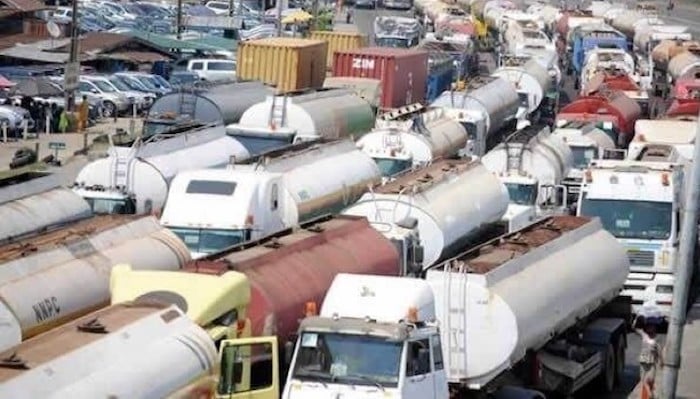
Amid worsening supply challenges and rising pump prices, petroleum marketers have begun moves to import petrol independently as the commodity moved close to the N1,000 per litre mark across major cities in the country.
Marketers said supply constraints and production glitches at the Dangote Petroleum Refinery sparked fresh pressure in the downstream oil market.
The National Publicity Secretary of the Independent Petroleum Marketers Association of Nigeria, Chinedu Ukadike, confirmed the development in a telephone interview with The PUNCH on Tuesday...TAP TO CONTINUE FULL READING.
According to him, members of the Depot and Petroleum Products Marketers Association of Nigeria are concluding arrangements to begin petrol importation as part of efforts to stabilise retail prices.
He stated that petrol prices would soon drop as competition returns to the market, if additional competition is brought into the sector.
“Yes, petrol price is still going to come down because I also know that some marketers, especially DAPPMAN members, have applied and they are going to import petrol products.
“Peradventure, their prices are cheaper than Dangote’s, we would have no choice but to patronise them. The essence of this market is that where it is cheaper, we will buy. But prices will come down once there is a struggle for the market,” Ukadike said.
The PUNCH reports that petrol prices rose from about N865 to around N950 per litre on Monday.
Checks by The PUNCH on Tuesday showed that the pump price of Premium Motor Spirit, popularly called petrol, now sells between N920 and N955 per litre in many retail outlets, while some stations in Abuja, Sokoto and Lagos charge as high as N1,000 per litre, depending on location and brand.
This comes at a time when Nigerians were expecting petrol prices to drop to N841/litre as recommended by the Dangote refinery.
Our correspondent recalls that when the Dangote refinery launched its logistics-free fuel distribution scheme on September 15, it stated that its partners and filling stations benefitting from the scheme would drop petrol prices to N841 in the South West and N851 in Abuja, Edo, Kwara, Rivers and Delta.
But when this had yet to take effect in filling stations, prices surged above N900 in Lagos, Ogun Abuja and others.
In the Federal Capital Territory, a market survey by one of our correspondents revealed that petrol sold for N955 per litre at NNPC outlets in Gwarinpa and Lugbe, while prices climbed to N928 per litre at NNPC stations in Lagos.
In parts of Edo, Rivers, Oyo and Gombe states, motorists purchased the product at prices ranging from N900 to N1,000 per litre, amid reports of long queues and panic buying.
The latest spike has raised concerns among motorists and consumers already grappling with high transportation and food costs, threatening to further fuel inflationary pressures across the country.
Reacting, the Independent Petroleum Marketers Association of Nigeria has blamed depot owners for the sudden surge in petrol prices.
IPMAN President, Abubakar Shettima, told The PUNCH that depot owners increased their prices when they discovered that the Dangote refinery had stopped fuel loading for some days.
Our correspondent reports that depots hiked their prices on Monday from an average of N830 to about N890.
According to Petroleumprice.com, depots like Matrix, Fynefield and Liquid Bulk sold petrol at N900 as of Tuesday. Northwest offered N895; Pinnacle, N885; RainOil, N890; NIPCO, N850; Aiteo, N878; and Sigmund, N890.
Following this, filling stations adjusted their pump prices to reflect the new pricing regime.
The Nigerian National Petroleum Company Limited retail outlets sold premium motor spirit at N928 in Ogun and Lagos, an increase of about N50 from the previous N870.
The adjustment also marks a reversal of the price reduction introduced in August, when NNPC lowered petrol prices to N865 per litre in Lagos and N890 per litre in Abuja.
Speaking with our correspondent, the NNPC spokesperson, Andy Odeh, said the NNPC adjusted its pump prices like every other retail outlet because the depots increased their gantry rates.
“The ex-depot prices have gone up. You know all the filling stations are retailers. So, when the price goes up ex-depot, there will be an adjustment by the retailers. That’s what has happened and it’s across all the retailers,” the NNPC spokesperson said.
In Ogun and Lagos, filling stations sold petrol at prices ranging from N900 and N950 on Tuesday. Dangote’s partner, MRS, also sold the product at N925 in Ogun.
Our correspondent gathered that the Dangote refinery stopped selling petrol to marketers recently, causing a tightness in supply.
The Dangote refinery has yet to respond to questions seeking further clarification about the development.
However, sources said this might be due to ongoing maintenance or the challenges posed by the mass sacking of engineers at the facility.
In an interview with our correspondent, the President of IPMAN, Shettima said members of the Depot and Petroleum Products Marketers Association of Nigeria hiked fuel prices following the no-loading situation at the 650,000-capacity refinery.
“These DAPPMAN people are the only ones who are selling the product now. But, probably, Dangote will start tomorrow (today). So, if Dangote starts selling tomorrow, the price will come down. Dangote has not been selling to marketers since all these days.
“You may see their trucks on the road, but the trucks are not enough; marketers still have to support by going there to load. And immediately these DAPPMAN people saw that Dangote was not loading, they increased their ex-depot prices. That’s just what is happening. But I know these things are temporary, very soon they will wipe away,” Shettima said.
Speaking on the development, the IPMAN National Publicity Secretary, Chinedu Ukadike, attributed the price increase to temporary supply glitches at the Dangote Refinery and sharp practices by some private depot owners.
Ukadike explained that the refinery had recently slowed loading operations due to internal reorganisation and labour-related disruptions, causing limited distribution to private marketers.
“There is a reorganisation going on, and the issue of the NUPENG strike caused a little glitch in terms of supply and refining of petroleum products, because of the workers’ strike.
“And what we are trying to do now is to manage the situation. Now Dangote has also increased its pump price, while NNPCL has increased its price. This just shows that it is a reflective market whereby when the suppliers increase prices, the retailers have no choice but to increase them, just to make a little profit. So that is the current situation. It is only when we tie our importation of crude products or refined products to the price of the dollar that we can have issues, but that is no longer the case. The issue of exchange doesn’t arise. The factors of production are the issues now,” Ukadike said.
He added that depot owners were taking advantage of the limited supply situation to hike ex-depot prices, further worsening the pump price burden on consumers.
Major Energies Marketers Association of Nigeria further confirmed in its daily bulletin, posted on its official X handle, that the refinery had suspended gantry loading for most private marketers since last Thursday, restricting sales to its own and MRS trucks, thereby creating a shortage at independent outlets.
The Chief Executive Officer of PetroleumPrice.ng, Jeremiah Olatide, has blamed the fresh wave of petrol scarcity and price hikes on operational disruptions at the Dangote Refinery, which he said has suspended gantry sales to private depot owners since last week.
Olatide said the refinery is currently prioritising loading for its own last-mile delivery trucks and those of its affiliate, MRS, while marketers who obtained Product Finance Instruments have been unable to lift fuel for several days.
“No, things haven’t improved. The current situation, as I speak to you, is that the refinery is only loading their own trucks, last-mile delivery trucks, and they have suspended gantry sales since last Thursday,” he said. Those who have PFI are yet to load. I think they have low stock, so they are trying to manage it.”
According to him, the production hiccup was compounded by crude supply shortages and the recent layoff of about 800 refinery workers, which has further strained the facility’s operations.
“Basically, they are having issues with crude, and the 800 staff that were laid off is also a challenge to them. All these have contributed to the supply glitch we’ve experienced in the last week,” Olatide explained.
He likened the unfolding situation to the earlier gas supply crisis, warning that the refinery’s reduced output was already distorting the downstream market. “Clearly, there is a supply problem with PMS distribution, just like the gas problem started,” he added.
Olatide revealed that petrol prices at private depots had surged in response to the supply shortfall, as marketers scramble for limited volumes. “Depot marketers were not allowed to load products today at the refinery. It was only for MRS trucks and their personal trucks. Anyone applying through its trucks will get products now, but not private marketers’ trucks,” he said.
He further disclosed that private depots, previously buying at N820 per litre from the refinery, have halted sales and are considering fresh price increases.
“No doubt, there is a supply glitch. It’s not affecting MRS, but private depot operators have stopped sales and want to raise prices again,” Olatide said.
Meanwhile, residents living in Sokoto State have lamented the recent increase in pump price by petroleum marketers in the state, which has increased the cost of fuel to between 960 naira and arefinery0 naira within the metropolis.
Our correspondent, who monitored the development in the state, gathered that the increase in price covered both independent and major marketers in the state.
Findings by our correspondent in the state gathered that all the NNPC filling stations in the state metropolis have not been open for business for the last week.
A visit to AA Rano on Tuesday discovered that a litre of fuel had been adjusted from the previous 930 naira to 960 naira.
Also, at some of the independent marketers in the state, the fuel, which was sold for between 950 and 960 naira, is now being sold for between 1,000 and 1,050 naira.
A motorist who spoke with our correspondent at AA Rano said he decided to join the queue due to the recent scarcity and increase in the price.
“I have to be here to queue for the fuel, I learnt a litre is now 992 from NNPC in Lagos, only God knows how much NNPC will sell in Sokoto.
“Even though I don’t have money, I have to borrow money from my wife, I have been here for about 40 minutes trying to get this product, anyway it’s unfortunate”
With the cost of fuel nearing N1,000 per litre, analysts warn of another round of price shocks across transportation, food, and manufacturing sectors, even as Nigerians continue to await the promise of stable supply from the country’s 650,000 barrels-per-day Dangote Refinery.
👉 Are You A WhatsApp User? Do You Want To Get Our News As Fast As Possible On Daily Basis? 👉 Click This Link To Join WhatsApp Channel Now.
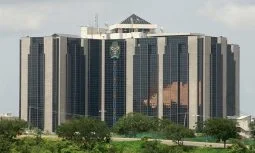
The Central Bank of Nigeria (CBN) has introduced new Bank Verification Number (BVN) rules effective from May 1, 2026, aimed at reducing fraud, especially SIM swap and identity theft cases. The regulations include stricter controls on phone number changes, age restrictions, device limits, and temporary account restrictions for suspicious activities. Here is a simple breakdown of what you need to know.
One phone number change in a lifetime – Customers can only change the phone number linked to their BVN once. Choose carefully.
24-hour watchlist for suspicious BVNs – Banks can temporarily restrict accounts flagged for suspicious activity while investigations are conducted.
BVN registration is now for adults only – Only individuals aged 18 and above can independently register for a BVN. Minors require guardian-linked arrangements.
One device per banking app – You can only use your banking app on one device at a time. Switching devices triggers a 24-hour transaction limit of N20,000.
Authorised channels only – BVN services are now limited to CBN-approved banks and financial institutions. Avoid third-party apps or unofficial agents.
The new rules may feel strict, but they are designed to protect your money and reduce fraud. Be more careful with your phone number, devices, and banking activities to avoid unnecessary restrictions...TAP TO CONTINUE FULL READING.
Sources: Nigerian Tribune
👉 Are You A WhatsApp User? Do You Want To Get Our News As Fast As Possible On Daily Basis? 👉 Click This Link To Join WhatsApp Channel Now.
Breaking News
‘Nigeria is a safe country’ Reno Omokri Tells Portuguese Ambassador Who Drives Nigeria Highways Without Escort, Calls Trips Safe

The Portuguese Ambassador to Nigeria has driven from Abuja to Bauchi and back without a security escort, describing the journeys as “very normal” and safe. Reno Omokri shared a video of the ambassador, praising Nigeria’s overall safety under President Tinubu. The ambassador also reportedly drove from Enugu to Abuja without incident. However, critics point to over 1,000 abductions since January 2026 and frequent highway kidnappings, questioning the safety claims.
Key Points:
Critics noted bandit attacks in Bauchi and other regions.
Many questioned why top Nigerian officials don’t take the same unescorted routes.
The ambassador acknowledged “some localized issues” but highlighted safety overall.
Over 1.5 million safe visitors to Lagos during the December holidays were cited.
Social media users expressed a divide between official accounts and citizens’ realities...TAP TO CONTINUE FULL READING.
The ambassador’s experience contrasts sharply with the lived reality of many Nigerians.
Sources: X
I Drove From Abuja To Bauchi And Back Without An Escort And It Was Safe-Paulo Santos, Portuguese Ambassador To Nigeria pic.twitter.com/GZmEJTHi0p
— Reno Omokri (@renoomokri) April 30, 2026
👉 Are You A WhatsApp User? Do You Want To Get Our News As Fast As Possible On Daily Basis? 👉 Click This Link To Join WhatsApp Channel Now.
More than 1,000 victims across 19 countries were defrauded of about $215 million in a sprawling business email compromise scheme, leading to convictions of Nigerian nationals, the US attorney’s office has said. Twenty-five defendants were convicted on April 24. Among them were four Nigerian nationals and five naturalised US citizens of Nigerian descent. The scheme involved hacking email accounts and crafting fraudulent payment requests.
Key Points:
Victims were located in the US, UK, Germany, UAE, Australia, and 14 other countries.
One victim’s business sent $2.7 million to a shell company account.
Seized items included luxury watches worth over $215,000 and a Georgia residence.
The FBI, US Postal Inspection Service, and Border Patrol conducted the investigation.
A Chicago-area money service business owner was a co-defendant...TAP TO CONTINUE FULL READING.
Each defendant’s sentence will be determined based on their role and criminal history.
Sources: The Cable, Punch
👉 Are You A WhatsApp User? Do You Want To Get Our News As Fast As Possible On Daily Basis? 👉 Click This Link To Join WhatsApp Channel Now.

 Breaking News8 months ago
World’s Youngest Undergraduate is Nigerian JOSHUA BECKFORD, gained admission in Oxford University at the age of Six years
 Breaking News6 months ago
JUST IN: Finally United States President Donald Trump Revokes 80,000 Visas of Nigerians, Other Foreign Nationals

 Breaking News8 months ago
BREAKING NEWS: Woman in Trouble For Burning 7-year-old Girl’s Private Parts With Hot Knife

 Breaking News8 months ago
BREAKING NEWS: FULL DETAILS! Top Secret Leaked Why SIM Fubara Fails to Return to Government House After Reinstatement

 Breaking News6 months ago
BREAKING NEWS: Nigerian Billionaire Lawmaker Ned Nwoko, Orders Arrest of His Mother In Law Regina Daniels’ Mother, Rita
 Breaking News8 months ago
BREAKING NEWS: Federal Government Releases Proof of N25,000 Cash Transfers to 71 Million Nigerians in 8.1 Million Households

 Breaking News8 months ago
BREAKING NEWS: Another Rivers Saga: Just Reinstated Fubara Told to Sack All Sole Administrators Appointees, Seek Tinubu’s Assurance Over Impeachment

 Breaking News8 months ago
BREAKING NEWS: Finally Department of State Services (DSS) summons Sowore over post on Tinubu