
Breaking News
Cartel, Nigerian security operatives allegedly pocket N24bn monthly

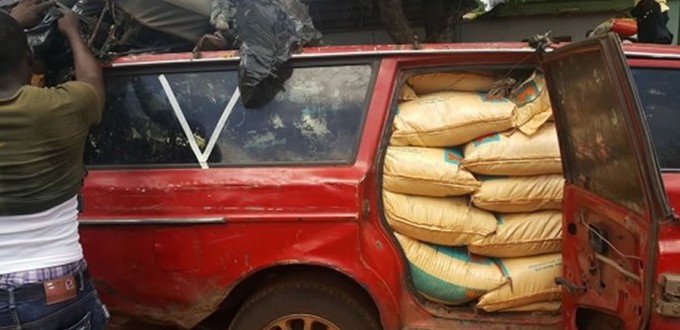
A notorious smuggling network operating along the Seme–Badagry and Idi Iroko corridors within Nigerian security forces has been exposed.
The Union of Pioneers Association of Smugglers disclosed this to DAILY POST.
Members of the union alleged that Nigerian security operatives and border-area residents have long served as foot soldiers for an illicit trade worth around N24 billion monthly...TAP TO CONTINUE FULL READING.
Speaking anonymously, union leaders claimed that a powerful syndicate backed by senior security figures oversees the flow of contraband, including rice, vehicles, fuel, and other restricted items, from the Republic of Benin into Lagos. They say goods are routinely cleared after “settlements” with customs officers and escorted safely by military personnel.
The union accused a well-known smuggling coordinator of running what they described as a “mafia-style structure” that enriches a select few at the expense of indigenous operators.
“He doesn’t own a single vehicle, but he collects returns from every operation,” a member said. “His investment keeps growing, while the real indigenes can’t boast of any.”
Attempts by the union to create a new operational team, known as Team C, have allegedly been blocked repeatedly by security operatives. Despite interventions from community leaders and even a prominent Yoruba traditional ruler, the union claims officials have stalled the process to protect their financial interests.
“They don’t want Team C because it will cut into the billions they make,” another union executive said.
Members further accused soldiers attached to two major formations in Badagry of providing escort services for smuggled goods instead of securing Nigeria’s borders. As recently as Saturday, one source claimed, army personnel were seen supervising loading operations after a clearance arrangement involving some customs officials.
“The military are supposed to defend Nigeria’s territorial integrity, but they are escorting smuggled rice and cars into Lagos,” a member alleged.
Multiple senior officers across several formations, including the customs service, were also named by insiders as allegedly offering top-level protection for the network.
While Lagos border routes are described as “crippled” due to the cartel’s grip, the union claims several Ogun State border points are fully active and currently serve as alternative entry routes for smuggled goods, further expanding the cartel’s reach.
“Lagos is dead unless you are connected. But Ogun is booming. That’s why the money is huge,” one union member said.
With December approaching, a month typically marked by heightened smuggling, union members say they were again informed this week that their long-requested operational approval would not be granted. They now accuse security operatives of colluding with the cartel to monopolise the Christmas surge in contraband movement.
Feeling sidelined, the union says it is preparing a petition to National Security Adviser Nuhu Ribadu, calling for a full-scale investigation into what they describe as a “billionaire smuggling empire backed by uniformed personnel.”
They insist the alleged involvement of soldiers, customs officers, and police officers shows how deeply entrenched corruption is at Nigeria’s borders.
The spokesperson of the Nigeria Customs Service, Abdullahi Maiwada, has yet to comment on the allegations as of filing this report.
This comes despite the operation of the NCS anti-smuggling unit.
NCS announced in July that it had seized N1.84 billion worth of contraband in South West Nigeria alone.
👉 Are You A WhatsApp User? Do You Want To Get Our News As Fast As Possible On Daily Basis? 👉 Click This Link To Join WhatsApp Channel Now.

The Central Bank of Nigeria (CBN) has introduced new Bank Verification Number (BVN) rules effective from May 1, 2026, aimed at reducing fraud, especially SIM swap and identity theft cases. The regulations include stricter controls on phone number changes, age restrictions, device limits, and temporary account restrictions for suspicious activities. Here is a simple breakdown of what you need to know.
One phone number change in a lifetime – Customers can only change the phone number linked to their BVN once. Choose carefully.
24-hour watchlist for suspicious BVNs – Banks can temporarily restrict accounts flagged for suspicious activity while investigations are conducted.
BVN registration is now for adults only – Only individuals aged 18 and above can independently register for a BVN. Minors require guardian-linked arrangements.
One device per banking app – You can only use your banking app on one device at a time. Switching devices triggers a 24-hour transaction limit of N20,000.
Authorised channels only – BVN services are now limited to CBN-approved banks and financial institutions. Avoid third-party apps or unofficial agents.
The new rules may feel strict, but they are designed to protect your money and reduce fraud. Be more careful with your phone number, devices, and banking activities to avoid unnecessary restrictions...TAP TO CONTINUE FULL READING.
Sources: Nigerian Tribune
👉 Are You A WhatsApp User? Do You Want To Get Our News As Fast As Possible On Daily Basis? 👉 Click This Link To Join WhatsApp Channel Now.
Breaking News
‘Nigeria is a safe country’ Reno Omokri Tells Portuguese Ambassador Who Drives Nigeria Highways Without Escort, Calls Trips Safe
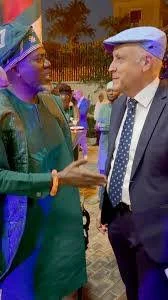
The Portuguese Ambassador to Nigeria has driven from Abuja to Bauchi and back without a security escort, describing the journeys as “very normal” and safe. Reno Omokri shared a video of the ambassador, praising Nigeria’s overall safety under President Tinubu. The ambassador also reportedly drove from Enugu to Abuja without incident. However, critics point to over 1,000 abductions since January 2026 and frequent highway kidnappings, questioning the safety claims.
Key Points:
Critics noted bandit attacks in Bauchi and other regions.
Many questioned why top Nigerian officials don’t take the same unescorted routes.
The ambassador acknowledged “some localized issues” but highlighted safety overall.
Over 1.5 million safe visitors to Lagos during the December holidays were cited.
Social media users expressed a divide between official accounts and citizens’ realities...TAP TO CONTINUE FULL READING.
The ambassador’s experience contrasts sharply with the lived reality of many Nigerians.
Sources: X
I Drove From Abuja To Bauchi And Back Without An Escort And It Was Safe-Paulo Santos, Portuguese Ambassador To Nigeria pic.twitter.com/GZmEJTHi0p
— Reno Omokri (@renoomokri) April 30, 2026
👉 Are You A WhatsApp User? Do You Want To Get Our News As Fast As Possible On Daily Basis? 👉 Click This Link To Join WhatsApp Channel Now.
More than 1,000 victims across 19 countries were defrauded of about $215 million in a sprawling business email compromise scheme, leading to convictions of Nigerian nationals, the US attorney’s office has said. Twenty-five defendants were convicted on April 24. Among them were four Nigerian nationals and five naturalised US citizens of Nigerian descent. The scheme involved hacking email accounts and crafting fraudulent payment requests.
Key Points:
Victims were located in the US, UK, Germany, UAE, Australia, and 14 other countries.
One victim’s business sent $2.7 million to a shell company account.
Seized items included luxury watches worth over $215,000 and a Georgia residence.
The FBI, US Postal Inspection Service, and Border Patrol conducted the investigation.
A Chicago-area money service business owner was a co-defendant...TAP TO CONTINUE FULL READING.
Each defendant’s sentence will be determined based on their role and criminal history.
Sources: The Cable, Punch
👉 Are You A WhatsApp User? Do You Want To Get Our News As Fast As Possible On Daily Basis? 👉 Click This Link To Join WhatsApp Channel Now.

 Breaking News8 months ago
World’s Youngest Undergraduate is Nigerian JOSHUA BECKFORD, gained admission in Oxford University at the age of Six years
 Breaking News6 months ago
JUST IN: Finally United States President Donald Trump Revokes 80,000 Visas of Nigerians, Other Foreign Nationals

 Breaking News8 months ago
BREAKING NEWS: Woman in Trouble For Burning 7-year-old Girl’s Private Parts With Hot Knife

 Breaking News8 months ago
BREAKING NEWS: FULL DETAILS! Top Secret Leaked Why SIM Fubara Fails to Return to Government House After Reinstatement

 Breaking News6 months ago
BREAKING NEWS: Nigerian Billionaire Lawmaker Ned Nwoko, Orders Arrest of His Mother In Law Regina Daniels’ Mother, Rita
 Breaking News8 months ago
BREAKING NEWS: Federal Government Releases Proof of N25,000 Cash Transfers to 71 Million Nigerians in 8.1 Million Households

 Breaking News8 months ago
BREAKING NEWS: Another Rivers Saga: Just Reinstated Fubara Told to Sack All Sole Administrators Appointees, Seek Tinubu’s Assurance Over Impeachment
 Breaking News8 months ago
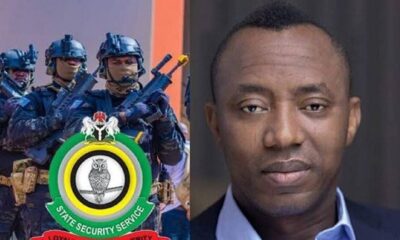
BREAKING NEWS: Finally Department of State Services (DSS) summons Sowore over post on Tinubu