
Breaking News
Human Rights Watch Warns Tinubu: “Prioritise Security As Nigerian Children Should Go To School”

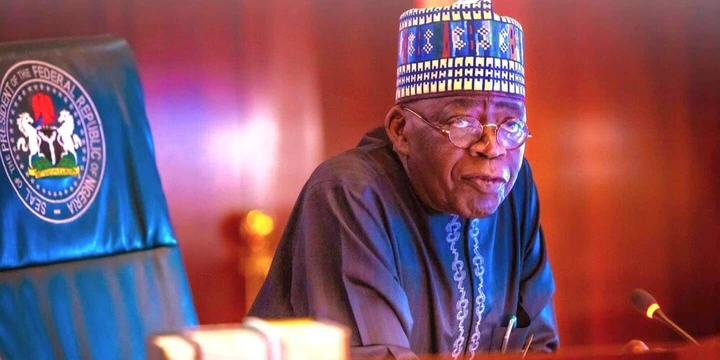
According to HRW, the latest incidents underscore a worsening security environment in Nigeria’s northwest and central regions.
The Human Rights Watch (HRW) has condemned the renewed wave of mass kidnappings of schoolchildren in Nigeria, demanding that the Bola Tinubu-led government act swiftly to secure the safe release of hundreds of abducted students and teachers across the country.
The organisation also called for urgent, concrete steps to protect schools and communities across the country from further attacks...TAP TO CONTINUE FULL READING.
According to HRW, the latest incidents underscore a worsening security environment in Nigeria’s northwest and central regions.
On November 18, unidentified armed men kidnapped 25 schoolgirls from the Government Girls Comprehensive Secondary School in Maga, Kebbi State.
Three days later, on November 21, gunmen abducted 303 students and 12 teachers at St. Mary’s Catholic Primary and Secondary School in Papiri, Niger State.
“These mass school kidnappings once again lay bare the deliberate targeting of students, teachers, and schools in Nigeria’s deteriorating security environment,” said Anietie Ewang, Nigeria researcher at Human Rights Watch.
“The deepening crisis underscores the government’s failure to protect vulnerable communities.”
No group has claimed responsibility for the attacks, but Nigeria has been plagued for years by violent assaults and mass abductions carried out by criminal gangs widely referred to as bandits.
These groups have repeatedly kidnapped schoolchildren for ransom across the northwest and central regions.
HRW also noted that on November 18, the Al-Qaeda-aligned Group for the Support of Islam and Muslims (JNIM) claimed responsibility for an October 29 attack on a military patrol in Kwara State, apparently its first known operation inside Nigeria.
Human Rights Watch said it interviewed families whose children were among those kidnapped in Kebbi State.
“I immediately took a motorbike and rushed to the school, where I found my second daughter, also a student at the school,” Isa Nazifi, whose 13-year-old daughter Khadija was abducted, was quoted as saying.
“She told me Khadija had been taken. We are extremely worried. My wife is in tears. I will stay here at the school until my daughter returns. If I go home without her, what will I tell my family?”
Another parent, Malam Sani Zimri, whose daughter Salima was also abducted, said parents had heard of a possible attack days earlier but were reassured by the presence of security operatives in the area. However, during the attack, he said, no operatives were present on school grounds, according to HRW.
“We developed confidence after seeing military operatives surveilling the area, only to realise that there were no security operatives on the premises for the entire three hours that the incident occurred,” he said.
The latest kidnappings follow a grim pattern that began with the 2014 abduction of the Chibok schoolgirls in Borno State by Boko Haram, an incident that sparked global outrage.
Since then, kidnappings targeting schools have repeatedly shattered communities across northern Nigeria.
Among the major incidents are the Boko Haram abduction of more than 300 children from Zanna Mobarti Primary School in Damasak, Borno State, in 2015.
Abduction of over 300 from a boarding school in Kankara, Katsina State, in December 2020. Mass abductions that occurred in Kagara, Niger State, Jangebe, Zamfara State, and at Bethel Baptist High School, Kaduna State, where more than 100 students were taken.
“The spate of kidnappings continued in 2024 with students taken from schools in Kuriga, Kaduna state, and Gidan Bakuso, Sokoto state,” HRW stated.
Despite repeated crises, HRW said Nigerian authorities have not implemented effective early warning systems or preventive measures to mitigate attacks.
President Bola Tinubu had ordered security agencies to act decisively to rescue the abducted students and bring the perpetrators to justice.
He also urged communities to provide intelligence that could aid recovery efforts.
Authorities have reacted by closing 47 Federal Unity Colleges nationwide. Several states, including Katsina, Taraba, and Niger, have shut down or restricted activities in many schools, particularly boarding institutions.
While these measures aim to protect students, HRW warned they disproportionately disrupt learning, leaving thousands of children without access to education or vital psychosocial support.
Without alternative learning arrangements, the organisation said, children risk long-term academic and developmental setbacks.
“Nigerian authorities have failed to apply lessons from previous attacks to create early warning systems and other measures that could prevent these atrocities,” HRW said.
“Nigeria is a signatory to the Safe Schools Declaration, committing the government to take concrete steps to protect education during conflict and insecurity. Yet kidnappings have continued at a relentless pace and scale.”
On November 19, the Nigerian Senate ordered a full investigation into the implementation of the Safe School Fund, questioning why funds meant to secure schools have not stopped recurring attacks.
HRW urged the government to expedite plans to introduce legislation that will implement the Safe Schools Declaration nationwide.
“Children in Nigeria have the right to go to school without fearing for their lives,” Ewang said.
“Nigerian authorities should prioritise the safe release of the kidnapped children and their teachers and bring those responsible for their abduction to justice.”
👉 Are You A WhatsApp User? Do You Want To Get Our News As Fast As Possible On Daily Basis? 👉 Click This Link To Join WhatsApp Channel Now.

The Central Bank of Nigeria (CBN) has introduced new Bank Verification Number (BVN) rules effective from May 1, 2026, aimed at reducing fraud, especially SIM swap and identity theft cases. The regulations include stricter controls on phone number changes, age restrictions, device limits, and temporary account restrictions for suspicious activities. Here is a simple breakdown of what you need to know.
One phone number change in a lifetime – Customers can only change the phone number linked to their BVN once. Choose carefully.
24-hour watchlist for suspicious BVNs – Banks can temporarily restrict accounts flagged for suspicious activity while investigations are conducted.
BVN registration is now for adults only – Only individuals aged 18 and above can independently register for a BVN. Minors require guardian-linked arrangements.
One device per banking app – You can only use your banking app on one device at a time. Switching devices triggers a 24-hour transaction limit of N20,000.
Authorised channels only – BVN services are now limited to CBN-approved banks and financial institutions. Avoid third-party apps or unofficial agents.
The new rules may feel strict, but they are designed to protect your money and reduce fraud. Be more careful with your phone number, devices, and banking activities to avoid unnecessary restrictions...TAP TO CONTINUE FULL READING.
Sources: Nigerian Tribune
👉 Are You A WhatsApp User? Do You Want To Get Our News As Fast As Possible On Daily Basis? 👉 Click This Link To Join WhatsApp Channel Now.
Breaking News
‘Nigeria is a safe country’ Reno Omokri Tells Portuguese Ambassador Who Drives Nigeria Highways Without Escort, Calls Trips Safe

The Portuguese Ambassador to Nigeria has driven from Abuja to Bauchi and back without a security escort, describing the journeys as “very normal” and safe. Reno Omokri shared a video of the ambassador, praising Nigeria’s overall safety under President Tinubu. The ambassador also reportedly drove from Enugu to Abuja without incident. However, critics point to over 1,000 abductions since January 2026 and frequent highway kidnappings, questioning the safety claims.
Key Points:
Critics noted bandit attacks in Bauchi and other regions.
Many questioned why top Nigerian officials don’t take the same unescorted routes.
The ambassador acknowledged “some localized issues” but highlighted safety overall.
Over 1.5 million safe visitors to Lagos during the December holidays were cited.
Social media users expressed a divide between official accounts and citizens’ realities...TAP TO CONTINUE FULL READING.
The ambassador’s experience contrasts sharply with the lived reality of many Nigerians.
Sources: X
I Drove From Abuja To Bauchi And Back Without An Escort And It Was Safe-Paulo Santos, Portuguese Ambassador To Nigeria pic.twitter.com/GZmEJTHi0p
— Reno Omokri (@renoomokri) April 30, 2026
👉 Are You A WhatsApp User? Do You Want To Get Our News As Fast As Possible On Daily Basis? 👉 Click This Link To Join WhatsApp Channel Now.

More than 1,000 victims across 19 countries were defrauded of about $215 million in a sprawling business email compromise scheme, leading to convictions of Nigerian nationals, the US attorney’s office has said. Twenty-five defendants were convicted on April 24. Among them were four Nigerian nationals and five naturalised US citizens of Nigerian descent. The scheme involved hacking email accounts and crafting fraudulent payment requests.
Key Points:
Victims were located in the US, UK, Germany, UAE, Australia, and 14 other countries.
One victim’s business sent $2.7 million to a shell company account.
Seized items included luxury watches worth over $215,000 and a Georgia residence.
The FBI, US Postal Inspection Service, and Border Patrol conducted the investigation.
A Chicago-area money service business owner was a co-defendant...TAP TO CONTINUE FULL READING.
Each defendant’s sentence will be determined based on their role and criminal history.
Sources: The Cable, Punch
👉 Are You A WhatsApp User? Do You Want To Get Our News As Fast As Possible On Daily Basis? 👉 Click This Link To Join WhatsApp Channel Now.

 Breaking News8 months ago
World’s Youngest Undergraduate is Nigerian JOSHUA BECKFORD, gained admission in Oxford University at the age of Six years
 Breaking News6 months ago
JUST IN: Finally United States President Donald Trump Revokes 80,000 Visas of Nigerians, Other Foreign Nationals
 Breaking News8 months ago
BREAKING NEWS: Woman in Trouble For Burning 7-year-old Girl’s Private Parts With Hot Knife

 Breaking News8 months ago
BREAKING NEWS: FULL DETAILS! Top Secret Leaked Why SIM Fubara Fails to Return to Government House After Reinstatement

 Breaking News6 months ago
BREAKING NEWS: Nigerian Billionaire Lawmaker Ned Nwoko, Orders Arrest of His Mother In Law Regina Daniels’ Mother, Rita
 Breaking News8 months ago
BREAKING NEWS: Federal Government Releases Proof of N25,000 Cash Transfers to 71 Million Nigerians in 8.1 Million Households

 Breaking News8 months ago
BREAKING NEWS: Another Rivers Saga: Just Reinstated Fubara Told to Sack All Sole Administrators Appointees, Seek Tinubu’s Assurance Over Impeachment
 Breaking News8 months ago
BREAKING NEWS: Finally Department of State Services (DSS) summons Sowore over post on Tinubu