Connect with us

Breaking News

‘You Can Not Solve This Problems By War’ – Bandit Leader Warns FG

Published

on

A notorious bandit commander, Isiya Kwashen Garwa, has accused the Nigerian government of fuelling the rising cycle of banditry, kidnapping, and rural violence through oppression, injustice and decades of mismanagement, while urging Nigerians to embrace peace and reconciliation.....TAP TO CONTINUE READING

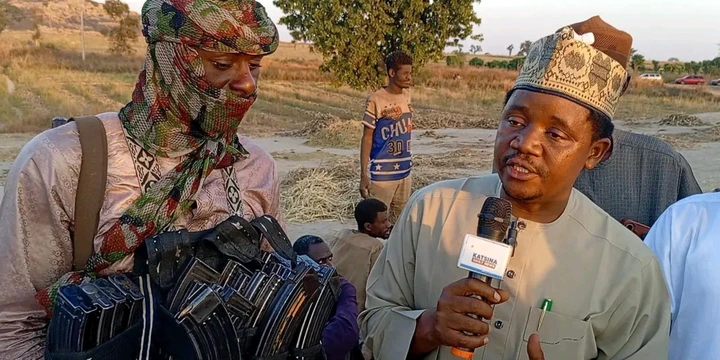
Garwa made the declaration on Friday while handing over 37 kidnapped victims, men, women, and children, to a lawmaker representing Bakori Constituency at the Katsina State House of Assembly, Hon. AbdulRahman Ahmad Kandarawa, in the presence of the Chairman of Bakori Local Government Area.

The handover ceremony, captured in a video obtained by SaharaReporters, showed Garwa dressed in a tactical jacket strapped with multiple rifle magazines, surrounded by armed fighters, delivering a fiery speech that stunned residents across the Northwest.

Addressing the observers and senior government actors at the scene, Garwa said the security crisis was not merely a product of criminal ambition but a rebellion born out of systemic injustice.

“Today again, by Allah’s help and His mercy, about thirty-seven people have been found. All of them were on their way fulfilling their responsibilities,” Garwa said in Hausa.

He added that the crisis ravaging the Northwest was rooted in long-ignored grievances, failed leadership, and distrust of authorities from the federal down to the local levels.

Garwa warned that military force alone would never quench the Northwest fire, using a metaphor to show the interdependence of Hausa and Fulani communities scarred by years of recurring violence.

Garwa stated, “Contrary to what some people think, this situation is not the way they imagine it, nor is it based on lies or deceit. People think everything is being manipulated dishonestly, but before God, that is not the case. What is happening is what Allah allows us to witness.

“Anyone who invites you to sit with him or to reconcile may be sincere or may not, because today things may look right, and tomorrow you may see the opposite of what you hoped for in your life, just like waking up healthy today and falling ill tomorrow. That is how this situation is.

“Every day, there must be challenges. Today there may be a problem; tomorrow there may be none. But we pray that the few mistakes that occur are not the kind that create panic, and that none of them cause serious harm or unrest.

“We must all gather and thank Allah because of what we are witnessing. This matter is not our strength, nor is it your strength, nor is it due to the failure of security agencies. It is Allah’s decree. He has turned our attention, your attention, and everyone’s attention, those involved and those not involved, to understand each other, to show compassion, and to seek peace.

“Doing this is better than conflict. Even in war, after constant fighting, people eventually sit at the table to negotiate. Talk less of this situation, which is like a conflict inside one home, between mother and child, or between mother and father.

“We are all one people; we come from the same roots. You cannot solve this problem by war. You will not achieve what you want through fighting. I want to give you an example so you understand:

“Imagine you have Suya beans, and you ask for insecticide spray to kill whatever harmful thing is on it. You may kill the insect, but the spray will also ruin the Suya itself. This problem is like that. If you try to “kill” one side, the Fulani or the Hausa, none of them will survive. You cannot destroy them without destroying yourself, because they live together and depend on each other.

“Our people live closely: some are Hausa, some are Fulani, if you oppress one group, the other will also feel the consequences. That is the truth.”

Garwa claimed that the roots of the conflict lie within the same communities suffering its consequences.

He further stated, “If Nigeria were like other countries, where the groups do not depend on each other, maybe you could fight one without harming the other. But here, we are tied together like a bird with one body, you cannot cut one wing and expect the other to fly.

“People, especially those suggesting harsh actions, must understand this. This issue cannot be solved by force but by truth, fairness, and justice. All of us are citizens; nobody came from another place or another country. It is oppression and injustice that created these problems.

“If you examine every local government affected by these challenges, you will see that the trouble often comes from the people of those same places. The same with states, Zamfara, Katsina, many causing trouble there are originally from there. This whole crisis grew from oppression, injustice, and mismanagement.

“Some leaders know this; some do not. Those who do not know cannot guide the people correctly. It is better to admit you do not know than to speak without knowledge. If you know, you can narrate the truth. But if you do not know where things went wrong or how they started, then you cannot offer real solutions.”

According to the bandit leader, “Oppression and injustice are what cause these calamities. Many villagers know what they themselves contributed to the problem among their own people. Some leaders know, some do not, and some even contributed to it. On every side, there are bad people.

“It is better, for Allah’s sake and for the Prophet’s sake, that we forgive each other, tolerate one another, and correct the harm we have done to each other. If we continue seeking revenge, where will it end? The one who harmed you may already be dead, and the one you harmed may also be dead. How long will revenge continue?

“For Allah’s sake and the Prophet’s sake, let us forgive one another. Let us have mercy on the innocent people suffering in these crises, people who neither caused it nor know anything about it. Most of those being killed or harmed are innocent, both among your people and ours.”

The bandit leader alleged that both villagers and those in authority contributed to an environment where killings, reprisals, and distrust became normalised.

He accused some security agents of carrying out extrajudicial killings and raids on innocent families.

He said, “Security agents go to houses, attack families, kill people, destroy homes and animals that know nothing. Then, when our people seek revenge, they also attack innocent villages that know nothing. Where will this lead us?”

The commander repeatedly called for dialogue, forgiveness, and what he described as a reset of communal relations.

He added, “For Allah’s sake, let everyone fear the Day of Judgment. Let us cover each other’s faults and seek peace. We pray that Allah brings peace back to our local governments, Bakori, Faskari, Katsina and all affected areas, by the blessings of the Prophet and the Qur’an. Ameen.”

Read The Full Article Here Now


👉 Are You A WhatsApp User? Do You Want To Get Our News As Fast As Possible On Daily Basis? 👉 Click This Link To Join WhatsApp Channel Now.
Art & Commercial students don’t fail JAMB because they’re dull. They fail because they’re taught like Science students. Science students calculate — JAMB rewards that. Art students explain — JAMB doesn’t. So you read hard, attend lessons, yet your score disappoints you. This online class fixes that. No theory overload. No confusion. Just real JAMB questions, clear breakdowns, and winning strategies. 📌 JAMB is not hard — you were just taught the wrong way.Click The Link To Reach Us Now 👉 https://wa.me/2349063958940

Continue Reading
Click to comment

Leave a Reply

Your email address will not be published. Required fields are marked *

Breaking News

Exporters raise the alarm over container shortage at Lagos ports

Published

on

The Association of West African Exporters and Marine Professionals has warned that the worsening scarcity of shipping containers at Lagos ports is threatening the country’s export sector, which is valued at $44.06bn as of 2025.....TAP TO CONTINUE READING

This is even as the group lamented the refusal of shipping lines to pick export cargoes, a development they said is undermining Nigeria’s growing export market.

The President of AWAEMAP, Bunmi Olumekun, stated this in a recent chat with journalists in Lagos. The warning comes as Nigeria’s export sector has recorded significant momentum under President Bola Ahmed Tinubu’s administration.

In February, The PUNCH reported that Nigeria’s total exports in the first nine months of 2025 outpaced the corresponding period of 2024 by $3.76bn. The figures feed into the improving local currency amid calls for inclusive gains for businesses and households.

Data from the Central Bank of Nigeria Quarterly Statistics (December 2025) showed that the country’s total exports in the first nine months of 2025 rose to $44.06bn, an improvement over the $40.29bn recorded in the corresponding period of 2024.

However, Olumekun warned that deliberate actions by foreign shipping lines are now putting those gains at risk.

“The shipping companies don’t even bring vessels to Nigeria to take exports again. They prefer to go to Cotonou rather than coming to Nigeria. They want to make sure that Nigerian goods are not sellable outside Nigeria. You will see a vessel coming in to discharge cargoes and sail empty to Cotonou to carry exports,” he said.

The AWAEMAP president said export cargoes are now piling up inside terminals across the Lagos ports, with no vessels available to evacuate them and no containers to load intended exports.

“Currently, we are having a challenge getting containers to load our export cargoes out of the country. Currently, we have more export than import cargoes lying inside the terminals. Somebody told me that his export containers of perishable items have been at the port since December 2025, and there is no vessel to evacuate them,” Olumekun stated.

He said the problem is further compounded by a lack of space at the terminals to accommodate export containers, adding that the situation has triggered congestion that plagued Lagos ports before the introduction of the e-call-up system.

The AWAEMAP president also raised concerns that the ongoing conflict in the Middle East could provide foreign shipping lines with additional justification to avoid Nigerian ports, further worsening the situation.

Despite the setbacks, Olumekun acknowledged the progress recorded under the current administration. “Under President Bola Tinubu, the Nigerian economy is improving in terms of export, but these foreigners want to cripple it,” he said.

Olumekun called on the Federal Government to urgently address the container scarcity.

Also speaking, an exporter who is the Managing Director of LWL Concept, Lawal Wasiu, said, “One of the challenges we are facing at the port right now is so many empty containers with no vessel to pick them up. And one big reason for that is the Iran-US war, which has affected the routes these ships follow. For example, some shipping lines have cancelled any Middle East consignment because of the war.

“So there are so many containers laden with exports, as we speak, that are still at the port waiting for vessels to come. Some terminal operators have stopped accepting export containers. Even transporters now do not want to drop empty containers at the ports because of the delay. So this is also causing the scarcity of empty containers.”

Read The Full Article Here Now


👉 Are You A WhatsApp User? Do You Want To Get Our News As Fast As Possible On Daily Basis? 👉 Click This Link To Join WhatsApp Channel Now.
Art & Commercial students don’t fail JAMB because they’re dull. They fail because they’re taught like Science students. Science students calculate — JAMB rewards that. Art students explain — JAMB doesn’t. So you read hard, attend lessons, yet your score disappoints you. This online class fixes that. No theory overload. No confusion. Just real JAMB questions, clear breakdowns, and winning strategies. 📌 JAMB is not hard — you were just taught the wrong way.Click The Link To Reach Us Now 👉 https://wa.me/2349063958940

Continue Reading

Breaking News

Airlines under pressure after jet fuel surges 100%

Published

on

There are indications that airfares may jump in the coming weeks following the hike in the cost of aviation fuel, commonly referred to as Jet A1, a development that is already putting pressure on airline operations and signalling higher ticket costs for passengers.....TAP TO CONTINUE READING

The spike in JetA1 price is largely due to the crisis in the Middle East, which has slowed the production and movement of crude oil across countries, worsening the operational cost of domestic carriers.

Checks by our correspondent with airlines showed an astronomical increase in the operating cost of airlines, particularly caused by the spike in aviation fuel, which has become the dominant cost driver in recent weeks.

At the time of filing this report, aviation fuel, which was sold between N900 and N995 before the Middle East crisis commenced, has jumped to between N2,500 and N2,700, depending on the airport of delivery, sharply raising the cost burden for operators.

Operators said they were monitoring developments, stressing that an increase in airfares was imminent, with strong indications that the prices of air tickets might double if the current trend persists.

Aviation fuel remains the single highest component of airline operations, accounting for about 30 to 35 per cent of total operational costs, a figure that industry players say is rising rapidly under current market conditions.

Airline sources said the price of the product had remained unstable since February 28, 2026, when the war started in Iran, changing about five times since that time, further complicating planning and pricing decisions.

The spokesperson for United Nigeria Airlines, Chibuike Uloka, challenged the Federal Competition and Consumer Protection Commission to urgently engage domestic airline operators over the sustainability of current ticket pricing amid rising operational costs.

The FCCPC recently accused airlines of price fixing, with special attention on five unnamed airlines. This was, however, dismissed by the airline operators.

Uloka noted that despite aviation fuel prices soaring beyond N2,000 per litre, many carriers had continued to maintain fares at around N195,000, raising concerns about how long such pricing could be sustained under prevailing economic conditions.

He, however, warned that the situation could deteriorate further if fuel prices get to N3,000 per litre, stressing that not all airlines would be able to remain in operation under such pressure, a development that could further shrink capacity and push fares even higher.

He said, “Honestly, this is a very good time for FCCPC to come out and ask operators how they have been able to sustain flight tickets at N195,000 despite the increase in aviation fuel crossing N2000 and above. They should please ask how operators have kept on with operations? These are hard times. But most definitely, the current prices can’t be sustained for long periods.

“If this continues the way it is, because the way we are now, the price is also getting to N3000 per litre, and if it eventually gets to N3000, not all operators will be able to fly. And the ones that will be able to fly will not be Father Christmas. What we are asking now is not even profit, but at least to be able to operate optimally. Aviation has become a daily necessity because people must be able to move from one place to another. But FCCPC must be able to come out now and ask operators how we are faring.”

The PUNCH understands that Nigeria has been unable to produce enough crude oil for the Dangote Petroleum Refinery, forcing the indigenous refining company to import crude.

Crude prices have jumped from $65–$69 to about $112 per barrel as of the time of filing this report, further worsening the cost of aviation fuel and pushing airlines closer to inevitable fare adjustments.

This effect has also upped gantry prices, with operators warning that sustained increases will ultimately be transferred to passengers through higher ticket fares.

Industry expert, Samuel Caulcrick, projected an imminent rise in airfares, attributing it to the growing burden of operational costs on airlines, which is increasingly being driven by the surge in aviation fuel prices.

He explained that current market conditions suggest that operating expenses have surged significantly, with aviation fuel now accounting for about 45 per cent of total airline costs, making it the single largest cost component in the sector and leaving operators with little choice but to adjust fares.

Caulcrick noted that the shift in cost structure marks a departure from previous years when maintenance expenses dominated airline spending. However, the persistent increase in the price of Jet A1 fuel has altered the dynamics, placing greater financial pressure on operators and inevitably influencing ticket pricing across the industry.

He stated, “Before now, the highest component of airline operation was maintenance, but that has changed with the continuous rise in the prices of Jet A1. In those days when aviation fuel was less costly, the maintenance cost was higher, but now fueling has taken over.

“If that component goes up, it will definitely affect the prices of every seat. But we should expect the airfares to go up by 20 to 25 per cent in the coming days.”

Read The Full Article Here Now


👉 Are You A WhatsApp User? Do You Want To Get Our News As Fast As Possible On Daily Basis? 👉 Click This Link To Join WhatsApp Channel Now.

Art & Commercial students don’t fail JAMB because they’re dull. They fail because they’re taught like Science students. Science students calculate — JAMB rewards that. Art students explain — JAMB doesn’t. So you read hard, attend lessons, yet your score disappoints you. This online class fixes that. No theory overload. No confusion. Just real JAMB questions, clear breakdowns, and winning strategies. 📌 JAMB is not hard — you were just taught the wrong way.Click The Link To Reach Us Now 👉 https://wa.me/2349063958940

Continue Reading

Breaking News

Dangote boosts Africa fuel supply with massive exports

Published

on

The Dangote Petroleum Refinery has ramped up its regional footprint with the export of 12 cargoes of refined petroleum products totalling 456,000 tonnes to five African countries, amid a growing fuel supply crisis triggered by geopolitical tensions in the Middle East.....TAP TO CONTINUE READING

The PUNCH gathered on Sunday that the cargoes, sold through international traders on a Free on Board basis, were shipped to Côte d’Ivoire, Cameroon, Tanzania, Ghana, and Togo, marking a significant milestone since the refinery attained its 650,000 barrels-per-day capacity in February 2026.

A senior official at the refinery, who spoke on condition of anonymity because he was not authorised to speak publicly, described the development as a reflection of growing confidence in Nigeria’s refining capacity and a shift in Africa’s fuel supply dynamics.

“The Dangote Petroleum Refinery has strengthened Nigeria’s presence in the regional energy market with the successful sales of 12 cargoes by traders, totalling 456,000 tonnes (456KT) of refined petroleum products.

“The shipments by traders, destined for countries such as Côte d’Ivoire, Cameroon, Tanzania, Ghana, and Togo, represent the refinery’s export of Premium Motor Spirit since achieving 650,000 barrels a day capacity in February 2026.

“The products were sold on an FOB (Free on Board) basis to international traders for deliveries to the above-identified countries of export,” the official said.

A total of 456,000 tonnes of refined petroleum products is equivalent to roughly 608 million litres, underscoring the massive scale of the shipments and their potential impact on fuel supply across multiple African markets.

The official further noted that the surge in export volumes aligns with recent reports indicating increased demand from several African countries grappling with fuel supply shortages and rising import costs linked to global market disruptions.

“This accomplishment underscores the Dangote Refinery’s capability to not only meet but also exceed Nigeria’s domestic fuel demands. It also demonstrates the refinery’s growing role in supplying high-quality Euro 5 gasoline and diesel to West Africa, a region long underserved and historically regarded as a dumping ground for lower-quality fuels, and other regions which have become destinations of exports,” he added.

According to him, the refinery’s production of Euro 5 standard gasoline and diesel is also a key factor driving patronage, as many African markets move to phase out lower-quality fuels.

The exports, the official explained, are expected to improve energy security in West, East, and Central Africa by reducing dependence on long-haul imports from Europe and the Middle East, while also cutting logistics costs and delivery timelines.

“By supplying neighbouring and other economies, the Dangote Refinery is expected to contribute to enhanced energy security in West, East, and Central Africa, reducing logistics and supply chain delays associated with long-distance fuel imports, lowering cost pressures on regional fuel markets through proximity sourcing, and building stronger trade relations between Nigeria and key African economies,” the official asserted.

The development signals a gradual reordering of Africa’s fuel supply chain, with Nigeria emerging as a refining hub following years of reliance on imports despite being a major crude oil producer.

The refinery official also addressed concerns that increased exports could tighten supply in the domestic market, insisting that adequate provisions had been made from the outset.

“Solid yes, it won’t affect meeting local demands, because we factored that into our strategy from the time we started constructing the refinery,” he stated.

“We have 54 countries in Africa, but how many of them have functional refineries? The reality is that demand will continue to rise, and we are positioning to meet both domestic and regional needs,” he added.

The export milestone comes as the Dangote refinery continues to scale operations, following its phased ramp-up and eventual attainment of full production capacity earlier this year.

Africa, despite being rich in crude oil resources, relies heavily on imported refined petroleum products due to limited refining capacity across the continent.

Recent geopolitical tensions and supply chain disruptions have further exposed the vulnerability of many African countries, leading to fuel shortages and price volatility.

In response, several nations have increasingly turned to regional suppliers, with Nigeria’s Dangote refinery emerging as a key alternative due to its scale, proximity, and product quality.

A report by Bloomberg on Friday revealed that at least three African countries—South Africa, Ghana, and Kenya—have formally reached out to the refinery, while several others are making enquiries, as disruptions linked to the Iran war continue to choke global fuel supply chains.

According to the report, the refinery, owned by Africa’s richest man, Aliko Dangote, is witnessing an unprecedented surge in demand from across the continent.

A company executive confirmed that the facility “has been approached by South Africa and many other countries” seeking alternative fuel supply arrangements.

The report read, “Dangote Petroleum Refinery and Petrochemicals has been approached by South Africa and many other countries to secure fuel supplies after the Iran war disrupted flows.

“South Africa is seeking a standard contract for fuel supplies with Nigeria, and other countries such as Ghana and Kenya have also reached out to Dangote for fuel supplies.”

This development follows earlier projections that the crisis in the Middle East is tightening the noose around Africa’s fuel supply chain, with many countries now running on just weeks of refined petroleum products as key import routes come under severe strain.

The sustained exports from the refinery would not only stabilise fuel supply across Africa but also boost Nigeria’s foreign exchange earnings and strengthen its strategic influence in the continent’s energy market.

The latest shipments underscore a broader trend of rising intra-African energy trade, positioning Nigeria at the centre of a new regional fuel distribution network.

Read The Full Article Here Now


👉 Are You A WhatsApp User? Do You Want To Get Our News As Fast As Possible On Daily Basis? 👉 Click This Link To Join WhatsApp Channel Now.

Art & Commercial students don’t fail JAMB because they’re dull. They fail because they’re taught like Science students. Science students calculate — JAMB rewards that. Art students explain — JAMB doesn’t. So you read hard, attend lessons, yet your score disappoints you. This online class fixes that. No theory overload. No confusion. Just real JAMB questions, clear breakdowns, and winning strategies. 📌 JAMB is not hard — you were just taught the wrong way.Click The Link To Reach Us Now 👉 https://wa.me/2349063958940

Continue Reading

PURPOSE ONLINE ACADEMY

Trending

All Right Reserved | Copyright © 2026 3ppleloaded News | Powered by 3ppleloaded.ng |