
Breaking News
Killing of Generals without strategic military response disgraceful – Analysts


“Follow me if I advance, kill me if I retreat, avenge me if I die,” is a battle cry missing in Nigeria’s military response to the growing terrorist attacks and murder of its one-star generals.
This famous line, often attributed to French Royalist General Henri de Verger, Comte de la Rochejaquelein, captures the deep military sentiment of loyalty, sacrifice, and the expectation that soldiers will carry on their commander’s mission even after his death, and avenge his murder.
La Rochejaquelein is said to have used these words as a rallying cry during a counterattack at the village of Aubiers, France, in 1791 during the French Revolution.
The quote has since been echoed in various military contexts across the world, symbolising courage and unbroken resolve to avenge and punish enemies for fallen soldiers, not to mention generals.
Despite its universal appeal, this spirit seems not to have fully resonated within the Nigerian Armed Forces, as Nigerians have waited for too long for the military to avenge the deaths of its generals slain by terrorists.
Analysts are agitated that the country has lost two one-star generals to mere attacks in the space of four years without any decisive offensive to avenge their deaths and honour their sacrifices.
They note that these generals and other top and low-ranking officers sacrificed their lives for nothing, as ISWAP and other terror groups not only gloat over the killings but are growing in leaps and bounds, killing and maiming innocent Nigerians effortlessly.
In November 2021, a Nigerian Army brigadier general, Dzarma Zirkusu, who commanded the 28 Task Force Battalion, was ambushed and killed alongside three of his men at Askira in the Uba Local Government Area of Borno State. The attack was carried out by fighters from the Islamic State West Africa Province as he rushed to reinforce his troops.
He was one of the highest-ranking officers the military had lost in combat in recent years. His death fuelled widespread expectations that the military would storm the area with full force to avenge the killings.
In a report published by Voice of African News on November 13, 2021, Army spokesman Brigadier General Onyema Nwachukwu confirmed the death of Brigadier General Dzarma Zirkusu. He was quoted as saying, “Troops had encountered ISWAP fighters in Borno State’s Askira Uba Local Government Area, where a fierce battle took place, and several militants were killed.
“Sadly, a gallant senior officer, Brigadier General Dzarma Zirkusu, and three soldiers paid the supreme sacrifice … as they reinforced a counter-offensive against the terrorists.”
However, four years later, Sunday PUNCH reports that history has repeated itself. Another one-star general, Brigadier General Musa Uba, the Commanding Officer of the 25 Task Force Brigade, was tracked and killed alongside other officers after surviving an ambush by the same ISWAP faction on November 14, along the Damboa–Biu Road. He led a convoy operation near Wajiroko village.
ISWAP later claimed it had executed him and several other captured soldiers. His death was confirmed by President Bola Tinubu, who, in a statement posted on his X handle on Wednesday 19, wrote, “I am heartbroken by the abduction of our daughters in Kebbi and the painful loss of Brigadier General Musa Uba and the brave soldiers who fell in Borno…”
Nigeria has, over the years, lost a distressing number of senior military officers to the war, among them the former Commander of the 272 Tank Battalion, Lt. Col Mohammed Abu Ali; Col Dahiru Chiroma Bako of the 25 Task Force Brigade, Operation LAFIYA DOLE; and Lt. Col Aliyu Paiko, Commanding Officer of the 202 Tank Battalion.
Several Air Force and Naval officers have also died in similar ambushes. Beyond the senior ranks, thousands of servicemen have been killed in attacks orchestrated by what began as ragtag Boko Haram fighters but has since transformed into a sophisticated fighting force bolstered by ISWAP.
Security experts say that the repeated killing of Nigerian war generals under similar circumstances has deepened public fears about the country’s ability to overcome the relentless assault on its citizens.
A security analyst, Philip Agumadu, noted, “The killing of the first and second one-star generals by ISWAP created expectations among many Nigerians that the military would stage a decisive response, one strong enough to neutralise threats in the Sambisa Forest and restore confidence in national security.
“That has not happened, and the consequence is that ISWAP and other terrorist groups continue to sustain attacks on the Nigerian state, its military, and the people. The protracted resilience of these insurgent groups breeds frustration, especially among citizens who feel the sacrifices of officers such as Uba, Zirkusu, and many other fallen heroes deserve meaningful justice.”
Agumadu stressed the urgent need for a fortified and coordinated counterterrorism approach, one driven by intelligence, expanded capacity, continuous operations, and strong political will.
“What is urgently needed is a bolstered and coordinated counterterrorism strategy. Honouring these officers’ memories requires a security approach that protects communities, dismantles terrorist networks, and ensures such losses are not repeated.”
The security analyst added that identifying, arresting, and prosecuting terrorism sponsors and the negotiators who liaise with such groups is essential to avenging the slain generals. According to him, informants and sympathisers within the Armed Forces must also be exposed and punished.
“The actions of these criminal elements enable violence that has claimed countless innocent civilian lives. In the military context, terrorists’ informants and sympathisers put troops in harm’s way and compromise national security missions. Holding such facilitators accountable will weaken insurgent networks, protect troops, and reduce needless loss of soldiers’ lives,” he said.
Columnist and public affairs analyst, Emeka Obasi, in an article titled ‘From C-130 to Sambisa,’ published in Vanguard on November 22, 2025, described the situation as deeply troubling.
“The military should not be seen as a burial ground where promising officers are wasted for no fault of theirs. Whether in the air or on the ground, the high mortality rate has left many families without breadwinners. Widows are churned out regularly,” he wrote.
He recalled Nigeria’s strong military engagements across Africa: in Liberia, Sierra Leone, Somalia, Sudan, Rwanda, Angola, Congo, and The Gambia, contrasting them with the humiliating losses at home.
“After Uba, it will be a shame to lose another precious serviceman to Boko Haram or ISWAP in an ambush. There are enemies within the Nigerian Armed Forces. More should be done about intelligence. It is painful that Uba, a Borno man, would be killed in his area by terrorists from the same area,” Obasi noted.
A South Africa-based Nigerian security expert, Peter Emmanuel, said the military must urgently reclaim its dignity. He described the capture and execution of a one-star general in a local war as “a national disgrace.”
He said, “Politicians now mess up with the military and use them as errand boys; things that never happened in Nigeria are beginning to happen,” he said, citing a viral video in which a senior government official berated a three-star general publicly.
“We know the top echelon in the military might have the will, but the ranks may have been compromised. From the top, the military has lost its respect due to corruption and tribal politics. I urge the military to free itself from these shackles and save Nigeria, its people’s lives, and property, as ordinary Nigerians still hope and count on them for freedom from this horror and nightmare.”
👉 Are You A WhatsApp User? Do You Want To Get Our News As Fast As Possible On Daily Basis? 👉 Click This Link To Join WhatsApp Channel Now.
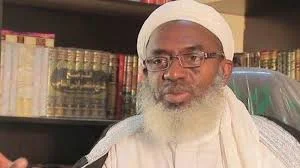
Kaduna-based Islamic cleric Ahmad Gumi has alleged that American intelligence agencies are behind the activities of bandits and Boko Haram terrorists in Nigeria. Gumi made the claim in a Facebook post on Saturday while reacting to comments by Mike Arnold, who had spoken about the alleged persecution of Christians in Nigeria.
Gumi accused Arnold of promoting a false narrative about Christian killings while ignoring the insecurity affecting parts of northern Nigeria. He wrote that bandits and Boko Haram are “allegedly sponsored by the same American intelligence.” Gumi added: “One of the things Islam abhors is lies and liars.”
Key Points:
Gumi’s allegation could strain Nigeria-US counterterrorism cooperation if taken seriously.
The cleric’s claims may fuel anti-American sentiment among Nigerians already frustrated with insecurity.
Families of victims of banditry and Boko Haram attacks may feel their suffering is being used for political narratives.
The US government has not responded to Gumi’s allegations at the time of this report.
The timing of this claim, amid ongoing counterterrorism talks between Nigerian and US officials, is highly sensitive.
Sources: Daily Post Nigeria
👉 Are You A WhatsApp User? Do You Want To Get Our News As Fast As Possible On Daily Basis? 👉 Click This Link To Join WhatsApp Channel Now.
Breaking News
Airstrike Kills Several Civilians in Niger Village During Military Pursuit of Terrorists
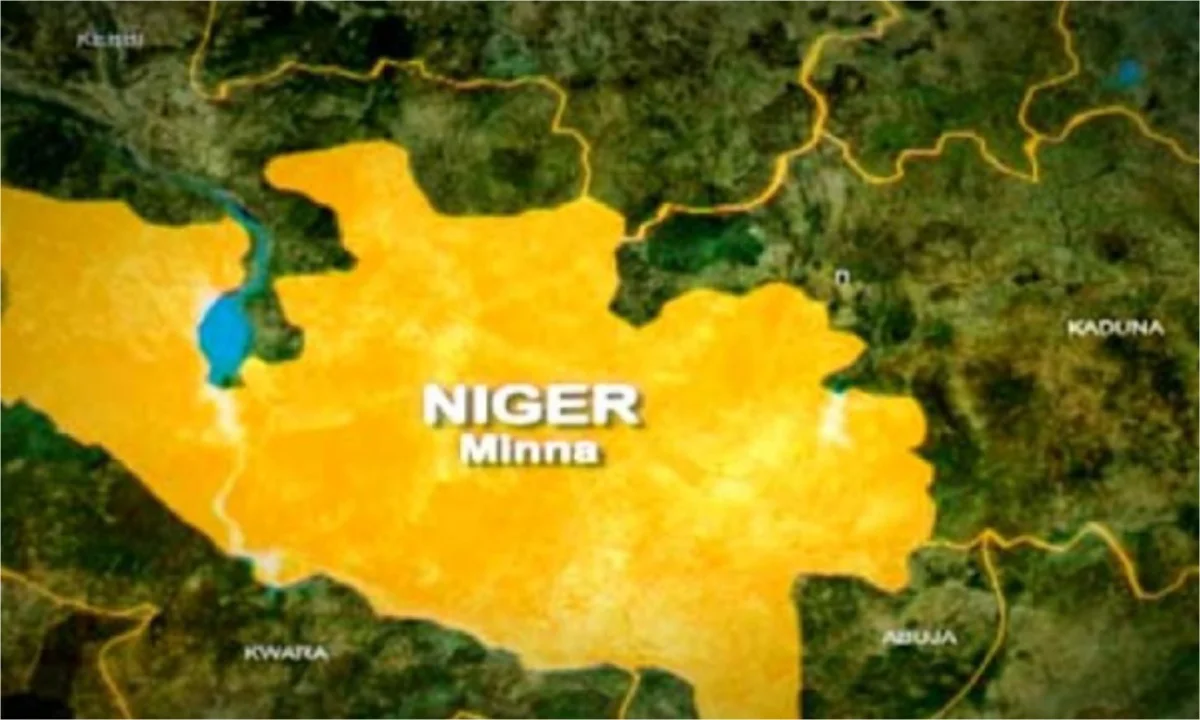
Several civilians were reportedly killed after a military airstrike hit Guradnayi village near Kusasu in Shiroro Local Government Area of Niger State early on Sunday morning.
According to Premium Times, residents said the attack happened around 5 am and followed the movement of armed terrorists on motorcycles through the area.
A resident of Kusasu said at least 12 people died in the house of one of his relatives in Guradnayi, including his cousin’s son. Residents claimed military aircraft were pursuing terrorists before the bombs were dropped. The Nigerian Air Force has not yet released an official statement.
Key Points:
Families in rural Niger State have lost multiple relatives in a single night of bombing.
Accidental airstrikes continue to kill civilians instead of the terrorists they target.
Residents fleeing from terrorists were reportedly among those killed in their homes.
Communities now face the impossible choice: stay and face bandits, or flee and face bombs.
Timing of this incident, without an official statement, leaves families in agonising uncertainty.
Sources : Daily Post Nigeria
👉 Are You A WhatsApp User? Do You Want To Get Our News As Fast As Possible On Daily Basis? 👉 Click This Link To Join WhatsApp Channel Now.

A cruise ship where hantavirus cases were detected has arrived in Spain’s Canary Islands. The vessel docked after reports emerged of passengers infected with the rare and potentially deadly rodent-borne virus. Local health authorities are expected to implement quarantine and testing protocols for affected passengers and crew.
The situation has raised concerns about the spread of infectious diseases on international cruise liners. Further details on the number of cases and the severity of infections are awaited from Spanish health officials.
Key Points:
Passengers and crew on board face potential quarantine and health monitoring.
The cruise industry may face renewed scrutiny over infectious disease protocols.
Tourists planning cruises could reconsider bookings following the outbreak.
Local health systems in the Canary Islands must prepare for possible hospital admissions.
The timing of the arrival, peak tourist season, could impact regional tourism.
Watch for updates from Spanish health authorities on the number of confirmed cases and any quarantine measures implemented.
Sources: AFP
👉 Are You A WhatsApp User? Do You Want To Get Our News As Fast As Possible On Daily Basis? 👉 Click This Link To Join WhatsApp Channel Now.

 Breaking News8 months ago
World’s Youngest Undergraduate is Nigerian JOSHUA BECKFORD, gained admission in Oxford University at the age of Six years
 Breaking News6 months ago
JUST IN: Finally United States President Donald Trump Revokes 80,000 Visas of Nigerians, Other Foreign Nationals

 Breaking News8 months ago
BREAKING NEWS: Woman in Trouble For Burning 7-year-old Girl’s Private Parts With Hot Knife

 Breaking News8 months ago
BREAKING NEWS: FULL DETAILS! Top Secret Leaked Why SIM Fubara Fails to Return to Government House After Reinstatement

 Breaking News6 months ago
BREAKING NEWS: Nigerian Billionaire Lawmaker Ned Nwoko, Orders Arrest of His Mother In Law Regina Daniels’ Mother, Rita
 Breaking News8 months ago
BREAKING NEWS: Federal Government Releases Proof of N25,000 Cash Transfers to 71 Million Nigerians in 8.1 Million Households

 Breaking News8 months ago
BREAKING NEWS: Another Rivers Saga: Just Reinstated Fubara Told to Sack All Sole Administrators Appointees, Seek Tinubu’s Assurance Over Impeachment
 Breaking News8 months ago
BREAKING NEWS: Finally Department of State Services (DSS) summons Sowore over post on Tinubu