
Breaking News
‘I’d rather hawk groundnuts than do hookup’

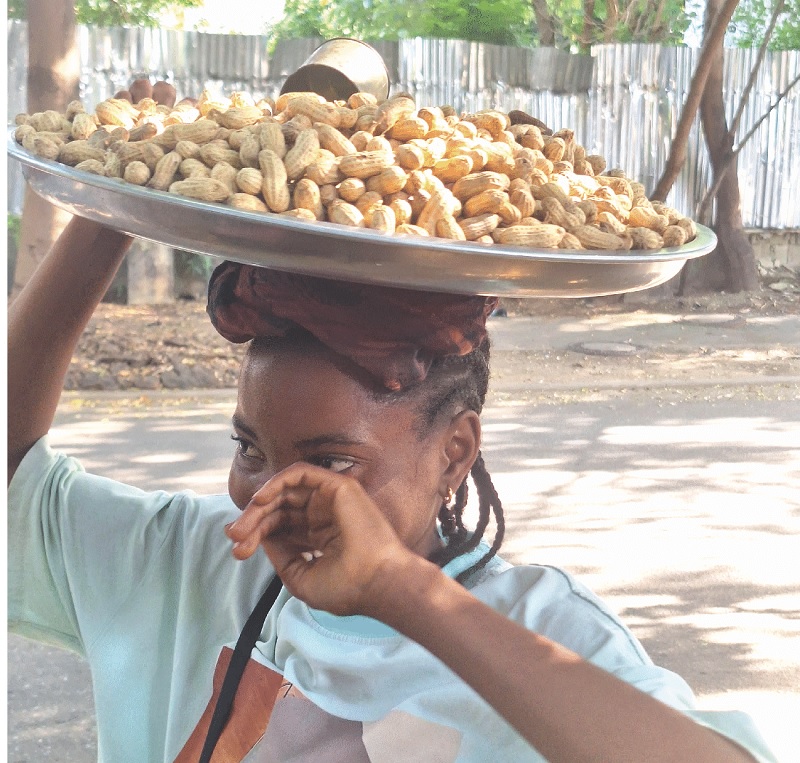
Assistant Editor, Jide Babalola in this piece, captures the story of final-year female varsity student who keeps faith with dignity in season of despair.
Principle or convenience? For one 21-year-old female Nigerian undergraduate, that question isn’t theoretical. Forget the lecture hall; the most powerful lesson is being taught from a groundnut tray. While the path of least temptation beckons many of her generation, she has chosen a harder road – one paved not with quick cash, but with groundnuts and daily treks. It is a real-life drama where integrity wins the final act. Her story is a defiant answer to the pressures that ensnare so many.
At dusk, when the sun loosens its grip on Abuja’s ring of suburbs and the road begins to glitter with brake lights, a young woman walks behind her mother with a tray balanced like a halo. Daily, the day’s sale of boiled groundnut is concluded with much sweat and toil under the sweltering Abuja sun but still, the rhythm of survival hums from her step. When you encounter her just before sundown, she smiles cautiously, makes her pitch, counts out small change. Then she slips her small phone back into her pocket and whispers the vow that has carried her through the hardest of seasons: “I’d rather hawk groundnuts than do hookup.”
An Igarra from Auchi area of Edo State, her name is Deborah Lawani, 21, a final-year student of the University of Abuja. She is one of four children—two boys, two girls—raised by a mother who turned grief into a stall by the roadside. Their single room in Masaka, on the far edge of the Federal Capital Territory, holds a family of five and a stubborn hope that refuses to be evicted.
In an age when cynicism does brisk business—“This generation is lost,” people mutter—Deborah’s quiet orbit lays a modest ambush on despair. She is a reminder that moral courage often arrives without fanfare: a young woman walking a narrow path in a city where temptation dresses up as necessity and calls itself hustle.
“The day my father left was the day I was writing Common Entrance examination towards getting into secondary school,” she recalls, voice steady, eyes briefly clouded. Long before then, memories of her primary school days had left scarring impact on her fragile mind. “He used to drink, he used to smoke. When my mother advised him, he beat her. One day he brought divorce papers. Maybe he thought she would fight, but she had already suffered enough.” The sentence lands with the weight of a Bible verse: after so much sorrow, some endings feel like mercy.
Left with four children and very little else, her mother did what many unschooled women do to outrun hunger—she went out to the road to sell groundnuts. “That is how we have been living,” Deborah says. “I help her whenever there is a break from school. During the last two-week warning strike, I came back to hawk. Now that they’ve called it off, I will return to campus.”
To watch her by the toll of evening traffic is to see the republic of the resilient at work: women who bend without breaking, men who bargain with a smile shaped by hardship, children who memorise the choreography of danger between bumpers and buses. Abuja is a city of glass towers and tin roofs, of new money and old hunger. If you listen closely, you hear the arithmetic of survival in the clatter of coins.
On campus, Deborah’s life is another ledger—of odd jobs and dignity. “There is nothing I don’t do to support myself,” she says, not as apology but as mantra. “When students move into new accommodation, I clean and mop. Some people don’t know how to cook; I cook for them and they pay something. I make hair. I sell peppermint. I am not a lazy girl.”
What emerges is not a sob story but a portrait of character, the thing the old philosophers insisted was formed by habit—choosing, one day after another, the harder right. Deborah speaks with the piety of someone who has discovered that faith is not only a church thing but a way of tying your life to a promise you cannot yet see. “I believe God will vindicate me and my mother,” she says. “I believe that when I am done with university, I can get a job and take care of my family.”
There are other routes, of course. In Abuja, as in many cities, the euphemism “hookup” floats across conversations like a scented veil. It is the new code for what the old people, without apology, called prostitution, now packaged in the gloss of the smartphone era—fast, discreet, transactional. Many girls consider it, some do it, others justify it. Poverty, after all, is impatient; and the cost-of-living crisis has rearranged the moral furniture in many homes.
Deborah has watched the drift with clear eyes, and she refuses it. “I have seen what other girls do,” she says. “But I will not sell my body. I will not let desperation carry me where I cannot return from. You don’t even know who these men really are. Some bring disease. Some have violence in their hands. Some girls get harmed, even killed. I tell my friends, ‘please, find something else to do. You can sell groundnuts like me. You can clean, you can cook, you can learn hair-making. Don’t let peer pressure decide your life.’”
She says it simply, but something luminous sits behind her words: a belief in the dignity of labour as the old antidote to shame. It is the stubborn ethic our parents sang into us—work is the cure for worklessness—now spoken by a daughter who has watched her mother turn smoke and sand and nuts into a budget.
There is, too, the psychology of a firstborn who understands that her choices whisper instructions to younger siblings. “We are four,” she says, “and I am the first. If I break, they break. So I must stand.” In the cramped economy of that room in Masaka, leadership is not a title; it is what you do with the little in your hands.
Against the chorus that declares Gen Z a lost generation, her life suggests a different reading. Yes, there is excess and there is drift; but there is also grit, courtesy, and moral defiance. The internet can be a highway to ruin, but it has also taught a new generation to improvise, to monetise skill, to learn. If you listen to young Nigerians—really listen—you will find the kind who donate blood to strangers, who crowdfund school fees for classmates, who start small businesses between lectures and night class. Deborah belongs to that quiet company: ordinary heroes disguised as students.
Her days have the measured rhythm of someone who has no time to waste. Lectures. Notes. A cleaning job in the evening. A hair appointment over the weekend. A small batch of peppermint to hawk to course mates who like the sweetness after a meal. And then, when school pauses for any reason, back to the roadside to help the woman who raised her from the ashes of a marriage.
“Help me if you can,” she says with disarming directness, and then—because she is her mother’s daughter—she corrects herself. “If you choose to help my mother, I will be happiest. It is still me you are helping.”
It is an unusual kind of ambition in a time of glittering self: to centre the parent first, to make caring for family the measure of achievement. It took some fatherly reassurances to convince her about parting with her telephone number – 07048444313 – in case one or two readers of The Nation want to help her out.
There is always the temptation, in stories like this, to make poverty a spectacle or to baptise suffering as a virtue. Deborah resists both. What she articulates is moral clarity under pressure. Not a saint’s perfection, but a young Nigerian’s stubborn insistence that her body is not for sale, that work – however humble – is better than a bargain that wounds the soul.
Her resolve is also a quiet indictment of a society that too easily blames the young while underfunding schools, underpaying labour, and outsourcing hope. If more girls took this path, society would blossom. If society made this path less brutal, more girls could take it.
👉 Are You A WhatsApp User? Do You Want To Get Our News As Fast As Possible On Daily Basis? 👉 Click This Link To Join WhatsApp Channel Now.
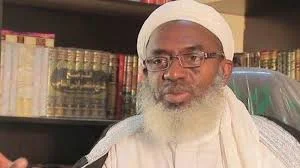
Kaduna-based Islamic cleric Ahmad Gumi has alleged that American intelligence agencies are behind the activities of bandits and Boko Haram terrorists in Nigeria. Gumi made the claim in a Facebook post on Saturday while reacting to comments by Mike Arnold, who had spoken about the alleged persecution of Christians in Nigeria.
Gumi accused Arnold of promoting a false narrative about Christian killings while ignoring the insecurity affecting parts of northern Nigeria. He wrote that bandits and Boko Haram are “allegedly sponsored by the same American intelligence.” Gumi added: “One of the things Islam abhors is lies and liars.”
Key Points:
Gumi’s allegation could strain Nigeria-US counterterrorism cooperation if taken seriously.
The cleric’s claims may fuel anti-American sentiment among Nigerians already frustrated with insecurity.
Families of victims of banditry and Boko Haram attacks may feel their suffering is being used for political narratives.
The US government has not responded to Gumi’s allegations at the time of this report.
The timing of this claim, amid ongoing counterterrorism talks between Nigerian and US officials, is highly sensitive.
Sources: Daily Post Nigeria
👉 Are You A WhatsApp User? Do You Want To Get Our News As Fast As Possible On Daily Basis? 👉 Click This Link To Join WhatsApp Channel Now.
Breaking News
Airstrike Kills Several Civilians in Niger Village During Military Pursuit of Terrorists
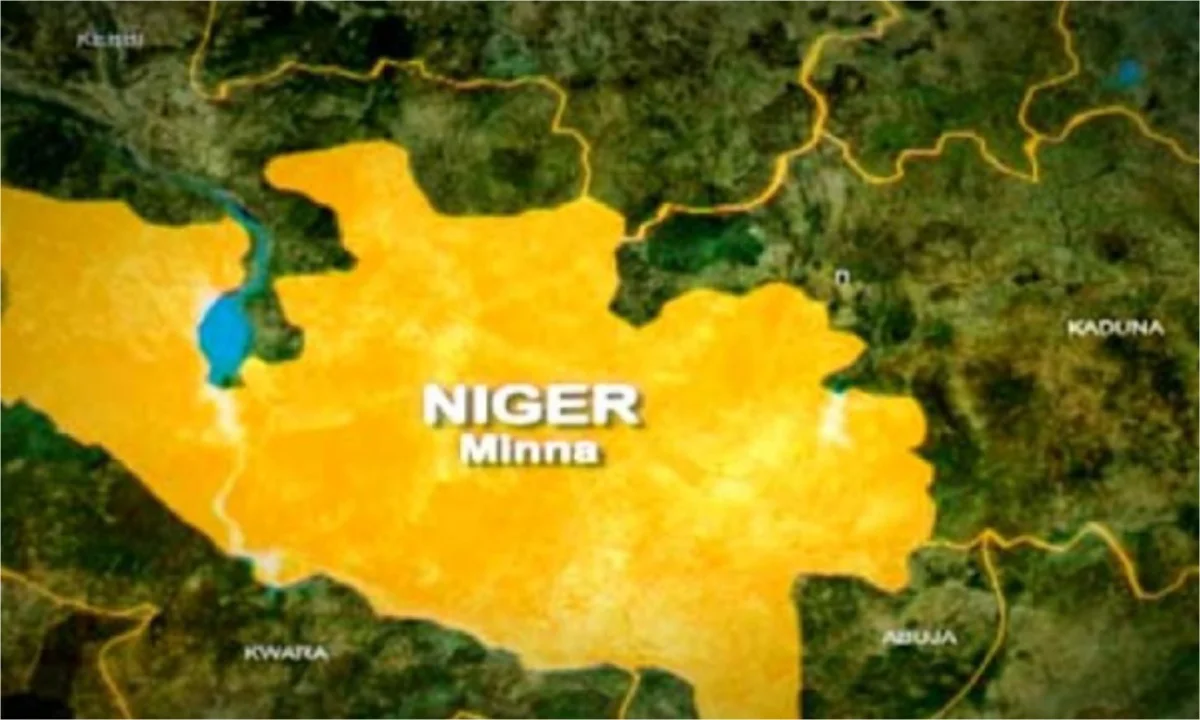
Several civilians were reportedly killed after a military airstrike hit Guradnayi village near Kusasu in Shiroro Local Government Area of Niger State early on Sunday morning.
According to Premium Times, residents said the attack happened around 5 am and followed the movement of armed terrorists on motorcycles through the area.
A resident of Kusasu said at least 12 people died in the house of one of his relatives in Guradnayi, including his cousin’s son. Residents claimed military aircraft were pursuing terrorists before the bombs were dropped. The Nigerian Air Force has not yet released an official statement.
Key Points:
Families in rural Niger State have lost multiple relatives in a single night of bombing.
Accidental airstrikes continue to kill civilians instead of the terrorists they target.
Residents fleeing from terrorists were reportedly among those killed in their homes.
Communities now face the impossible choice: stay and face bandits, or flee and face bombs.
Timing of this incident, without an official statement, leaves families in agonising uncertainty.
Sources : Daily Post Nigeria
👉 Are You A WhatsApp User? Do You Want To Get Our News As Fast As Possible On Daily Basis? 👉 Click This Link To Join WhatsApp Channel Now.

A cruise ship where hantavirus cases were detected has arrived in Spain’s Canary Islands. The vessel docked after reports emerged of passengers infected with the rare and potentially deadly rodent-borne virus. Local health authorities are expected to implement quarantine and testing protocols for affected passengers and crew.
The situation has raised concerns about the spread of infectious diseases on international cruise liners. Further details on the number of cases and the severity of infections are awaited from Spanish health officials.
Key Points:
Passengers and crew on board face potential quarantine and health monitoring.
The cruise industry may face renewed scrutiny over infectious disease protocols.
Tourists planning cruises could reconsider bookings following the outbreak.
Local health systems in the Canary Islands must prepare for possible hospital admissions.
The timing of the arrival, peak tourist season, could impact regional tourism.
Watch for updates from Spanish health authorities on the number of confirmed cases and any quarantine measures implemented.
Sources: AFP
👉 Are You A WhatsApp User? Do You Want To Get Our News As Fast As Possible On Daily Basis? 👉 Click This Link To Join WhatsApp Channel Now.

 Breaking News8 months ago
World’s Youngest Undergraduate is Nigerian JOSHUA BECKFORD, gained admission in Oxford University at the age of Six years

 Breaking News6 months ago
JUST IN: Finally United States President Donald Trump Revokes 80,000 Visas of Nigerians, Other Foreign Nationals

 Breaking News8 months ago
BREAKING NEWS: Woman in Trouble For Burning 7-year-old Girl’s Private Parts With Hot Knife

 Breaking News8 months ago
BREAKING NEWS: FULL DETAILS! Top Secret Leaked Why SIM Fubara Fails to Return to Government House After Reinstatement

 Breaking News6 months ago
BREAKING NEWS: Nigerian Billionaire Lawmaker Ned Nwoko, Orders Arrest of His Mother In Law Regina Daniels’ Mother, Rita

 Breaking News8 months ago
BREAKING NEWS: Federal Government Releases Proof of N25,000 Cash Transfers to 71 Million Nigerians in 8.1 Million Households

 Breaking News8 months ago
BREAKING NEWS: Another Rivers Saga: Just Reinstated Fubara Told to Sack All Sole Administrators Appointees, Seek Tinubu’s Assurance Over Impeachment

 Breaking News8 months ago
BREAKING NEWS: Finally Department of State Services (DSS) summons Sowore over post on Tinubu
Gladys oloye
November 30, 2025 at 11:27 am
Wow what a good girl