
Breaking News
Childhood Homelessness Drove Me To Build 100 Free Homes For Widows — Dr Umma Sani


The chief executive officer, Adashe Women Housing and Empowerment Society, Dr Umma Sani, has said her difficult upbringing as an orphan and the repeated trauma of homelessness inspired her lifelong commitment to providing free housing for widows and orphans across the country.
She stated this in Rigachikun, Igabi local government area of Kaduna State, during the formal handover of keys and allocation letters for 100 newly completed housing units to beneficiaries.
The project, delivered through a partnership involving Adashe Women Housing and Empowerment Society, Family Homes Funds Limited and the Federal Ministry of Budget and Economic Planning, is one of the key social housing interventions aligned with President Bola Ahmed Tinubu’s Renewed Hope Agenda.
Speaking with journalists after the ceremony, Dr. Sani said the housing units represent more than physical structures, describing them as “a pathway to dignity and stability” for widows who shoulder the burden of raising children without financial or emotional support...TAP TO CONTINUE FULL READING.
According to her, the support from Family Homes Funds and the Ministry of Budget and Economic Planning was critical in executing the initiative at the current scale.
“Today, 100 women have been given more than a home; they have been given shelter, peace and a serene environment where they can raise their children,” she said. “Adashe Women Housing conceptualised the idea, but Family Homes partnered with us, and the Ministry under the Honourable Minister, Alhaji Atiku Bagudu, supported us. That is how this project came to life. We give glory to God.”
Dr. Sani explained that the housing project is part of a broader empowerment plan aimed at helping widows attain economic independence.
“We empowered them with starter packs and provided the basic tools they need to begin small businesses. The idea is not just to give houses, but to equip them to stand on their feet,” she noted.
She expressed satisfaction with the beneficiaries’ enthusiasm throughout the training sessions, adding that the successful completion of the programme prepared them for the next phase of their lives.
“This is a wonderful day for all of us. The widows completed their training and have now collected their keys and allocation letters. We are grateful,” she said.
Dr. Sani disclosed that the 100-unit delivery represents only the pilot phase, as the organisation plans to replicate the initiative across all 36 states of the federation.
“This is just the beginning. Our goal is to ensure widows and orphans across Nigeria have a safe place to call home,” she added.
Reflecting on her motivation, Sani became emotional as she narrated her childhood experiences. The last of 11 children, she recalled growing up in constant fear of eviction due to her family’s inability to pay rent.
“I lost my father when I was a year old. Many times, I returned home from school to find our belongings thrown outside because we could not pay rent,” she recounted.
She said she initially envisioned building only a few houses but was humbled by how far the vision has grown.
“I thought I would start with three, five or ten houses. But today, by God’s grace, we have given out 100 houses free of charge. Alhamdulillah.”
Representing the Kaduna State Government, the permanent secretary, Ministry of Housing Development, Shehu Salisu, reaffirmed the commitment of both federal and state governments to expanding access to affordable housing for vulnerable citizens.
He urged the beneficiaries—particularly the widows—to maintain the property, noting that proper upkeep would encourage government to replicate similar interventions.
Also speaking, the managing director, Family Homes Funds Limited, Abdul Muktar, reminded beneficiaries to embrace a strong maintenance culture, noting that housing remains one of the most critical human needs.
He disclosed that the organisation is undertaking similar projects in Ibadan and Calabar, with the Ibadan scheme targeted at families of fallen military heroes and the Calabar project designed to support vulnerable households.
One of the beneficiaries, Mrs. Sarah Owojere, described the intervention as “a dream come true,” stating that years of living in unsafe, flood-prone conditions made the allocation a turning point for her family.
“I am very happy. God has granted my heart’s desire because the house I was living in was not good at all,” she said.
👉 Are You A WhatsApp User? Do You Want To Get Our News As Fast As Possible On Daily Basis? 👉 Click This Link To Join WhatsApp Channel Now.

The Central Bank of Nigeria (CBN) has introduced new Bank Verification Number (BVN) rules effective from May 1, 2026, aimed at reducing fraud, especially SIM swap and identity theft cases. The regulations include stricter controls on phone number changes, age restrictions, device limits, and temporary account restrictions for suspicious activities. Here is a simple breakdown of what you need to know.
One phone number change in a lifetime – Customers can only change the phone number linked to their BVN once. Choose carefully.
24-hour watchlist for suspicious BVNs – Banks can temporarily restrict accounts flagged for suspicious activity while investigations are conducted.
BVN registration is now for adults only – Only individuals aged 18 and above can independently register for a BVN. Minors require guardian-linked arrangements.
One device per banking app – You can only use your banking app on one device at a time. Switching devices triggers a 24-hour transaction limit of N20,000.
Authorised channels only – BVN services are now limited to CBN-approved banks and financial institutions. Avoid third-party apps or unofficial agents.
The new rules may feel strict, but they are designed to protect your money and reduce fraud. Be more careful with your phone number, devices, and banking activities to avoid unnecessary restrictions...TAP TO CONTINUE FULL READING.
Sources: Nigerian Tribune
👉 Are You A WhatsApp User? Do You Want To Get Our News As Fast As Possible On Daily Basis? 👉 Click This Link To Join WhatsApp Channel Now.
Breaking News
‘Nigeria is a safe country’ Reno Omokri Tells Portuguese Ambassador Who Drives Nigeria Highways Without Escort, Calls Trips Safe
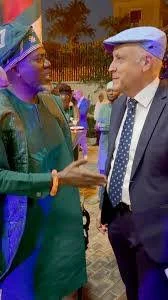
The Portuguese Ambassador to Nigeria has driven from Abuja to Bauchi and back without a security escort, describing the journeys as “very normal” and safe. Reno Omokri shared a video of the ambassador, praising Nigeria’s overall safety under President Tinubu. The ambassador also reportedly drove from Enugu to Abuja without incident. However, critics point to over 1,000 abductions since January 2026 and frequent highway kidnappings, questioning the safety claims.
Key Points:
Critics noted bandit attacks in Bauchi and other regions.
Many questioned why top Nigerian officials don’t take the same unescorted routes.
The ambassador acknowledged “some localized issues” but highlighted safety overall.
Over 1.5 million safe visitors to Lagos during the December holidays were cited.
Social media users expressed a divide between official accounts and citizens’ realities...TAP TO CONTINUE FULL READING.
The ambassador’s experience contrasts sharply with the lived reality of many Nigerians.
Sources: X
I Drove From Abuja To Bauchi And Back Without An Escort And It Was Safe-Paulo Santos, Portuguese Ambassador To Nigeria pic.twitter.com/GZmEJTHi0p
— Reno Omokri (@renoomokri) April 30, 2026
👉 Are You A WhatsApp User? Do You Want To Get Our News As Fast As Possible On Daily Basis? 👉 Click This Link To Join WhatsApp Channel Now.
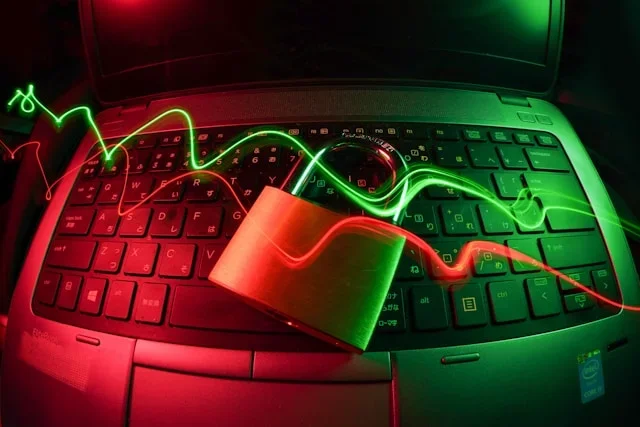
More than 1,000 victims across 19 countries were defrauded of about $215 million in a sprawling business email compromise scheme, leading to convictions of Nigerian nationals, the US attorney’s office has said. Twenty-five defendants were convicted on April 24. Among them were four Nigerian nationals and five naturalised US citizens of Nigerian descent. The scheme involved hacking email accounts and crafting fraudulent payment requests.
Key Points:
Victims were located in the US, UK, Germany, UAE, Australia, and 14 other countries.
One victim’s business sent $2.7 million to a shell company account.
Seized items included luxury watches worth over $215,000 and a Georgia residence.
The FBI, US Postal Inspection Service, and Border Patrol conducted the investigation.
A Chicago-area money service business owner was a co-defendant...TAP TO CONTINUE FULL READING.
Each defendant’s sentence will be determined based on their role and criminal history.
Sources: The Cable, Punch
👉 Are You A WhatsApp User? Do You Want To Get Our News As Fast As Possible On Daily Basis? 👉 Click This Link To Join WhatsApp Channel Now.

 Breaking News8 months ago
World’s Youngest Undergraduate is Nigerian JOSHUA BECKFORD, gained admission in Oxford University at the age of Six years
 Breaking News6 months ago
JUST IN: Finally United States President Donald Trump Revokes 80,000 Visas of Nigerians, Other Foreign Nationals
 Breaking News8 months ago
BREAKING NEWS: Woman in Trouble For Burning 7-year-old Girl’s Private Parts With Hot Knife
 Breaking News8 months ago
BREAKING NEWS: FULL DETAILS! Top Secret Leaked Why SIM Fubara Fails to Return to Government House After Reinstatement
 Breaking News6 months ago
BREAKING NEWS: Nigerian Billionaire Lawmaker Ned Nwoko, Orders Arrest of His Mother In Law Regina Daniels’ Mother, Rita
 Breaking News8 months ago
BREAKING NEWS: Federal Government Releases Proof of N25,000 Cash Transfers to 71 Million Nigerians in 8.1 Million Households
 Breaking News8 months ago
BREAKING NEWS: Another Rivers Saga: Just Reinstated Fubara Told to Sack All Sole Administrators Appointees, Seek Tinubu’s Assurance Over Impeachment
 Breaking News8 months ago
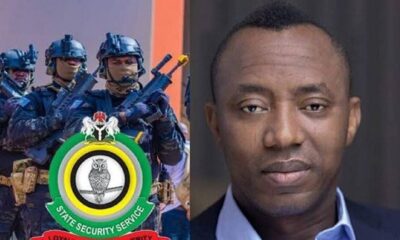
BREAKING NEWS: Finally Department of State Services (DSS) summons Sowore over post on Tinubu