
Breaking News
BREAKING NEWS: Jehovah’s Witness Cancer Patient Under Fire For Rejecting Chemotherapy Despite ‘N30m Donations’

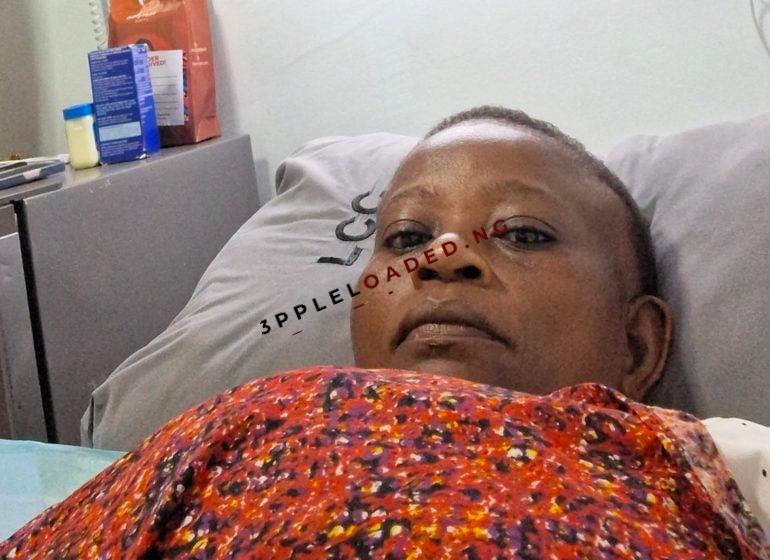
An X user identified as Aunty Esther has faced criticism after announcing that she would not begin chemotherapy due to her religious beliefs as a Jehovah’s Witness.
On November 24, the businesswoman took to X, expressing fear over her deteriorating health.
“I’m scared. All I want is to live, I don’t want to die. Please believe me when I say something is wrong. My breast is swollen and I desperately need help,” she wrote.
Good morning Good afternoon Good evening.
I know say a lot of people want update.I say make I tell una, my result don come out. I thank all of you for your money contributions.
Doc tell @auntymuse_, myself and my husband the results. Nah my breast and armpit the cancer dey pic.twitter.com/sdpveBK01v
— Auntieesther pepper girl 🍅 🌶market shopper (@MensahOmolola) December 4, 2025
Her post quickly gained attention and sympathy online, with Nigerians reportedly donating over ₦30 million to support her cancer treatment.
Aunty Esther wanted soup as swallow is her go-to food. That is the bill for the soup. The soup plus delivery cost N74k.
Balance brought forward, this 1st day of December, 2025
N30,776,252
.
.
.
Thank you for your kindness 🙏🏾 pic.twitter.com/Q5X5d7s9Ok— Sir Dickson (@Wizarab10) December 1, 2025
But in another post on Thursday, Esther revealed that cancer was found in her breast and armpit, noting that her internal organs remained stable.
According to her, doctors recommended an immediate start of chemotherapy, but she declined blood transfusion required to optimise her blood count before treatment.
“I say make I tell una, my result don come out. I thank all of you for your money contributions,” she wrote.
“Doc tell @auntymuse_, myself and my husband the results. Nah my breast and armpit the cancer dey. My organs inside fine fine.
“Doc say she want to start chemotherapy but I go take the injection. I respect everyone opinion but I and my family choose the Injection and food dat go boost my blood.
“Doc accept my decision, and she say she go follow me but nah small small e go reach when I go start the chemo. I will be on treatment to boost the blood count and chemo will start.”
My organs inside fine fine.
Doc say she want to start chemotherapy but I go take the injection. I respect everyone opinion but I and my family choose the Injection and food dat go boost my blood.
— Auntieesther pepper girl 🍅 🌶market shopper (@MensahOmolola) December 4, 2025
Esther had reportedly received over N4 million donations in June but opted for treatment outside recommended medical facilities to avoid blood-related procedures.
Jehovah’s Witness doctrine prohibits the use of blood transfusions, including whole blood and major blood components.
Her decision has triggered backlash from many Nigerians on X, with some donors asking for refunds and accusing her of misleading the public about being ready for full medical care.
Critics argued that her refusal contradicted her earlier claim that she would follow medical recommendations once funds were raised.
While others expressed sympathy, saying she has the right to uphold her faith.
“I think you should go to your church to contribute for you. Because I don’t think people will contribute again,” a user wrote.
Another user wrote: “Religion is really affecting a lot of Nigerians, honestly. Because of your church beliefs, you chose an alternative treatment. After all the rigmarole, we still ended up here. It’s okay, hope it works for you.”
See more reactions below.
Nothing disgusts me more than, watching the motion of an ingrate.
There's nothing special about Aunty Esther.
Strangers who owe you nothing, pooled together resources to keep you alive but look at you choosing death through religion.
Same religion that can't heal you.
— 👑S.A.L.A.K.O🕊 (@UnkleAyo) December 5, 2025
👉 Are You A WhatsApp User? Do You Want To Get Our News As Fast As Possible On Daily Basis? 👉 Click This Link To Join WhatsApp Channel Now.
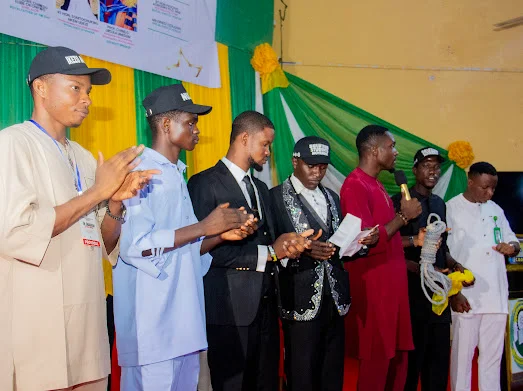
Beneficiaries of the Nigerian Education Loan Fund (NELFUND) in Anambra State have endorsed President Bola Tinubu for a second term in office and donated N10,735,500 towards the purchase of his expression of interest form. Speaking at Chukwuemeka Odumegwu Ojukwu University in Igbariam on Friday, the Chairman of the National Association of Nigerian Students Joint Campus Council in Anambra State, Ifeanyichukwu Chukwuemeka, described the gesture as a show of appreciation for Tinubu’s educational reforms and youth-focused policies. The students said the endorsement recognises the impact of the loan scheme on access to higher education.
Key Points:
Students who benefited from government loans are now publicly backing the president’s re-election.
The N10.7 million donation raises questions about where students sourced such a large sum.
Other NELFUND beneficiaries across Nigeria may feel pressure to show similar political support.
The president’s educational policies gain visible grassroots validation from direct beneficiaries.
The timing of this endorsement, well before the 2027 election, helps build early momentum for Tinubu’s campaign.
Sources: The Punch
👉 Are You A WhatsApp User? Do You Want To Get Our News As Fast As Possible On Daily Basis? 👉 Click This Link To Join WhatsApp Channel Now.

Operatives of the Lagos State Police Command have rescued four kidnapped children from suspected traffickers at the Alafia Bus Terminal in Coker-Orile and reunited them with their families.
The rescue occurred on Thursday, May 8, 2026, at about 11:40 p.m. during a routine patrol. The children were found with an unidentified woman who was about to board a luxurious bus heading out of Lagos State. The suspect abandoned the children and fled when she noticed the approaching patrol officers. The children had allegedly been kidnapped from the Ijesha-Tedo area of Lagos.
Key Points:
Four families can sleep peacefully knowing their children have been returned safely.
The suspect fleeing on sight suggests an organised child trafficking network operating in Lagos.
Late-night travel with unrelated children should raise red flags for transport workers and passengers.
The police patrol’s vigilance at a bus terminal shows the importance of routine checks in public spaces.
Sources: Vanguard
👉 Are You A WhatsApp User? Do You Want To Get Our News As Fast As Possible On Daily Basis? 👉 Click This Link To Join WhatsApp Channel Now.
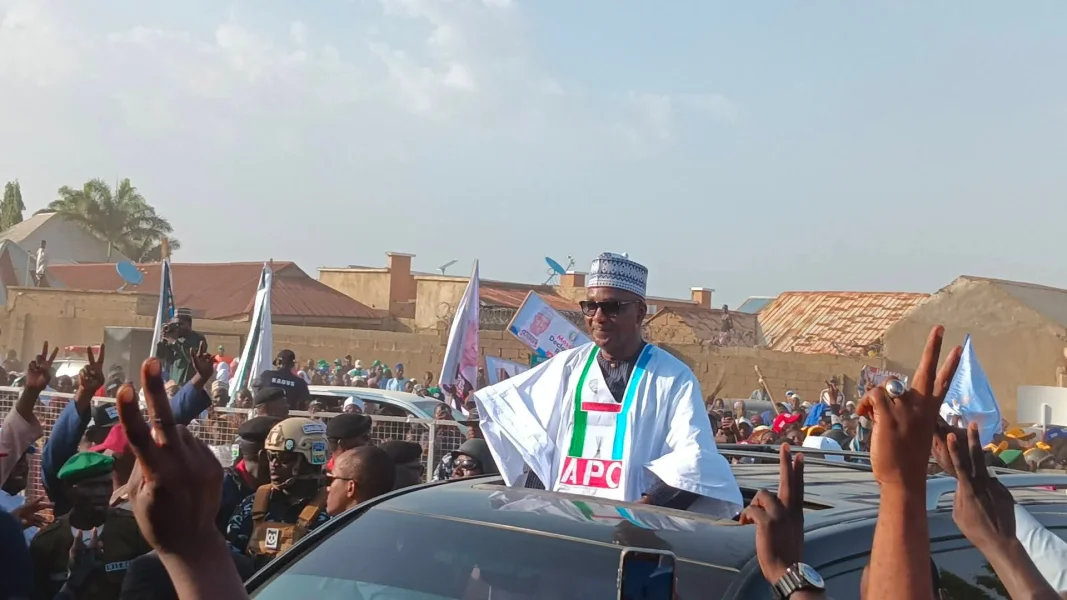
Speaker of the House of Representatives, Rt. Hon. Abbas Tajudeen, on Saturday, launched his fifth-term bid at a grand ceremony in Zaria, Kaduna State. Declaring his intention at the Mallawa Eid Ground, Abbas listed the democratic dividends his representation has attracted to Zaria Federal Constituency.
Thousands of supporters embarked on a solidarity walk before the declaration. Abbas stated he has sponsored 74 bills, with 21 signed into law, and distributed 117 vehicles, 200 tricycles, 1,000 motorcycles, and direct financial support to over 4,000 beneficiaries. Abbas was first elected to the House of Representatives in 2011.
Key Points:
Constituents who have benefited from Abbas’s empowerment programmes may feel motivated to re-elect him.
Opponents may question whether representing the same constituency for five terms limits fresh perspectives.
The Speaker’s focus on constituency projects sets a benchmark for other lawmakers seeking re-election.
His legislative record (74 bills, 21 signed into law) provides measurable evidence of parliamentary activity.
The timing of this declaration, ahead of the 2027 elections, allows Abbas to consolidate grassroots support early.
Sources: Daily Trust
👉 Are You A WhatsApp User? Do You Want To Get Our News As Fast As Possible On Daily Basis? 👉 Click This Link To Join WhatsApp Channel Now.

 Breaking News8 months ago
World’s Youngest Undergraduate is Nigerian JOSHUA BECKFORD, gained admission in Oxford University at the age of Six years
 Breaking News6 months ago
JUST IN: Finally United States President Donald Trump Revokes 80,000 Visas of Nigerians, Other Foreign Nationals

 Breaking News8 months ago
BREAKING NEWS: Woman in Trouble For Burning 7-year-old Girl’s Private Parts With Hot Knife
 Breaking News8 months ago
BREAKING NEWS: FULL DETAILS! Top Secret Leaked Why SIM Fubara Fails to Return to Government House After Reinstatement
 Breaking News6 months ago
BREAKING NEWS: Nigerian Billionaire Lawmaker Ned Nwoko, Orders Arrest of His Mother In Law Regina Daniels’ Mother, Rita
 Breaking News8 months ago
BREAKING NEWS: Federal Government Releases Proof of N25,000 Cash Transfers to 71 Million Nigerians in 8.1 Million Households
 Breaking News8 months ago
BREAKING NEWS: Another Rivers Saga: Just Reinstated Fubara Told to Sack All Sole Administrators Appointees, Seek Tinubu’s Assurance Over Impeachment

 Breaking News8 months ago
BREAKING NEWS: Finally Department of State Services (DSS) summons Sowore over post on Tinubu