
Breaking News
10 Dead in Lagos Fire – What to do in a fire outbreak

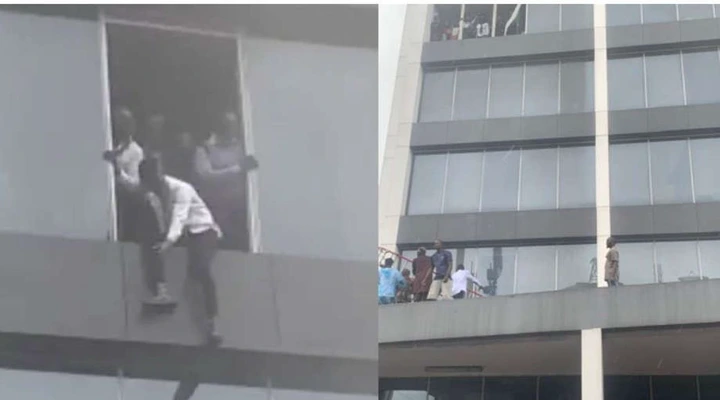
On Tuesday afternoon, September 16, tragedy struck at Afriland Towers, a six-storey commercial building on Broad Street, Lagos Island.
The fire, which reportedly started in the inverter room in the basement around 1:30 pm, quickly spread thick smoke through the building and caused panic among occupants. Employees of United Capital, a financial and investment services firm on the 3rd and 4th floors, were among the worst hit.
The company later confirmed that it lost six members of staff. The Federal Inland Revenue Service (FIRS) also announced the death of four of its staff. This brought the official death toll from the Afriland Towers fire to 10 people...TAP TO CONTINUE FULL READING.
Videos of victims attempting to escape through windows went viral on social media as emergency responders were nowhere to be found. In a later statement, the Federal Fire Service, Lagos State Fire and Rescue Service said not everyone made it alive.
A total of nine victims have been rescued. Five individuals have been resuscitated. Several others escaped unhurt, while efforts are ongoing to revive the remaining four
In a country like Nigeria, where fire service response is often delayed and equipment is inadequate, knowing what to do during a fire outbreak can be the difference between life and death.
What To Do During a Fire Outbreak
1. Don’t Panic, Act Fast
Panic causes confusion and delays escape. Stay calm, breathe deeply, and focus on finding the safest way out. Your composure can also help others stay collected.
2. Alert Others
Shout “Fire!” several times to alert others. Don’t waste time gathering belongings, focus on getting out safely.
3. Evacuate
Before opening any door, use the back of your hand to feel the door, knob, and cracks.
If hot: Don’t open. Try another exit.
If cool: Open slowly, prepared to shut it quickly if flames or smoke appear.
Smoke is often deadlier than flames. Crawl low, keeping your head 30–60 cm above the floor, where the air is cleaner. During fires, elevators can fail or trap you. Always use stairways to exit.
4. Fire Extinguisher
If the fire is still small and manageable, use an extinguisher, but only if you’ve been trained. Remember the PASS rule:
Pull the pin
Aim at the base of the fire
Squeeze the handle
Sweep side to side
For wood, paper, or cloth fires, a water or foam extinguisher is best because it cools and soaks the flames. Electrical fires are different; never use water, as it can electrocute you. Instead, use a CO₂ or dry powder extinguisher. In Nigeria, where electrical fires are common, a dry powder extinguisher is the safest all-round option.
5. Seal Yourself In If Trapped
If you cannot escape:
Close doors between you and the fire.
Use wet towels, cloth, or even tape to block cracks and prevent smoke from seeping in.
Call the fire service and give your exact location.
Signal from a window with a cloth or flashlight, but don’t break the glass; falling shards can injure rescuers.
6. Stop, Drop, and Roll
If your clothes catch fire:
Stop moving.
Drop to the ground, covering your face if possible.
Roll back and forth until the flames go out.
Afterwards, cool burns with water for 3–5 minutes and seek medical help.
7. Once You’re Out, Stay Out
Never re-enter a burning building. Firefighters are trained and equipped; re-entry could cost your life.
In Nigeria, emergency response is often unreliable. Fire trucks may arrive late, without enough water, or not at all. That makes personal preparedness critical. Offices, schools, and residential estates should:
Conduct regular fire drills.
Install and maintain extinguishers, smoke alarms, and emergency exits.
Train staff and residents on basic fire safety.
Ultimately, during a fire outbreak, your survival depends on quick thinking, simple safety rules, and knowing alternative exits.
Quickly Watch Before It’s Deleted! See The Hidden Secret And What Will To Nigeria and United States On The 17th of November 2025. It Will Shock You.
👉 Are You A WhatsApp User? Do You Want To Get Our News As Fast As Possible On Daily Basis? 👉 Click This Link To Join WhatsApp Channel Now.

The Central Bank of Nigeria (CBN) has introduced new Bank Verification Number (BVN) rules effective from May 1, 2026, aimed at reducing fraud, especially SIM swap and identity theft cases. The regulations include stricter controls on phone number changes, age restrictions, device limits, and temporary account restrictions for suspicious activities. Here is a simple breakdown of what you need to know.
One phone number change in a lifetime – Customers can only change the phone number linked to their BVN once. Choose carefully.
24-hour watchlist for suspicious BVNs – Banks can temporarily restrict accounts flagged for suspicious activity while investigations are conducted.
BVN registration is now for adults only – Only individuals aged 18 and above can independently register for a BVN. Minors require guardian-linked arrangements.
One device per banking app – You can only use your banking app on one device at a time. Switching devices triggers a 24-hour transaction limit of N20,000.
Authorised channels only – BVN services are now limited to CBN-approved banks and financial institutions. Avoid third-party apps or unofficial agents.
The new rules may feel strict, but they are designed to protect your money and reduce fraud. Be more careful with your phone number, devices, and banking activities to avoid unnecessary restrictions...TAP TO CONTINUE FULL READING.
Sources: Nigerian Tribune
👉 Are You A WhatsApp User? Do You Want To Get Our News As Fast As Possible On Daily Basis? 👉 Click This Link To Join WhatsApp Channel Now.
Breaking News
‘Nigeria is a safe country’ Reno Omokri Tells Portuguese Ambassador Who Drives Nigeria Highways Without Escort, Calls Trips Safe

The Portuguese Ambassador to Nigeria has driven from Abuja to Bauchi and back without a security escort, describing the journeys as “very normal” and safe. Reno Omokri shared a video of the ambassador, praising Nigeria’s overall safety under President Tinubu. The ambassador also reportedly drove from Enugu to Abuja without incident. However, critics point to over 1,000 abductions since January 2026 and frequent highway kidnappings, questioning the safety claims.
Key Points:
Critics noted bandit attacks in Bauchi and other regions.
Many questioned why top Nigerian officials don’t take the same unescorted routes.
The ambassador acknowledged “some localized issues” but highlighted safety overall.
Over 1.5 million safe visitors to Lagos during the December holidays were cited.
Social media users expressed a divide between official accounts and citizens’ realities...TAP TO CONTINUE FULL READING.
The ambassador’s experience contrasts sharply with the lived reality of many Nigerians.
Sources: X
I Drove From Abuja To Bauchi And Back Without An Escort And It Was Safe-Paulo Santos, Portuguese Ambassador To Nigeria pic.twitter.com/GZmEJTHi0p
— Reno Omokri (@renoomokri) April 30, 2026
👉 Are You A WhatsApp User? Do You Want To Get Our News As Fast As Possible On Daily Basis? 👉 Click This Link To Join WhatsApp Channel Now.

More than 1,000 victims across 19 countries were defrauded of about $215 million in a sprawling business email compromise scheme, leading to convictions of Nigerian nationals, the US attorney’s office has said. Twenty-five defendants were convicted on April 24. Among them were four Nigerian nationals and five naturalised US citizens of Nigerian descent. The scheme involved hacking email accounts and crafting fraudulent payment requests.
Key Points:
Victims were located in the US, UK, Germany, UAE, Australia, and 14 other countries.
One victim’s business sent $2.7 million to a shell company account.
Seized items included luxury watches worth over $215,000 and a Georgia residence.
The FBI, US Postal Inspection Service, and Border Patrol conducted the investigation.
A Chicago-area money service business owner was a co-defendant...TAP TO CONTINUE FULL READING.
Each defendant’s sentence will be determined based on their role and criminal history.
Sources: The Cable, Punch
👉 Are You A WhatsApp User? Do You Want To Get Our News As Fast As Possible On Daily Basis? 👉 Click This Link To Join WhatsApp Channel Now.

 Breaking News8 months ago
World’s Youngest Undergraduate is Nigerian JOSHUA BECKFORD, gained admission in Oxford University at the age of Six years

 Breaking News6 months ago
JUST IN: Finally United States President Donald Trump Revokes 80,000 Visas of Nigerians, Other Foreign Nationals

 Breaking News8 months ago
BREAKING NEWS: Woman in Trouble For Burning 7-year-old Girl’s Private Parts With Hot Knife

 Breaking News8 months ago
BREAKING NEWS: FULL DETAILS! Top Secret Leaked Why SIM Fubara Fails to Return to Government House After Reinstatement

 Breaking News6 months ago
BREAKING NEWS: Nigerian Billionaire Lawmaker Ned Nwoko, Orders Arrest of His Mother In Law Regina Daniels’ Mother, Rita

 Breaking News8 months ago
BREAKING NEWS: Federal Government Releases Proof of N25,000 Cash Transfers to 71 Million Nigerians in 8.1 Million Households

 Breaking News8 months ago
BREAKING NEWS: Another Rivers Saga: Just Reinstated Fubara Told to Sack All Sole Administrators Appointees, Seek Tinubu’s Assurance Over Impeachment

 Breaking News8 months ago
BREAKING NEWS: Finally Department of State Services (DSS) summons Sowore over post on Tinubu