
Breaking News
BREAKING NEWS: FG pauses on tax laws guidelines, cites uncertainty

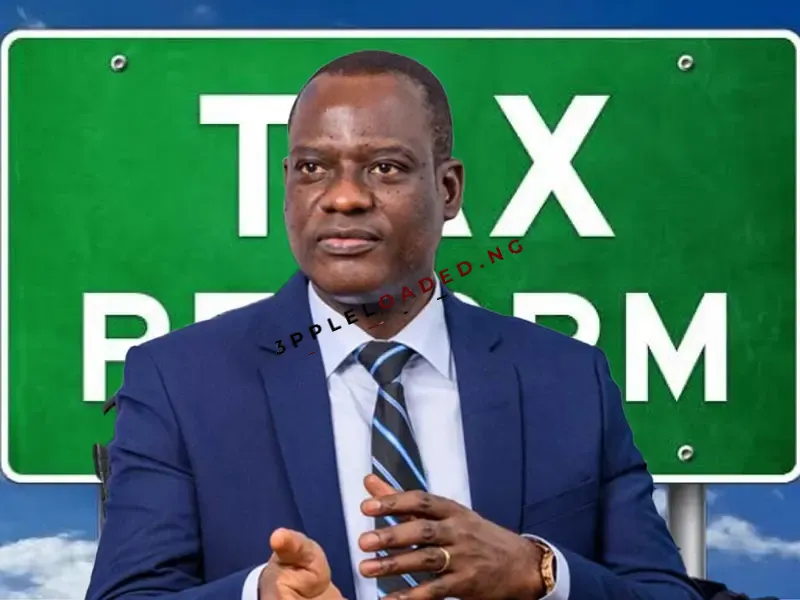
The federal government has halted the issuance of guidelines for the implementation of the new tax laws, citing uncertainty over the final version, Taiwo Oyedele, Chairman, Presidential Tax Reform Committee, has revealed.....TAP TO CONTINUE READING
He said he had told the Nigeria Revenue Service (NRS) and the Joint Revenue Board (JRB) to wait because guidelines on the implementation of tax laws cannot be issued.
Oyedele spoke in Lagos yesterday while responding to questions after delivering a keynote address on the 2026 Economic Outlook organised by the Institute of Chartered Accountants of Nigeria, with the theme ‘ICAN@60: Accountability as the Bedrock for National Development.’
SPONSOR AD
He said concerns over whether the documents currently in circulation represent the final version of the laws prompted him to instruct his team to buy a printed copy of the law from the government’s printer.
He said the feedback from his staff revealed that the National Assembly had taken custody of all printed copies of the tax laws and directed that they should not be sold or made available to the public until lawmakers conclude their review.
Efforts by Daily Trust to get a reaction from the Senate’s spokesman, Senator Yemi Adaramodu (APC, Ekiti South), were unsuccessful as he neither answered several phone calls nor responded to a WhatsApp message seeking his comments on the matter.
Also, calls to the mobile telephone line of the spokesperson of the House of Representatives, Akin Rotimi, did not go through last night.
While acknowledging that legislative review is a normal part of the lawmaking process, Oyedele noted that the restriction on access has reintroduced uncertainty into the tax reform process.
He said: “The Acts Authentication Act says whatever the government printer publishes is the evidence of the law that was passed.
“That government printer published something, which we said is the official version. Lawmakers said it is not what they passed. So, they said they would do their own gazettes.
“They set up their committee, they did their own review, they did their own gazettes. They sent me a copy, soft copy. But that’s not what the Acts Authentication Act says.
“So, I sent my staff, go to the government printer and go and buy. They went there, but as of last week, they said it’s not ready. That they should wait.
“So, I also told everybody, the NRS, JRB, you too wait, because we cannot issue guidelines.
“We are not 100 per cent certain that this is the final official position. I called my staff this (yesterday) morning, I said go back there, follow up every day, go, go there, don’t call them, go and sit down there.
“And I got feedback as I was here that says that… I don’t even know whether I should say this or not because I don’t know what the press will report. But in the interest of accountability and transparency, my staff told me that they said everything that they printed, the National Assembly collected from them and said they shouldn’t sell to anyone; that they want to complete their review. While that is good, it also creates uncertainty again.”
Few changes shouldn’t affect tax laws – FG
The laws — the National Revenue Service (Establishment) Act, the Joint Revenue Board of Nigeria (Establishment) Act, the Nigeria Tax Administration Act, and the Nigeria Tax Act — which took effect on January 1, had elicited criticisms following alleged alterations to the gazetted laws as against the versions passed by the National Assembly.
At the House of Representatives’ plenary in December, Abdussamad Dasuki (PDP, Sokoto) had raised a matter of privilege, alleging discrepancies between the tax laws passed by the National Assembly and the versions gazetted and made available to the public.
Rising under Order Six, Rule Two of the House Rules, Dasuki said his legislative privilege had been breached, insisting that the content of the gazetted tax laws did not reflect what members debated, voted on, and passed.
He said after spending the past three days to carefully review the gazetted copies alongside the Votes and Proceedings of the House as well as the harmonised version adopted by both chambers, he observed discrepancies.
The House later set up a seven-man committee to investigate the allegations and report within one week, which elapsed on December 25.
The legislature on January 3 released Certified True Copies (CTCs) of the approved versions of the tax laws as earlier passed by both chambers and transmitted for presidential assent.
A comparison of the CTCs to the earlier “altered” gazetted versions showed that the discrepancies had been addressed, with the National Assembly approving the versions it passed and disowning the controversial gazetted copies that had stirred public concern.
Few changes shouldn’t affect tax laws – Oyedele
Reacting yesterday to the allegations that the tax laws had been altered, Oyedele downplayed the impact of any changes, saying they should not affect the core provisions of the tax laws.
“So, in other words, what I’ll say to you is, the explanation we have provided about the law, because all this issue of they’ve altered, they’ve not altered, it’s not even a lot.
“There are few items that shouldn’t affect the main thing that people need, nothing about the tax rate, about the tax burden, the filing deadline.
“So, but this is the best I can say to you, as we speak,” he said.
‘Market lost N4.6trn in 1 day due to misinformation’
Oyedele expressed worry over stiff opposition to the tax reforms, including spread of misinformation aimed at undermining the reforms.
The tax expert said some Nigerians were being paid to protest against the report.
“We’ve seen people who have been paid to protest against this reform.
“You see a group, they gave them N30 million to go and protest. In the process of sharing N30 million, this agreement broke. Some of them went to the media and said, we are not doing it again,” he said.
He narrated how misinformation made Nigerian stocks lose a whopping N4.6trn in a day in November 2025.
“The new tax laws exempt someone who sells up to 150 million Naira a year. Why are people selling 1 million Naira in panic? The danger of misinformation. That fake news, because it’s fake, it’s not supported by data, led to real losses for people, including some people whose pensions are with PFAs, lost money,” he said.
Speaking on the theme, Oyedele described accountability as a bridge between reform and results.
“Your reforms can be brilliant. I’ve never seen any reform idea in Nigeria that is not brilliant.
“We’re just not very good with execution. And one of the reasons why execution failed is poor accountability,” he said.
He called on Nigerians and professionals to build trust and seek knowledge while demanding accountability.
“When trust rises, reforms are easier, and resistance to reform declines and results are better. Number two, let’s seek knowledge,” he said.
Experts urge inter-agency engagements for tax laws implementation
At the panel session, the Director-General of the Lagos Chamber of Commerce and Industry (LCCI), Dr Chinyere Almona, demanded interagency engagement during the implementation of the tax reform laws in order to produce the desired result.
Almona noted that usually there are conflicts within the policy execution architecture, while calling for the use of technology and a centralized system in monitoring execution of the policies.
Also speaking, the Director-General of the Manufacturers Association of Nigeria (MAN), Segun Ajayi-Kadir, called for the policy implementation that brings about inclusive growth “without compromising competitiveness.”
He said contribution of the manufacturing sector to the GDP has not been up to 10 per cent, while lamenting the myriad of challenges confronting the sector.
He also expressed worry over what he called escalation of the unsold inventory, which he puts at N2 trillion across the sector.
Earlier, the chairman in session, Mohammed Hayatudeen, noted that Nigeria was entering 2026 with a delicate but defining moment.
He said after the turbulence of the 2023–2024 reform cycle, the economy had regained stability with inflation moderated, the exchange rate stabilised, and external revenue strengthened.
Despite this, Hayatudeen expressed worry that the poverty rate is still high in the country.
He called for proper implementation of the tax reform laws into “favourable outcomes.”
He said: “This also raises important questions for practitioners and policymakers alike. Will ambition in tax policy be matched by capacity in tax administration and compliance? Laws alone do not raise revenue, capacity does. Systems do and professionals do. How these reforms are executed will test institutions in terms of their durability and efficacy.”
Accountability critical to economic stability – ICAN President
In his welcome remarks, the ICAN President, Mallam Haruna Nma Yahaya, said accountability remains critical to Nigeria’s economic stability and long-term development, as the country navigates ongoing reforms and fragile recovery.
He said the 2026 ICAN Economic Outlook was a deliberate platform to link professional responsibility with national progress.
Yahaya noted that Nigeria’s economy showed signs of stabilisation in 2025, with real GDP growth rising above 4 per cent in the second quarter, driven by improvements in manufacturing, trade, and services.
He added that inflation eased toward the mid-14 percent range by the end of the year, reflecting tighter monetary policy and improved supply conditions, with expectations of further moderation in 2026 if fiscal discipline is sustained.
According to him, external buffers also strengthened as foreign exchange reserves rose to multi-year highs, supported by stronger exports and reforms in the foreign exchange market. He said trade and current-account balances returned to surplus, while private-sector activity improved, with the Purchasing Managers’ Index (PMI) reaching 57.6 points, indicating strong expansion and improved business confidence.
Despite these gains, Yahaya warned that progress remains fragile and could be undermined without discipline, transparency, and strong institutions.
“Accountability is not merely governance ideal; it is an economic imperative,” he said, stressing that weak enforcement of laws, corruption, and poor consequences for misconduct continue to erode public trust and slow economic transformation.
He cited global evidence showing that countries with strong institutions and transparent systems perform better economically than those with weak governance structures.
The ICAN president urged participants to move beyond diagnosis to proposing practical solutions that strengthen institutions and improve governance outcomes.
He expressed optimism that ICAN’s impact in the coming years would surpass its achievements over the past six decades, calling on members and stakeholders to remain committed to accountability as a driver of national development.
Few changes shouldn’t affect tax laws – Oyedele
Reacting yesterday to the allegations that the tax laws had been altered, Oyedele downplayed the impact of any changes, saying they should not affect the core provisions of the tax laws.
“So, in other words, what I’ll say to you is, the explanation we have provided about the law, because all this issue of they’ve altered, they’ve not altered, it’s not even a lot.
“There are few items that shouldn’t affect the main thing that people need, nothing about the tax rate, about the tax burden, the filing deadline.
“So, but this is the best I can say to you, as we speak,” he said.
‘Market lost N4.6trn in 1 day due to misinformation’
Oyedele expressed worry over stiff opposition to the tax reforms, including spread of misinformation aimed at undermining the reforms.
The tax expert said some Nigerians were being paid to protest against the report.
“We’ve seen people who have been paid to protest against this reform.
“You see a group, they gave them N30 million to go and protest. In the process of sharing N30 million, this agreement broke. Some of them went to the media and said, we are not doing it again,” he said.
He narrated how misinformation made Nigerian stocks lose a whopping N4.6trn in a day in November 2025.
“The new tax laws exempt someone who sells up to 150 million Naira a year. Why are people selling 1 million Naira in panic? The danger of misinformation. That fake news, because it’s fake, it’s not supported by data, led to real losses for people, including some people whose pensions are with PFAs, lost money,” he said.
Speaking on the theme, Oyedele described accountability as a bridge between reform and results.
“Your reforms can be brilliant. I’ve never seen any reform idea in Nigeria that is not brilliant.
“We’re just not very good with execution. And one of the reasons why execution failed is poor accountability,” he said.
He called on Nigerians and professionals to build trust and seek knowledge while demanding accountability.
“When trust rises, reforms are easier, and resistance to reform declines and results are better. Number two, let’s seek knowledge,” he said.
Experts urge inter-agency engagements for tax laws implementation
At the panel session, the Director-General of the Lagos Chamber of Commerce and Industry (LCCI), Dr Chinyere Almona, demanded interagency engagement during the implementation of the tax reform laws in order to produce the desired result.
Almona noted that usually there are conflicts within the policy execution architecture, while calling for the use of technology and a centralized system in monitoring execution of the policies.
Also speaking, the Director-General of the Manufacturers Association of Nigeria (MAN), Segun Ajayi-Kadir, called for the policy implementation that brings about inclusive growth “without compromising competitiveness.”
He said contribution of the manufacturing sector to the GDP has not been up to 10 per cent, while lamenting the myriad of challenges confronting the sector.
He also expressed worry over what he called escalation of the unsold inventory, which he puts at N2 trillion across the sector.
Earlier, the chairman in session, Mohammed Hayatudeen, noted that Nigeria was entering 2026 with a delicate but defining moment.
He said after the turbulence of the 2023–2024 reform cycle, the economy had regained stability with inflation moderated, the exchange rate stabilised, and external revenue strengthened.
Despite this, Hayatudeen expressed worry that the poverty rate is still high in the country.
He called for proper implementation of the tax reform laws into “favourable outcomes.”
He said: “This also raises important questions for practitioners and policymakers alike. Will ambition in tax policy be matched by capacity in tax administration and compliance? Laws alone do not raise revenue, capacity does. Systems do and professionals do. How these reforms are executed will test institutions in terms of their durability and efficacy.”
Accountability critical to economic stability – ICAN President
In his welcome remarks, the ICAN President, Mallam Haruna Nma Yahaya, said accountability remains critical to Nigeria’s economic stability and long-term development, as the country navigates ongoing reforms and fragile recovery.
He said the 2026 ICAN Economic Outlook was a deliberate platform to link professional responsibility with national progress.
Yahaya noted that Nigeria’s economy showed signs of stabilisation in 2025, with real GDP growth rising above 4 per cent in the second quarter, driven by improvements in manufacturing, trade, and services.
He added that inflation eased toward the mid-14 percent range by the end of the year, reflecting tighter monetary policy and improved supply conditions, with expectations of further moderation in 2026 if fiscal discipline is sustained.
According to him, external buffers also strengthened as foreign exchange reserves rose to multi-year highs, supported by stronger exports and reforms in the foreign exchange market. He said trade and current-account balances returned to surplus, while private-sector activity improved, with the Purchasing Managers’ Index (PMI) reaching 57.6 points, indicating strong expansion and improved business confidence.
Despite these gains, Yahaya warned that progress remains fragile and could be undermined without discipline, transparency, and strong institutions.
“Accountability is not merely governance ideal; it is an economic imperative,” he said, stressing that weak enforcement of laws, corruption, and poor consequences for misconduct continue to erode public trust and slow economic transformation.
He cited global evidence showing that countries with strong institutions and transparent systems perform better economically than those with weak governance structures.
The ICAN president urged participants to move beyond diagnosis to proposing practical solutions that strengthen institutions and improve governance outcomes.
He expressed optimism that ICAN’s impact in the coming years would surpass its achievements over the past six decades, calling on members and stakeholders to remain committed to accountability as a driver of national development.
Read The Full Article Here Now
👉 Are You A WhatsApp User? Do You Want To Get Our News As Fast As Possible On Daily Basis? 👉 Click This Link To Join WhatsApp Channel Now.

Art & Commercial students don’t fail JAMB because they’re dull. They fail because they’re taught like Science students. Science students calculate — JAMB rewards that. Art students explain — JAMB doesn’t. So you read hard, attend lessons, yet your score disappoints you. This online class fixes that. No theory overload. No confusion. Just real JAMB questions, clear breakdowns, and winning strategies. 📌 JAMB is not hard — you were just taught the wrong way.Click The Link To Reach Us Now 👉 https://wa.me/2349063958940
Breaking News
Federal Government of Nigeria Finally Commissions CNG Station to Boost Domestic Supply

The Federal Government has commissioned an integrated Compressed Natural Gas, CNG, refueling station at Obafemi Awolowo University, Ile-Ife, Osun State, as part of efforts to strengthen domestic gas supply and promote cleaner energy alternatives.....TAP TO CONTINUE READING
Speaking at the inauguration, the Executive Director of the Midstream and Downstream Gas Infrastructure Fund, Oluwole Adama, described the move as a major step toward advancing Nigeria’s gas-powered energy transition.
He noted that the facility goes beyond being just a refueling station, adding that it reflects progress, collaboration, and commitment to expanding domestic gas utilization in line with national energy goals.
“This project represents more than the commissioning of a refueling station. It symbolizes progress, partnership, and purpose in advancing Nigeria’s energy transition, promoting cleaner fuels, and deepening domestic gas utilization in line with national energy objectives,” Adama stated.
On his part, the Vice-Chancellor of Obafemi Awolowo University, Prof. Adebayo Simeon Bamire, praised the initiative, saying the facility will serve both the university community and residents of the surrounding area.
He added that the project would create opportunities for research, hands-on learning, and innovation in alternative energy solutions.
DAILY POST gathered that the federal government-backed initiative forms part of broader efforts to drive renewable energy adoption and support Nigeria’s transition to cleaner fuel sources.
Read The Full Article Here Now
👉 Are You A WhatsApp User? Do You Want To Get Our News As Fast As Possible On Daily Basis? 👉 Click This Link To Join WhatsApp Channel Now.
Art & Commercial students don’t fail JAMB because they’re dull. They fail because they’re taught like Science students. Science students calculate — JAMB rewards that. Art students explain — JAMB doesn’t. So you read hard, attend lessons, yet your score disappoints you. This online class fixes that. No theory overload. No confusion. Just real JAMB questions, clear breakdowns, and winning strategies. 📌 JAMB is not hard — you were just taught the wrong way.Click The Link To Reach Us Now 👉 https://wa.me/2349063958940

MTN Nigeria said it invested N1tn in 2025 to expand fibre infrastructure, roll out additional base stations and strengthen network capacity nationwide, as the country’s biggest telco returned to profitability after a choking financial year marked by foreign exchange pressures and negative equity.....TAP TO CONTINUE READING
The capital expenditure, more than double the prior year’s spending, formed part of a broader recovery that saw the company post a profit after tax of N1.1tn for the year ended December 31, 2025. The rebound followed a difficult 2024 in which MTN suspended dividend payments and grappled with balance sheet strain.
Chief Executive Officer Dr Karl Toriola described 2025 as a defining year for the company, linking the improved earnings position to renewed long-term infrastructure investment.
“During the year, we invested N1tn in network expansion and modernisation, more than double the prior year’s capital expenditure. This investment translates to additional base stations, deeper fibre rollout, expanded capacity and improved network resilience across the country because sustaining critical digital infrastructure requires disciplined capital allocation and a deliberate long-term approach,” the executive said.
The telcos’ total subscriber base increased to 87.3 million, up 7.9 per cent, while active data subscribers rose to 53.2 million. Data traffic grew by 34 per cent during the year. These figures reflect sustained demand for digital services across the country and underscore the need for continued investment in network capacity and resilience.
“We are mindful that in a period of economic pressure, expectations from customers are heightened. When Nigerians purchase data or rely on our network for work, education, financial services or daily communication, they expect reliability, fairness and continuous improvement. That expectation is both legitimate and central to our responsibility, Toriola noted.
MTN’s service revenue rose 55.1 per cent to N5.2tn in 2025, while earnings before interest, tax, depreciation and amortisation more than doubled to N2.7tn. Earnings per share improved to N53.07 from a negative N19.05 a year earlier, reflecting the sharp turnaround in operational performance.
Chief Financial Officer Modupe Kadiri said the company’s financial recovery was built on deliberate balance sheet repair, disciplined capital allocation and reduced foreign exchange exposure.
“A year ago, MTN Nigeria was in negative equity. Today, we are declaring a N20 total dividend for the 2025 financial year,” Kadiri stated.
The board approved a final dividend of N15 per share, subject to shareholder approval at the annual general meeting, bringing the total dividend for the year to N20 per share, including an interim dividend of N5 already paid in the fourth quarter.
According to its report, MTN generated N1.2tn in free cash flow during the year and rebuilt shareholders’ equity to N548.7bn, with retained earnings standing at N400.4bn at year-end, signalling restored financial stability after the previous year’s market volatility.
Toriola said profitability would continue to underpin infrastructure expansion, noting that profit enables sustained reinvestment in network quality and broader coverage rather than serving as an end in itself.
“Profit, in our context, is not an end in itself. It is the mechanism that enables continued investment in network quality, broader coverage and enhanced customer experience. As Nigeria’s digital ecosystem continues to expand across fintech, small businesses, education and public services, resilient and future-ready telecommunications infrastructure remains foundational to national development,” he added.
Read The Full Article Here Now
👉 Are You A WhatsApp User? Do You Want To Get Our News As Fast As Possible On Daily Basis? 👉 Click This Link To Join WhatsApp Channel Now.
Art & Commercial students don’t fail JAMB because they’re dull. They fail because they’re taught like Science students. Science students calculate — JAMB rewards that. Art students explain — JAMB doesn’t. So you read hard, attend lessons, yet your score disappoints you. This online class fixes that. No theory overload. No confusion. Just real JAMB questions, clear breakdowns, and winning strategies. 📌 JAMB is not hard — you were just taught the wrong way.Click The Link To Reach Us Now 👉 https://wa.me/2349063958940
Breaking News
Nigeria Civil Aviation Authority, NCAA orders airline to refund passengers charged VAT before January 1

The Nigeria Civil Aviation Authority has directed Overland Airways to refund passengers who were wrongly charged Value Added Tax on flight tickets purchased before January 1, 2026.....TAP TO CONTINUE READING
The directive followed clarification issued by the Nigeria Revenue Service on the implementation of the new tax regime affecting airline tickets.
Passengers had complained to the regulators after an elderly woman was forced to pay the new tax in 2025, a fee that was expected to take effect on January 1, 2026.
The Director of Public Affairs and Consumer Protection at the NCAA, Michael Achimugu, in a statement on Saturday, disclosed that the matter had been resolved after regulatory engagement with the airline and the Nigeria Revenue Service.
“As directed by the NCAA, the operator, Overland Airways, has reverted with clarification from the Nigeria Revenue Service,” Achimugu said.
He clarified that passengers who bought tickets before the new tax laws came into force should never have been subjected to additional charges.
“Tickets purchased before January 1, 2026 were not affected by the new tax laws,” he said, adding that passengers who bought tickets in 2025 but were later made to pay VAT at check-in in 2026 were not supposed to have been charged.
According to the NCAA, the airline had initially implemented the VAT requirement based on its interpretation of the new fiscal policy, prompting complaints from affected travellers.
Achimugu explained that regulatory clarification became necessary to determine the correct application of the tax.
“The onus was on the NRS to clarify, which they have now done,” he said, noting that the aviation regulator had earlier communicated its position to the airline.
Following the clarification, Overland Airways agreed to correct the situation.
“The airline has committed to redress the situation by initiating a refund for affected passengers,” Achimugu added.
The controversy arose after several passengers complained that they were compelled to pay additional VAT charges at airport counters despite purchasing their tickets months before the tax provisions took effect.
Travellers described the development as unexpected and financially burdensome, especially during peak travel periods in December.
Read The Full Article Here Now
👉 Are You A WhatsApp User? Do You Want To Get Our News As Fast As Possible On Daily Basis? 👉 Click This Link To Join WhatsApp Channel Now.
Art & Commercial students don’t fail JAMB because they’re dull. They fail because they’re taught like Science students. Science students calculate — JAMB rewards that. Art students explain — JAMB doesn’t. So you read hard, attend lessons, yet your score disappoints you. This online class fixes that. No theory overload. No confusion. Just real JAMB questions, clear breakdowns, and winning strategies. 📌 JAMB is not hard — you were just taught the wrong way.Click The Link To Reach Us Now 👉 https://wa.me/2349063958940
-

 Breaking News6 months ago
World’s Youngest Undergraduate is Nigerian JOSHUA BECKFORD, gained admission in Oxford University at the age of Six years
-
 Breaking News4 months ago
JUST IN: Finally United States President Donald Trump Revokes 80,000 Visas of Nigerians, Other Foreign Nationals
-

 Breaking News5 months ago
BREAKING NEWS: Woman in Trouble For Burning 7-year-old Girl’s Private Parts With Hot Knife
-
 Breaking News6 months ago
BREAKING NEWS: FULL DETAILS! Top Secret Leaked Why SIM Fubara Fails to Return to Government House After Reinstatement
-

 Breaking News4 months ago
BREAKING NEWS: Nigerian Billionaire Lawmaker Ned Nwoko, Orders Arrest of His Mother In Law Regina Daniels’ Mother, Rita
-
 Breaking News5 months ago
BREAKING NEWS: Federal Government Releases Proof of N25,000 Cash Transfers to 71 Million Nigerians in 8.1 Million Households
-
 Breaking News5 months ago
BREAKING NEWS: Another Rivers Saga: Just Reinstated Fubara Told to Sack All Sole Administrators Appointees, Seek Tinubu’s Assurance Over Impeachment
-

 Breaking News6 months ago
BREAKING NEWS: Finally Department of State Services (DSS) summons Sowore over post on Tinubu