
Breaking News
BREAKING NEWS: Why bandits are difficult to defeat militarily — Col Samaila Yombe (rtd), civil war veteran

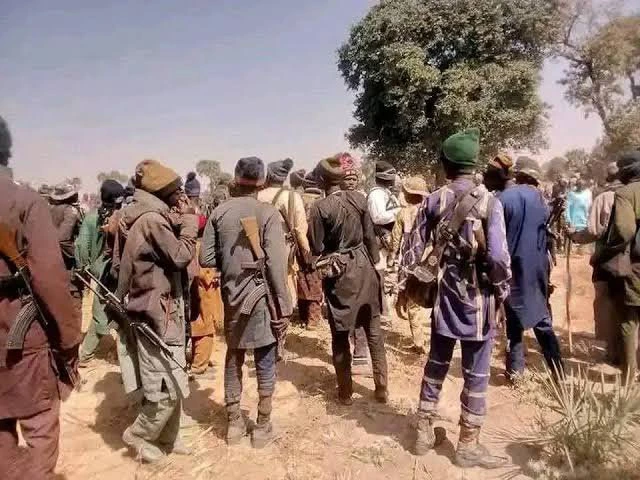
1970. Yombe also served as Deputy Governor of Kebbi State, 2015 -2019. The retired military officer is not new to terrorists as his convoy was attacked by suspected bandits in 2022. In this monitored interview, Yombe discusses the escalating security challenges in the North-West and proffers solutions. Excerpts:....TAP TO CONTINUE READING
What is your take on President Tinubu’s recent directives to the National Assembly to enact laws that would allow state police while ordering the army and the police to recruit more personnel as well as relevant security agencies to deploy their men to flush out bandits from the nation’s forests?
I prefer to start by looking at Kebbi as a state and, of course, other states that are bordering it and to emphasize that Kebbi does not have forests or locations where these bandits hide. They come in from Sokoto State, Zamfara State, Niger Republic and Niger State.
That has been the case. But, when we took over the governance of Kebbi State in 2015, the situation had not escalated as it is today. Be that as it may, we still had a lot of encroachments from Zamfara and that’s why Kebbi South is experiencing most of these bandit activities. Look at what is happening today, it is worrisome. We must bear in mind that the action of these bandits is difficult to deal with militarily in the sense that they appear from directions that the soldiers are not prepared for. Can you imagine if you are standing, facing south and someone behind you gives you a slap? You have to turn around to look at where he is. But, if he comes directly to you, you will know that this fellow is coming for me and you will be prepared and know how to handle whatever combat situation he is facing you with. That’s what has been the major problem and the security agents find it difficult to handle the tactical situation of bandits. Now, I appreciate President Bola Ahmed Tinubu for deciding that we have to reinforce our security assets by recruiting more soldiers, policemen, forest guards and so on because of the escalation of the problem and the limited availability of the forces to deal with it. By the time state police are formed and other security assets made available, we will be able to deal with the situation squarely. I appreciate the President for taking the step he has taken.
What do you think is responsible for the recent escalation of the security situation in Kebbi and what do you think should be done to prevent possible abuse of the proposed state policing?
I think Mr President has already taken care of the deficiency in terms of security assets to cover this situation in the large portion of the forests where these bandits hide. We should understand that due to the nature of the terrain, it’s difficult to traverse, cover and take military actions against the bandits. They take advantage of that to hide in those forests and hills. But, by the time these forces are made available to reinforce whatever security assets we have on ground, I think the situation will be history. But until we are able to occupy the forests physically, we will not be able to clear the bandits. They take advantage of the vast nature of the forests and, of course, the limited availability of our troops to cover that portion of the forests. Unless that which the President has taken care of now is put in place, we will still have the problem of kidnapping here and there, stealing, etc
What about the things you think should be put in place to avoid abuse of the state police?
The first thing is proper training of security agents and the de-radicalizing of those who have been disengaged. But, I find it difficult to understand why some of us… Most of these activities have some political undertone. Therefore, our politicians must be educated. Everybody now knows the negative vices of kidnapping and unrest, generally. There is no part of this country that is not affected by one security issue or the other. We have to really re-arrange our minds into thinking the best way to handle whatever situation to ensure peace. This involves even those who are backing, because a lot of people suspect that these bandits are backed by politicians. I don’t want to argue about that but whatever the case may be, we have to face it squarely. This is our country. If we don’t face it squarely, we are not going to enjoy what is available for us in this country. I can’t imagine why the Deputy Speaker (of Kebbi House) was on his way to his village and suddenly some group of people from the bush came and stole him. Steal a human being! It is absurd. We must re-arrange our mind to know that nobody will do this except us. We have to do it ourselves. Our religious fathers from different denominations will have to look at it with the fear of God. You can’t be stealing people and subjecting them to some kind of hardship and think
Can you tell us more about the Deputy Speaker’s abduction?
Let’s look at those who are involved in this kidnapping and the insecurity situation in Kebbi State. From the west, the state is bordered by Niger Republic. There, we are faced with the group called Lakurawa from Sahel countries and they don’t live in Nigeria. They cross the border because of the porous nature, come in and create all kinds of havoc and then go back. So, the case of the Deputy Speaker, he was in the mosque, he had just finished praying when people walked in and abducted him and rode on their motorcycles back into the forest outside the country. I don’t have details of how he was rescued but I learnt it involved the DSS and some military personnel that went in and got him out. I am glad that he came out in one piece, though he had a sad story to tell.
So you suspect that those who abducted him with motorcycle took him out of the country?
Exactly. There is no space for them in Kebbi State, specifically, but in Niger where you have a large portion of forest. From Gwazero up to Kwara State is uninhabited. They take advantage of this empty forest by using it as their cover. So, those who abducted the Deputy Speaker meandered around that forest; that was where our security agents went and brought him out. I observed that these guys (bandits) are afraid to die too. The moment you offer some kind of resistance, they will abandon their mission and take to their heels. So, with the present development, I am sure our military will adopt tactics that will match the offensive nature of these bandits.
Can you make your position clearer on the issue of state police; do you think it will or will not work?
No, it can work. We have very good police officers who are up and doing and they have demonstrated that in the past. You see, it’s when you have bad leadership that you will have problem. I am happy to see that the police are fishing out those bad eggs in their midst, to straighten out whatever deficiency they have in their performance. Yes, politicians, of course, you know very well that those that failed to be elected, too, have different kinds of feelings. Some of our politicians can go to any length to make sure that those who won are discredited. These things are happening, they are not hidden. We have opposition that are carrying out certain activities or saying many things that would make the governors appear bad. Police and the military and those who are involved in the security operations are doing very well but the issue is the escalation of the problem and the limited nature of security agents. That is what has made it so difficult to appreciate.
Can you share some of the limitations you observed in that region?
The major limitation is the number of security agents available and the equipment they need to work with. The bandits or whoever they are, their numbers are little but are highly mobile and they know the area very well. We don’t have enough forces to cover the kind of tactics being used by these bandits, but now Mr. President has tackled the issue of shortage of manpower. I am not saying capacity. Their limitation is because of their numerical strength to handle the nature of the security escalation of the country. For instance, you can’t send 15 soldiers to fight 300 bandits and expect good results. These 300 people appear from a direction you least expect and disappear after wreaking havoc. So, the tactics employed by the bandits made it so difficult for the limited number of security assets we have and I am happy and appreciate the President for having taken the step he has taken so far. The soldiers can now recruit, the police will recruit and the states which are exposed to these security issues can now have their police and that’s a very good development. I will like to seize this opportunity to advise the military, we have a large concentration of able bodied ex-service men that can be recalled to cover up the deficiency. Doing so will mean saving money to train and time because time is of essence here. If we call back those able bodied men, I mean those who are still strong. I remember what we did during the unfortunate Biafran issues, we had to call retired soldiers back and when they came in, they made the whole offensive difference because now we had adequate manpower. So the decision Mr President has taken is a welcomed idea. I appreciate him for that because when the strength of the security agents is increased, the next step is providing adequate weapons. You need to provide the tools with which they work and if we do that, I can see that within the shortest possible time, we will clear this rubbish. The next thing that must be done is that we must close our borders and defend them in such a way that no one will come in or go out without our permission. Those bandits come from Niger Republic into Kebbi State, create a lot of havoc and ride back. But, if we have that axis covered by security agents on ground, they can’t find a way to come in. They have to fight and they will not be able to come in and cause the havoc anymore. So I want to reiterate that the military should recall those able bodied ones. They have records of everyone, they should be able to call them back and let’s get on with this job.
What is your take on the issue of open grazing?
The first thing we must consider is that the Fulani are by nature highly mobile, they move to areas where they can get feed for their cattle. If we are to stop such mobility, we have to create ranches that will provide adequate grass and water for their cattle. If these two facilities are available, it will be more convincing to have them change their mind from moving from one place to the other and that will help us check the likelihood of attacks by some of our Fulani brothers. I think that’s the major problem, first we must have to provide a facility that will enable them settle down and will not have to move from point A to B anymore.
I think it is better we identify them as herders. That’s true, my elder brother who is not Fulani has plenty of cattle.
Do you think that retired soldiers will be willing to return if called back?
I can assure you that if you stand in one place and say our ex-servicemen from this age range report to your local government headquarters many will comply. I have had discussions with some of my colleagues, ex-servicemen, both other ranks and officers, who are biting their fingers and saying “look, why don’t we go and help in this?” Where I come from, there is a saying that a Zuru man once he enters the army, he is not looking forward to retirement. I also have friends that I have spoken with, they say “why don’t we tell these ogas to call us back even if we are to guard the barracks and let them go and fight?”
Read The Full Article Here Now
👉 Are You A WhatsApp User? Do You Want To Get Our News As Fast As Possible On Daily Basis? 👉 Click This Link To Join WhatsApp Channel Now.

Art & Commercial students don’t fail JAMB because they’re dull. They fail because they’re taught like Science students. Science students calculate — JAMB rewards that. Art students explain — JAMB doesn’t. So you read hard, attend lessons, yet your score disappoints you. This online class fixes that. No theory overload. No confusion. Just real JAMB questions, clear breakdowns, and winning strategies. 📌 JAMB is not hard — you were just taught the wrong way.Click The Link To Reach Us Now 👉 https://wa.me/2349063958940
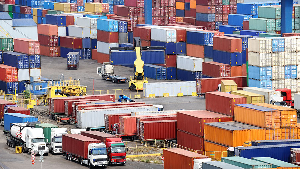
The Association of West African Exporters and Marine Professionals has warned that the worsening scarcity of shipping containers at Lagos ports is threatening the country’s export sector, which is valued at $44.06bn as of 2025.....TAP TO CONTINUE READING
This is even as the group lamented the refusal of shipping lines to pick export cargoes, a development they said is undermining Nigeria’s growing export market.
The President of AWAEMAP, Bunmi Olumekun, stated this in a recent chat with journalists in Lagos. The warning comes as Nigeria’s export sector has recorded significant momentum under President Bola Ahmed Tinubu’s administration.
In February, The PUNCH reported that Nigeria’s total exports in the first nine months of 2025 outpaced the corresponding period of 2024 by $3.76bn. The figures feed into the improving local currency amid calls for inclusive gains for businesses and households.
Data from the Central Bank of Nigeria Quarterly Statistics (December 2025) showed that the country’s total exports in the first nine months of 2025 rose to $44.06bn, an improvement over the $40.29bn recorded in the corresponding period of 2024.
However, Olumekun warned that deliberate actions by foreign shipping lines are now putting those gains at risk.
“The shipping companies don’t even bring vessels to Nigeria to take exports again. They prefer to go to Cotonou rather than coming to Nigeria. They want to make sure that Nigerian goods are not sellable outside Nigeria. You will see a vessel coming in to discharge cargoes and sail empty to Cotonou to carry exports,” he said.
The AWAEMAP president said export cargoes are now piling up inside terminals across the Lagos ports, with no vessels available to evacuate them and no containers to load intended exports.
“Currently, we are having a challenge getting containers to load our export cargoes out of the country. Currently, we have more export than import cargoes lying inside the terminals. Somebody told me that his export containers of perishable items have been at the port since December 2025, and there is no vessel to evacuate them,” Olumekun stated.
He said the problem is further compounded by a lack of space at the terminals to accommodate export containers, adding that the situation has triggered congestion that plagued Lagos ports before the introduction of the e-call-up system.
The AWAEMAP president also raised concerns that the ongoing conflict in the Middle East could provide foreign shipping lines with additional justification to avoid Nigerian ports, further worsening the situation.
Despite the setbacks, Olumekun acknowledged the progress recorded under the current administration. “Under President Bola Tinubu, the Nigerian economy is improving in terms of export, but these foreigners want to cripple it,” he said.
Olumekun called on the Federal Government to urgently address the container scarcity.
Also speaking, an exporter who is the Managing Director of LWL Concept, Lawal Wasiu, said, “One of the challenges we are facing at the port right now is so many empty containers with no vessel to pick them up. And one big reason for that is the Iran-US war, which has affected the routes these ships follow. For example, some shipping lines have cancelled any Middle East consignment because of the war.
“So there are so many containers laden with exports, as we speak, that are still at the port waiting for vessels to come. Some terminal operators have stopped accepting export containers. Even transporters now do not want to drop empty containers at the ports because of the delay. So this is also causing the scarcity of empty containers.”
Read The Full Article Here Now
👉 Are You A WhatsApp User? Do You Want To Get Our News As Fast As Possible On Daily Basis? 👉 Click This Link To Join WhatsApp Channel Now.
Art & Commercial students don’t fail JAMB because they’re dull. They fail because they’re taught like Science students. Science students calculate — JAMB rewards that. Art students explain — JAMB doesn’t. So you read hard, attend lessons, yet your score disappoints you. This online class fixes that. No theory overload. No confusion. Just real JAMB questions, clear breakdowns, and winning strategies. 📌 JAMB is not hard — you were just taught the wrong way.Click The Link To Reach Us Now 👉 https://wa.me/2349063958940
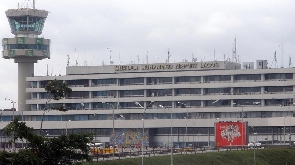
There are indications that airfares may jump in the coming weeks following the hike in the cost of aviation fuel, commonly referred to as Jet A1, a development that is already putting pressure on airline operations and signalling higher ticket costs for passengers.....TAP TO CONTINUE READING
The spike in JetA1 price is largely due to the crisis in the Middle East, which has slowed the production and movement of crude oil across countries, worsening the operational cost of domestic carriers.
Checks by our correspondent with airlines showed an astronomical increase in the operating cost of airlines, particularly caused by the spike in aviation fuel, which has become the dominant cost driver in recent weeks.
At the time of filing this report, aviation fuel, which was sold between N900 and N995 before the Middle East crisis commenced, has jumped to between N2,500 and N2,700, depending on the airport of delivery, sharply raising the cost burden for operators.
Operators said they were monitoring developments, stressing that an increase in airfares was imminent, with strong indications that the prices of air tickets might double if the current trend persists.
Aviation fuel remains the single highest component of airline operations, accounting for about 30 to 35 per cent of total operational costs, a figure that industry players say is rising rapidly under current market conditions.
Airline sources said the price of the product had remained unstable since February 28, 2026, when the war started in Iran, changing about five times since that time, further complicating planning and pricing decisions.
The spokesperson for United Nigeria Airlines, Chibuike Uloka, challenged the Federal Competition and Consumer Protection Commission to urgently engage domestic airline operators over the sustainability of current ticket pricing amid rising operational costs.
The FCCPC recently accused airlines of price fixing, with special attention on five unnamed airlines. This was, however, dismissed by the airline operators.
Uloka noted that despite aviation fuel prices soaring beyond N2,000 per litre, many carriers had continued to maintain fares at around N195,000, raising concerns about how long such pricing could be sustained under prevailing economic conditions.
He, however, warned that the situation could deteriorate further if fuel prices get to N3,000 per litre, stressing that not all airlines would be able to remain in operation under such pressure, a development that could further shrink capacity and push fares even higher.
He said, “Honestly, this is a very good time for FCCPC to come out and ask operators how they have been able to sustain flight tickets at N195,000 despite the increase in aviation fuel crossing N2000 and above. They should please ask how operators have kept on with operations? These are hard times. But most definitely, the current prices can’t be sustained for long periods.
“If this continues the way it is, because the way we are now, the price is also getting to N3000 per litre, and if it eventually gets to N3000, not all operators will be able to fly. And the ones that will be able to fly will not be Father Christmas. What we are asking now is not even profit, but at least to be able to operate optimally. Aviation has become a daily necessity because people must be able to move from one place to another. But FCCPC must be able to come out now and ask operators how we are faring.”
The PUNCH understands that Nigeria has been unable to produce enough crude oil for the Dangote Petroleum Refinery, forcing the indigenous refining company to import crude.
Crude prices have jumped from $65–$69 to about $112 per barrel as of the time of filing this report, further worsening the cost of aviation fuel and pushing airlines closer to inevitable fare adjustments.
This effect has also upped gantry prices, with operators warning that sustained increases will ultimately be transferred to passengers through higher ticket fares.
Industry expert, Samuel Caulcrick, projected an imminent rise in airfares, attributing it to the growing burden of operational costs on airlines, which is increasingly being driven by the surge in aviation fuel prices.
He explained that current market conditions suggest that operating expenses have surged significantly, with aviation fuel now accounting for about 45 per cent of total airline costs, making it the single largest cost component in the sector and leaving operators with little choice but to adjust fares.
Caulcrick noted that the shift in cost structure marks a departure from previous years when maintenance expenses dominated airline spending. However, the persistent increase in the price of Jet A1 fuel has altered the dynamics, placing greater financial pressure on operators and inevitably influencing ticket pricing across the industry.
He stated, “Before now, the highest component of airline operation was maintenance, but that has changed with the continuous rise in the prices of Jet A1. In those days when aviation fuel was less costly, the maintenance cost was higher, but now fueling has taken over.
“If that component goes up, it will definitely affect the prices of every seat. But we should expect the airfares to go up by 20 to 25 per cent in the coming days.”
Read The Full Article Here Now
👉 Are You A WhatsApp User? Do You Want To Get Our News As Fast As Possible On Daily Basis? 👉 Click This Link To Join WhatsApp Channel Now.
Art & Commercial students don’t fail JAMB because they’re dull. They fail because they’re taught like Science students. Science students calculate — JAMB rewards that. Art students explain — JAMB doesn’t. So you read hard, attend lessons, yet your score disappoints you. This online class fixes that. No theory overload. No confusion. Just real JAMB questions, clear breakdowns, and winning strategies. 📌 JAMB is not hard — you were just taught the wrong way.Click The Link To Reach Us Now 👉 https://wa.me/2349063958940
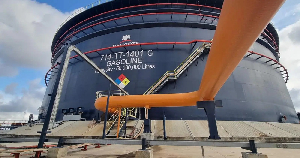
The Dangote Petroleum Refinery has ramped up its regional footprint with the export of 12 cargoes of refined petroleum products totalling 456,000 tonnes to five African countries, amid a growing fuel supply crisis triggered by geopolitical tensions in the Middle East.....TAP TO CONTINUE READING
The PUNCH gathered on Sunday that the cargoes, sold through international traders on a Free on Board basis, were shipped to Côte d’Ivoire, Cameroon, Tanzania, Ghana, and Togo, marking a significant milestone since the refinery attained its 650,000 barrels-per-day capacity in February 2026.
A senior official at the refinery, who spoke on condition of anonymity because he was not authorised to speak publicly, described the development as a reflection of growing confidence in Nigeria’s refining capacity and a shift in Africa’s fuel supply dynamics.
“The Dangote Petroleum Refinery has strengthened Nigeria’s presence in the regional energy market with the successful sales of 12 cargoes by traders, totalling 456,000 tonnes (456KT) of refined petroleum products.
“The shipments by traders, destined for countries such as Côte d’Ivoire, Cameroon, Tanzania, Ghana, and Togo, represent the refinery’s export of Premium Motor Spirit since achieving 650,000 barrels a day capacity in February 2026.
“The products were sold on an FOB (Free on Board) basis to international traders for deliveries to the above-identified countries of export,” the official said.
A total of 456,000 tonnes of refined petroleum products is equivalent to roughly 608 million litres, underscoring the massive scale of the shipments and their potential impact on fuel supply across multiple African markets.
The official further noted that the surge in export volumes aligns with recent reports indicating increased demand from several African countries grappling with fuel supply shortages and rising import costs linked to global market disruptions.
“This accomplishment underscores the Dangote Refinery’s capability to not only meet but also exceed Nigeria’s domestic fuel demands. It also demonstrates the refinery’s growing role in supplying high-quality Euro 5 gasoline and diesel to West Africa, a region long underserved and historically regarded as a dumping ground for lower-quality fuels, and other regions which have become destinations of exports,” he added.
According to him, the refinery’s production of Euro 5 standard gasoline and diesel is also a key factor driving patronage, as many African markets move to phase out lower-quality fuels.
The exports, the official explained, are expected to improve energy security in West, East, and Central Africa by reducing dependence on long-haul imports from Europe and the Middle East, while also cutting logistics costs and delivery timelines.
“By supplying neighbouring and other economies, the Dangote Refinery is expected to contribute to enhanced energy security in West, East, and Central Africa, reducing logistics and supply chain delays associated with long-distance fuel imports, lowering cost pressures on regional fuel markets through proximity sourcing, and building stronger trade relations between Nigeria and key African economies,” the official asserted.
The development signals a gradual reordering of Africa’s fuel supply chain, with Nigeria emerging as a refining hub following years of reliance on imports despite being a major crude oil producer.
The refinery official also addressed concerns that increased exports could tighten supply in the domestic market, insisting that adequate provisions had been made from the outset.
“Solid yes, it won’t affect meeting local demands, because we factored that into our strategy from the time we started constructing the refinery,” he stated.
“We have 54 countries in Africa, but how many of them have functional refineries? The reality is that demand will continue to rise, and we are positioning to meet both domestic and regional needs,” he added.
The export milestone comes as the Dangote refinery continues to scale operations, following its phased ramp-up and eventual attainment of full production capacity earlier this year.
Africa, despite being rich in crude oil resources, relies heavily on imported refined petroleum products due to limited refining capacity across the continent.
Recent geopolitical tensions and supply chain disruptions have further exposed the vulnerability of many African countries, leading to fuel shortages and price volatility.
In response, several nations have increasingly turned to regional suppliers, with Nigeria’s Dangote refinery emerging as a key alternative due to its scale, proximity, and product quality.
A report by Bloomberg on Friday revealed that at least three African countries—South Africa, Ghana, and Kenya—have formally reached out to the refinery, while several others are making enquiries, as disruptions linked to the Iran war continue to choke global fuel supply chains.
According to the report, the refinery, owned by Africa’s richest man, Aliko Dangote, is witnessing an unprecedented surge in demand from across the continent.
A company executive confirmed that the facility “has been approached by South Africa and many other countries” seeking alternative fuel supply arrangements.
The report read, “Dangote Petroleum Refinery and Petrochemicals has been approached by South Africa and many other countries to secure fuel supplies after the Iran war disrupted flows.
“South Africa is seeking a standard contract for fuel supplies with Nigeria, and other countries such as Ghana and Kenya have also reached out to Dangote for fuel supplies.”
This development follows earlier projections that the crisis in the Middle East is tightening the noose around Africa’s fuel supply chain, with many countries now running on just weeks of refined petroleum products as key import routes come under severe strain.
The sustained exports from the refinery would not only stabilise fuel supply across Africa but also boost Nigeria’s foreign exchange earnings and strengthen its strategic influence in the continent’s energy market.
The latest shipments underscore a broader trend of rising intra-African energy trade, positioning Nigeria at the centre of a new regional fuel distribution network.
Read The Full Article Here Now
👉 Are You A WhatsApp User? Do You Want To Get Our News As Fast As Possible On Daily Basis? 👉 Click This Link To Join WhatsApp Channel Now.
Art & Commercial students don’t fail JAMB because they’re dull. They fail because they’re taught like Science students. Science students calculate — JAMB rewards that. Art students explain — JAMB doesn’t. So you read hard, attend lessons, yet your score disappoints you. This online class fixes that. No theory overload. No confusion. Just real JAMB questions, clear breakdowns, and winning strategies. 📌 JAMB is not hard — you were just taught the wrong way.Click The Link To Reach Us Now 👉 https://wa.me/2349063958940
-

 Breaking News6 months ago
World’s Youngest Undergraduate is Nigerian JOSHUA BECKFORD, gained admission in Oxford University at the age of Six years
-
 Breaking News5 months ago
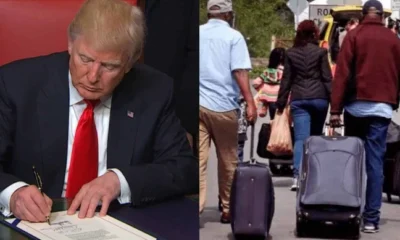
JUST IN: Finally United States President Donald Trump Revokes 80,000 Visas of Nigerians, Other Foreign Nationals
-

 Breaking News6 months ago
BREAKING NEWS: Woman in Trouble For Burning 7-year-old Girl’s Private Parts With Hot Knife
-

 Breaking News6 months ago
BREAKING NEWS: FULL DETAILS! Top Secret Leaked Why SIM Fubara Fails to Return to Government House After Reinstatement
-

 Breaking News5 months ago
BREAKING NEWS: Nigerian Billionaire Lawmaker Ned Nwoko, Orders Arrest of His Mother In Law Regina Daniels’ Mother, Rita
-
 Breaking News6 months ago
BREAKING NEWS: Federal Government Releases Proof of N25,000 Cash Transfers to 71 Million Nigerians in 8.1 Million Households
-

 Breaking News6 months ago
BREAKING NEWS: Another Rivers Saga: Just Reinstated Fubara Told to Sack All Sole Administrators Appointees, Seek Tinubu’s Assurance Over Impeachment
-

 Breaking News7 months ago
BREAKING NEWS: Finally Department of State Services (DSS) summons Sowore over post on Tinubu