
Breaking News
Otedola to DAPPMAN: Your business model outdated, Dangote transforming petroleum sector

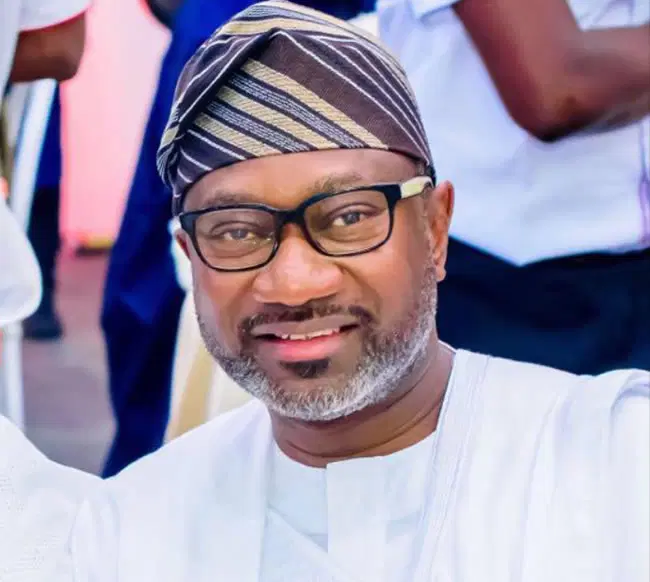
Nigeria’s billionaire businessman, Mr Femi Otedola, yesterday waded into the ongoing fuel supply disagreement between the Dangote Refinery and the Depot and Petroleum Products Marketers Association of Nigeria (DAPPMAN), advising the association to innovate or perish.....TAP TO CONTINUE READING
The philanthropist stressed that he had followed the debate around the fuel supply issues between both parties recently, the billionaire entrepreneur noted that he felt compelled to provide some perspective, especially as it relates to the future of the country.
In a statement on recent issues in the oil and gas sector, especially in the downstream, Otedola also congratulated Aliko Dangote on the success achieved so far since his refinery commenced operations, describing it as a historic leap for Nigeria’s energy independence and economic future.
Otedola posited that Nigeria remains threatened by entrenched cabals who still believe they can resist change, but maintained that history has shown time and again that change can only be delayed, but never halted.
Going down memory lane, Otedola recalled that he founded DAPPMAN 23 years ago, specifically in 2002, with a clear mission to challenge the dominance of the major marketers and give independent depot owners a fair platform to thrive.
According to him, at the time, the association aimed to fill critical supply gaps left by an inefficient downstream system. However, he emphasised that since then, times have changed, with many of the original players having exited the scene, and those left, clinging to assets that no longer reflect today’s business realities.
“But history has shown time and again: you can delay change, frustrate it, even sabotage it but you can never stop it. I founded DAPPMAN in 2002 (23 years ago) with a clear mission, to challenge the dominance of the major marketers and give independent depot owners a fair platform to thrive. “I personally structured the group, appointing the late George Enenmoh, then Managing Director of Ascon Oil, as Chairman, while I served as Vice Chairman and Sayyu Dantata as Secretary. At the time, depot ownership was strategic. We were filling critical supply gaps left by an inefficient system.
“But times have changed. Many of the original players have exited the scene, and those left are clinging to assets that no longer reflect today’s business realities . I advised some of them as far back as last year to sell their depots as scrap while they still had value. Nigeria now has over 4 million metric tons of storage capacity, most of it idle. With the Dangote Refinery now supplying fuel locally, the old business model is crumbling.
“Zenon Oil pioneered the modern diesel business in Nigeria and grew to become the largest supplier in the country. We built depots to store our imported diesel because the market was import-driven and riddled with inefficiencies. But with Dangote’s refinery fully operational, those gaps no longer exist.
“We now have domestic production and local supply efficient, reliable, and proudly Nigerian. Furthermore, we must not fail to recognise the attendant benefits of eliminating the grid lock around the Ibafon, Incan and Apapa areas due to the operations of the Dangote Refinery,” Otedola argued.
Today, more than just producing fuel, Otedola noted that Aliko Dangote has elevated the entire logistics chain, purchasing 8,000 brand new CNG eco-friendly trucks that will distribute across the country with less pollution and fewer breakdowns, unlike the aging, rickety trucks still used by some operators.
He added: “I know this business intimately. I was king of it and at the peak of it in 2005 (20 years ago), I was conferred with the life patron of the PTD (Petroleum Tanker Drivers) union by Mr Akinlaja. So, when I say the game has changed, I speak from deep experience.
“What is DAPPMAN fighting for today? To preserve a model built on fuel imports, subsidy exploitation, and outdated infrastructure? That era is fast disappearing. The setting up of depots was mainly to collect PFIs. No depots, no PFIs (Pro Forma Invoices) from NNPC who were sole suppliers of gasoline (petrol) at the time and which thus led to the breeding of complacent importers whose sole agenda was on arbitrage and subsidy margins.”
Since there are no more PFIs, the businessman argued that there is no reason why the Dangote Refinery should subsidise DAPPMAN with N1.5 trillion which they are asking Dangote Refinery to pay and subsequently pass this cost to consumers.
While saluting the courage of ‘my brother Aliko Dangote, like Amazon Incorporated’ in bringing about transformative change in the downstream sector, Otedola emphasised that the myth that depots generate massive employment was untrue.
“Depots do not drive employment as some claim. A typical depot employs perhaps five people, gatekeeper included. In contrast, a single filling station can provide jobs to dozens of Nigerians—from pump attendants to cashiers, security personnel, and cleaners. “If anything, DAPPMAN members should be focusing on owning and scaling last-mile retail outlets, not holding on to tanks built for a fuel import economy that no longer serves us”, he stated.
Taking a cue from the global picture, the philanthropist pointed out that depots in Amsterdam or Houston were designed to serve export markets, especially Africa, but that with Nigeria now refining locally, such infrastructure is increasingly unnecessary.
“The same thing happened in the cement industry. Once Nigeria started producing cement locally, the bulk carriers that used to dock at our ports were retired, many sold as scrap. The same outcome awaits fuel depots,” he said.
If DAPPMAN members do not adapt, Otedola argued that they will not only become irrelevant, but that they may go bankrupt.
Instead of resisting progress, he urged them to consider selling, restructuring, or investing in new value chains, explaining that if they truly believe in competition, they could even come together and acquire the Port Harcourt Refinery and see if they can succeed where NNPC could not.
Even in developed markets, he stated that refinery operators are downsizing their depot footprint, with many converting them into bonded warehouses or exiting completely and mentioning the case of the Folawiyo Group, known for its foresight and integrity, which sold its depot and exited early. “That is strategic thinking,” he posited.
“DAPPMAN had its place but today, its relevance is fast fading. We must stop clinging to outdated privileges and focus on a new era built on self-sufficiency, transparency, and sustainable value creation. Aliko’s refinery is not the problem. It is the solution. Let’s move forward,” he stated.
But more importantly, he noted that credit must go to President Bola Tinubu for doing what no other leader before him had the political will to execute, which is the full deregulation of the downstream petroleum sector.
This singular act, he said, has broken the grip of entrenched interests and ushered in a new era of transparency, healthy competition, and customer-centric service delivery.
“In a sector long plagued by rent-seeking, subsidy fraud, product diversion, and smuggling, this reform marks a decisive break from the past and lays the foundation for a more efficient and accountable energy market. Yet despite this progress, there are still voices clinging to the old ways. Voices determined to resist change, even when it’s clear the tide has turned,” Otedola wrote.
Besides, Otedola said that up to N2 trillion was siphoned in questionable fuel subsidy claims under the Goodluck Jonathan administration, narrating how he warned the ex-President about fraudulent oil marketers at the time.
The philanthropist maintained that all these fraudulent subsidy claims were tied to depot licenses, noting that the policy rewarded neither transparency nor innovation, but encouraged rent-seeking and corruption.
“On subsidy, I personally warned President Goodluck Jonathan that he was being misled. The system was built to benefit depot owners, and DAPPMAN (Depot and Petroleum Products Marketers Association of Nigeria) members became the primary beneficiaries.
“Over N2 trillion was siphoned through questionable claims, all tied to depot licenses. The policy rewarded neither transparency nor innovation, it encouraged rent-seeking and corruption,” the business mogul stated.
On a lighter note, he said: “Africans are proud of you (Dangote). And yes, my dear brother Aliko, you can now go to Monaco and rest jejely like me. You’ve earned it.”
Read The Full Article Here Now
👉 Are You A WhatsApp User? Do You Want To Get Our News As Fast As Possible On Daily Basis? 👉 Click This Link To Join WhatsApp Channel Now.

Art & Commercial students don’t fail JAMB because they’re dull. They fail because they’re taught like Science students. Science students calculate — JAMB rewards that. Art students explain — JAMB doesn’t. So you read hard, attend lessons, yet your score disappoints you. This online class fixes that. No theory overload. No confusion. Just real JAMB questions, clear breakdowns, and winning strategies. 📌 JAMB is not hard — you were just taught the wrong way.Click The Link To Reach Us Now 👉 https://wa.me/2349063958940
The Kano State Government has announced that the Emir of Kano, Muhammadu Sanusi II, will lead this year’s Eid-el-Fitr Durbar, even as it unveiled strict guidelines to prevent a breakdown of law and order during the celebrations.....TAP TO CONTINUE READING
The government said the decision, approved by Governor Abba Kabir Yusuf, followed credible intelligence reports indicating attempts by some individuals to create unrest during the Sallah period.
In a statement issued on Wednesday by the Commissioner for Information and Internal Affairs, Ibrahim Abdullahi Waiya, the government said it remained committed to preserving Kano’s cultural heritage but would prioritise peace and security.
According to the statement, Hawan Idi (Eid Durbar) will be conducted by Emir Sanusi from the Kofar Mata Eid Ground through designated routes to Gidan Shettima, terminating at Kofar Fatalwa of the emir’s palace.
It added that Hawan Nasarawa would be held in a modified form without horseback displays, while Hawan Daushe, Hawan Fanisau and Hawan Dorayi have been suspended for the time being in the interest of public safety.
The government said all security agencies had been directed to intensify surveillance and ensure strict compliance with the directives before, during and after the festive period.
It urged residents to remain calm, law-abiding and cooperative with security agencies, while cautioning against the spread of unverified information.
The government further assured the public of its commitment to a peaceful and hitch-free Sallah celebration, wishing Muslims in the state a joyous Eid-el-Fitr.
The Durbar, a centuries-old cultural procession, has been thrown into uncertainty following conflicting statements from government officials on whether it will hold this year, given the unresolved legal battle between Sanusi II and Aminu Ado Bayero.
While Governor Yusuf reinstated Sanusi II in 2024, Bayero continues to contest his dethronement in court, leaving the emirship in dispute.
The government recently hinted that the stool controversy would soon be resolved.
Read The Full Article Here Now
👉 Are You A WhatsApp User? Do You Want To Get Our News As Fast As Possible On Daily Basis? 👉 Click This Link To Join WhatsApp Channel Now.
Art & Commercial students don’t fail JAMB because they’re dull. They fail because they’re taught like Science students. Science students calculate — JAMB rewards that. Art students explain — JAMB doesn’t. So you read hard, attend lessons, yet your score disappoints you. This online class fixes that. No theory overload. No confusion. Just real JAMB questions, clear breakdowns, and winning strategies. 📌 JAMB is not hard — you were just taught the wrong way.Click The Link To Reach Us Now 👉 https://wa.me/2349063958940
Yoruba nation agitator, Sunday Adeyemo, popularly known as Sunday Igboho, has dismissed comments by human rights activist and former presidential candidate, Omoyele Sowore, over what he described as transactional politics and activism.....TAP TO CONTINUE READING
PUNCH Online reports that Sowore’s comment followed a viral video in which the activist criticised what he described as “transactional politics” among some regional agitators and influencers, accusing them of aligning with political actors for personal or material benefit.
In the video, Sowore appeared to reference Igboho, suggesting that his recent political positions, including support for President Bola Tinubu’s potential re-election bid, reflected what he termed “amala politics” — a colloquial expression often used to imply opportunistic or interest-driven engagement rather than principled activism.
Igboho, in a statement issued by his media aide, Olayomi Koiki, in Ibadan, the Oyo State capital, on Tuesday, criticised Sowore for allegedly describing his activism as “amala politics” in a recent viral video circulating on social media.
He described the comment as an inconsequential rant that should be ignored by the public.
Igboho argued that his agitation for improved security in the South-West and his support for the second-term bid of President Bola Tinubu in 2027 were constitutional rights aimed at promoting the collective interests of the Yoruba people and the development of Nigeria.
He said, “We strongly reject the characterisation of Igboho’s activism as transactional. Such a myopic position misrepresents the intent and focus of our agitation on effective grassroots security in the South-West and Nigeria as a whole.
“How many protests did Sowore organise to push for my freedom? Sowore’s claim of fighting for the masses contradicts his alleged daily lodging expenses of N450,000 at a popular Lagos hotel.
“I cannot be compelled to endorse political figures such as Peter Obi or Atiku Abubakar, or even align with Sowore’s political platform. I have the right to make independent political decisions based on the security and collective interests of the Yoruba people.”
He added that Igboho’s advocacy prioritises addressing insecurity across Yorubaland, including killings of farmers, kidnappings along highways and attacks on traditional rulers and royal institutions.
Koiki, however, clarified that these concerns form the basis of Igboho’s movement rather than any ambition for political office or revolutionary leadership.
The statement added, “While Sowore has consistently promoted nationwide revolution as a pathway to leadership, Igboho’s approach is rooted in protecting lives, land and property within Yoruba territory. This agitation is a response to real and ongoing threats faced by communities in the region.
“Latest security incidents in northern Nigeria, including reported explosions in Maiduguri on March 16, 2026, also raise questions about the broader effectiveness of long-term revolutionary advocacy.
“We challenge Sowore to assess the situation in his home state of Ondo State, considering the growing cases of banditry, kidnapping and attacks on rural communities.”
The statement added that the impact of insecurity on vulnerable groups, including farmers, traditional rulers, women and children, had been severe, with several communities reportedly affected.
“These realities reinforce Igboho’s long-standing call since 2020 for localised security measures and stronger regional protection strategies.
“Labelling our agitation and efforts as ‘amala politics’ undermines the urgency of the security crisis and the legitimacy of grassroots agitation,” the statement concluded
Read The Full Article Here Now
👉 Are You A WhatsApp User? Do You Want To Get Our News As Fast As Possible On Daily Basis? 👉 Click This Link To Join WhatsApp Channel Now.
Art & Commercial students don’t fail JAMB because they’re dull. They fail because they’re taught like Science students. Science students calculate — JAMB rewards that. Art students explain — JAMB doesn’t. So you read hard, attend lessons, yet your score disappoints you. This online class fixes that. No theory overload. No confusion. Just real JAMB questions, clear breakdowns, and winning strategies. 📌 JAMB is not hard — you were just taught the wrong way.Click The Link To Reach Us Now 👉 https://wa.me/2349063958940
The continuous detention of the former governor of Kaduna State, Mallam Nasir El-Rufai, has sparked reactions from politicians and socio-political activists.....TAP TO CONTINUE READING
DAILY POST reports that the former governor has been in the custody of the Independent Corrupt Practices and Other Related Offences Commission, ICPC, over an ongoing investigation into alleged financial impropriety when he was governor.
El-Rufai had earlier spent two nights in the custody of the Economic and Financial Crimes Commission, EFCC, before he was picked up by the Department of State Services and then later handed over to the ICPC.
His continuous detention has sparked outrage among citizens who are calling on the commission to immediately charge the former governor to court.
Popular socio-political activist, Aisha Yesufu, said in a post on X that “holding a citizen indefinitely without trial” is impossible.
According to her, “that is not justice. That is not accountability. That begins to look like persecution.
“Every Nigerian, no matter how powerful or unpopular, has the right to a fair hearing. That right is not a favour from the government. It is a constitutional guarantee. If El-Rufai committed crimes, then prosecute him. Nigerians will support that. But what we must never
Support is a system where the government can detain anyone endlessly, simply because it can.
“Today, it may be El-Rufai. Tomorrow, it could be anyone else who speaks or acts in a way that those in power do not like. A democracy must be better than that.
“So the message is simple: charge him in court or release him. Let justice be done openly, lawfully, and transparently. That is the only way a nation that claims to respect the rule of law should act”.
Similarly, an activist lawyer, Deji Adeyanju, in an interview he posted on X on Wednesday, demanded that the former governor be charged to court immediately, condemning El-Rufai’s incarceration.
“No matter the allegations, I think he should be charged in a court of competent jurisdiction so that he can face the music.
“All these things currently going on don’t look tidy to me”, he said.
On his part, Paul Ibe, a media aide to the former vice president, Atiku Abubakar, lambasted ICPC for not charging the former governor to court.
In a statement on his X handle, Ibe accused the Commission of taking sides with the President Bola Tinubu-led administration.
He wrote, “The matter of the former Governor of Kaduna State, Mallam Nasir el-Rufai @elrufai has proven beyond measure that the ‘I’ in ICPC (Independent Corrupt Practices and Other Related Offences Commission) @icpcnigeria represents Illegal or Irresponsible.
“There’s nothing Independent about the Commission. They’re no different from all the other institutions of state that are standing on Tinubu’s mandate. The ICPC is nauseatingly pliable and has disgracefully made itself available in coercing members of the opposition into the ruling party”!
Read The Full Article Here Now
👉 Are You A WhatsApp User? Do You Want To Get Our News As Fast As Possible On Daily Basis? 👉 Click This Link To Join WhatsApp Channel Now.
Art & Commercial students don’t fail JAMB because they’re dull. They fail because they’re taught like Science students. Science students calculate — JAMB rewards that. Art students explain — JAMB doesn’t. So you read hard, attend lessons, yet your score disappoints you. This online class fixes that. No theory overload. No confusion. Just real JAMB questions, clear breakdowns, and winning strategies. 📌 JAMB is not hard — you were just taught the wrong way.Click The Link To Reach Us Now 👉 https://wa.me/2349063958940
-

 Breaking News6 months ago
World’s Youngest Undergraduate is Nigerian JOSHUA BECKFORD, gained admission in Oxford University at the age of Six years
-
 Breaking News4 months ago
JUST IN: Finally United States President Donald Trump Revokes 80,000 Visas of Nigerians, Other Foreign Nationals
-

 Breaking News6 months ago
BREAKING NEWS: Woman in Trouble For Burning 7-year-old Girl’s Private Parts With Hot Knife
-
 Breaking News6 months ago
BREAKING NEWS: FULL DETAILS! Top Secret Leaked Why SIM Fubara Fails to Return to Government House After Reinstatement
-

 Breaking News4 months ago
BREAKING NEWS: Nigerian Billionaire Lawmaker Ned Nwoko, Orders Arrest of His Mother In Law Regina Daniels’ Mother, Rita
-
 Breaking News6 months ago
BREAKING NEWS: Federal Government Releases Proof of N25,000 Cash Transfers to 71 Million Nigerians in 8.1 Million Households
-
 Breaking News6 months ago
BREAKING NEWS: Another Rivers Saga: Just Reinstated Fubara Told to Sack All Sole Administrators Appointees, Seek Tinubu’s Assurance Over Impeachment
-

 Breaking News6 months ago
BREAKING NEWS: Finally Department of State Services (DSS) summons Sowore over post on Tinubu