
Breaking News
Silent Poison: How Grinding Machines Are Dosing Millions With Dangerous Metals

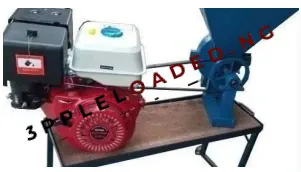
ABUJA – For most Nigerian households, the journey to the grinding machine is as routine as buying salt or kerosene. From Lagos to Kano, from Benue to Borno, families take their pepper, beans, maize, melon, guinea corn, or groundnuts to neighbourhood mills — small, noisy sheds packed with churning discs, vibrating motors, and a steady line of customers. The grinding machine is the unofficial heart of the Nigerian food economy, feeding homes, schools, canteens, and markets.....TAP TO CONTINUE READING
What is less visible is the quiet poison many of these machines introduce into Nigerian food. Beneath the sound of clattering metal and the familiar smell of ground pepper, tiny metallic fragments and heavy metals are breaking off from worn, rusted, or improvised grinding equipment — ending up directly in the food people consume daily. Over years of continuous exposure, these metals accumulate in the body, silently damaging kidneys, the liver, and other organs.
This investigation reveals a disturbing public-health problem hiding in plain sight: the widespread ingestion of toxic metals through unregulated grinding machines, the absence of enforcement from regulators, the lack of awareness among consumers, and the potential link to the rising burden of kidney disease in Nigeria.
In bustling markets in Abuja, Ibadan, Minna and Kaduna, grinding operators told this reporter that they process hundreds of kilograms of food per day. Many openly admitted that their machines have not been serviced in months or years. Others confessed that they use scrap metal or locally fabricated discs because original parts are too expensive. Almost all had never received any safety training.
LACK OF AWARENESS
A grinding operator at Dutse Market in Abuja, who requested anonymity, laughed nervously when asked whether his equipment could introduce metal into food. “Oga, the machine is iron. Food is rough. When iron touches stone and pepper every day, e go scratch small,” he said. “But nobody has ever complained. People just want their pepper ground fast.”
Market women who use these machines daily also expressed shock when informed about metal contamination. A pepper seller in Kado described how she takes baskets of tomatoes and pepper to the grinder every morning. “I’ve been doing this for 12 years,” she said. “We only complain when the machine spoils our pepper, or when it is slow. I never heard of metal inside food.”
Yet laboratory analyses conducted in Nigerian universities, public health institutes, and independent labs repeatedly show elevated levels of iron filings, lead, chromium, nickel, cadmium, and other metals in ground food samples — often far above internationally accepted limits. Toxicologists interviewed for this story explained that while iron filings from machines are common, the more dangerous contaminants are heavy metals like lead and cadmium, which accumulate in the body and damage vital organs.
A clinical toxicologist at Aminu Kano Teaching Hospital, who asked not to be named because he is not authorised to speak to the press, said chronic exposure to heavy metals through food is a “real but underestimated” driver of kidney disease. “Nigeria has a rising crisis of chronic kidney disease. The public tends to blame high blood pressure and diabetes, which are indeed causes, but environmental and dietary exposure to toxic metals is the elephant in the room,” he said. “Metals do not leave the body quickly. If you ingest small amounts every day from flours, pepper, beans or groundnuts processed by unsafe machines, the cumulative dose over years becomes dangerous.”
At Wuse Market, this reporter met a young mother buying ground rice for her six-month-old baby. She said she prefers buying already-ground cereals because they are faster to cook. When shown small black particles in a sample purchased from a similar stall, she stared in disbelief. “I thought that was dirt,” she said. “This is what I feed my baby every morning.”
The problem is not merely the presence of metals in machines, but the complete absence of regulatory supervision. Nigeria’s food-safety laws theoretically cover production, processing, and handling of foods, but in practice, the grinding industry is almost entirely informal. Grinding shops operate in markets, on street corners, behind houses, and sometimes inside cramped kiosks covered with dust and smoke. Many run without registration, without licenses, and without inspections.
A senior official at the Standards Organisation of Nigeria (SON), who spoke on background, admitted that enforcement in this sector is “almost nonexistent.” He explained that SON’s mandate covers materials and equipment, while NAFDAC oversees food safety. “But the grinding machine business is too fragmented,” he said. “Ninety percent of operators are informal. We cannot inspect thousands of small shops scattered nationwide.”
NAFDAC’S LIMITATIONS At NAFDAC’s Abuja office, an official in the Food Safety and Applied Nutrition Directorate noted that the agency focuses on packaged, commercial food producers. “People grinding pepper in a market are outside formal regulation,” she said. “Technically, they should operate under sanitary regulations, but enforcement is difficult. The agency simply does not have the manpower.
The metal composition of such improvised discs is inconsistent and often unsafe. Welded joints break easily. Rust is common. Some discs are made from recycled vehicle parts. In one workshop visited during this investigation, a mechanic proudly displayed a grinder disc he fashioned from discarded brake drums.
Experts warn that these improvised parts introduce unpredictable metal contamination. “When you do not know the alloy composition of the metal, you cannot predict the level of lead or chromium that might leach into food,” said a materials engineer at Ahmadu Bello University. “Some recycled metals contain very high levels of toxic elements.”
Consumers, however, have little choice. Grinding machines have become essential because they are fast, cheap, and widely accessible. Food processors like pepper, beans, tomatoes, soybeans, and maize require equipment that many households cannot afford. The cost of a reliable household grinder can range from ₦25,000 to ₦90,000, while a trip to the market mill costs between ₦100 and ₦500.
In Karu Market, a retired civil servant said she stopped grinding beans at home because it was “too stressful.” When informed about metal ingestion risks, she sighed deeply. “This is Nigeria,” she said. “Every day something is killing us.”
Her concern is not unfounded. Public health experts warn that chronic, long-term exposure to small quantities of toxic metals can silently impair kidney function. Kidney damage usually progresses without symptoms until it becomes advanced. By the time fatigue, swelling, or reduced urination appear, kidney function may already be severely compromised. Nigeria currently spends billions of naira on dialysis and kidney transplants each year, with demand rising sharply
The toxicologist at Kano Teaching Hospital explained the biological mechanism: “Lead and cadmium accumulate in kidney tissues. They damage the tubules responsible for filtering waste. Over years, this leads to chronic kidney disease. Even low-level daily exposure from contaminated food adds up.”
The challenge is compounded by Nigeria’s high reliance on milled and ground foods. Staple diets often include ground pepper, groundnut paste, ground melon, corn flour, rice flour, yam flour, and bean flour. Street foods, boarding schools, hospitals, and fastfood outlets all rely heavily on grinding machines for food preparation.
A survey of consumers across Abuja and Nasarawa markets conducted for this report found that nearly all respondents had no knowledge of metal contamination risks. Many admitted that ground food sometimes contains “black particles” or “tiny stones,” but had never questioned its origin.
At the Garki Village Market grinding cluster, this reporter examined several machines closely. Many were visibly rusted. Others had cracked metal housings held together with wire or temporary clamps. Some emitted burnt smells from overheated motors. Few had proper covers to prevent dust and debris from entering the food.
A machine operator, who has been grinding pepper for 18 years, said he was unaware that metal particles could harm the kidneys. “We don’t think of it,” he said. “As far as the food comes out smooth and the customer is happy, that is all.” When asked how often he replaces grinding discs, he estimated once every six to eight months — typically only when the disc breaks or starts producing “black specks” in the food.
THE REAL ISSUE Experts insist the technology itself is not the problem; the danger lies in the lack of maintenance and the use of substandard parts. Proper stainless-steel grinding discs, properly maintained and regularly replaced, can minimise contamination. But most small-scale operators cannot afford them. The mechanic at Utako explained: “A stainless-steel disc can cost ₦40,000 to ₦60,000. A fabricated one is ₦6,000. Which one do you think people will buy?”
Yet this price difference has consequences far beyond the market. A nephrologist at the University College Hospital Ibadan said the link between food contamination and rising kidney disease deserves urgent national attention. “We must widen our lens. Look at the lives of ordinary Nigerians. Look at what they eat every day. Look at the invisible exposures. That is where prevention begins.”
Regulators agree that change will require a coordinated effort — public enlightenment, machine-operator training, enforcement of basic standards, and affordable access to safe equipment. But three separate regulatory officials interviewed for this story admitted that no national initiative currently exists.
For now, the burden falls on consumers who are largely unaware of the risks. Some health-conscious families have begun buying small household grinders to reduce frequent exposure. Others are washing ground food more thoroughly, though experts warn that washing does not remove invisible heavy metals.
A dependable solution, according to food-safety specialists, would involve subsidising safe grinder parts, training operators on maintenance, and conducting regular random market inspections. Without such measures, millions of Nigerians will continue consuming small but dangerous doses of metal daily.
In the absence of regulation, metal ingestion through grinding machines remains an invisible national health threat — one that touches nearly every home, every kitchen, and every meal. It is a crisis hidden in plain sight, waiting for attention, waiting for accountability, and silently accumulating in the bodies of millions.
If nothing changes, experts warn, Nigeria may continue to witness a rising tide of kidney disease whose roots lie not only in genetics or lifestyle, but in the everyday meals prepared for families — meals contaminated long before they reach the pot, poisoned quietly by the very machines meant to nourish.
Read The Full Article Here Now
👉 Are You A WhatsApp User? Do You Want To Get Our News As Fast As Possible On Daily Basis? 👉 Click This Link To Join WhatsApp Channel Now.

Art & Commercial students don’t fail JAMB because they’re dull. They fail because they’re taught like Science students. Science students calculate — JAMB rewards that. Art students explain — JAMB doesn’t. So you read hard, attend lessons, yet your score disappoints you. This online class fixes that. No theory overload. No confusion. Just real JAMB questions, clear breakdowns, and winning strategies. 📌 JAMB is not hard — you were just taught the wrong way.Click The Link To Reach Us Now 👉 https://wa.me/2349063958940

The Kano State Government has announced that the Emir of Kano, Muhammadu Sanusi II, will lead this year’s Eid-el-Fitr Durbar, even as it unveiled strict guidelines to prevent a breakdown of law and order during the celebrations.....TAP TO CONTINUE READING
The government said the decision, approved by Governor Abba Kabir Yusuf, followed credible intelligence reports indicating attempts by some individuals to create unrest during the Sallah period.
In a statement issued on Wednesday by the Commissioner for Information and Internal Affairs, Ibrahim Abdullahi Waiya, the government said it remained committed to preserving Kano’s cultural heritage but would prioritise peace and security.
According to the statement, Hawan Idi (Eid Durbar) will be conducted by Emir Sanusi from the Kofar Mata Eid Ground through designated routes to Gidan Shettima, terminating at Kofar Fatalwa of the emir’s palace.
It added that Hawan Nasarawa would be held in a modified form without horseback displays, while Hawan Daushe, Hawan Fanisau and Hawan Dorayi have been suspended for the time being in the interest of public safety.
The government said all security agencies had been directed to intensify surveillance and ensure strict compliance with the directives before, during and after the festive period.
It urged residents to remain calm, law-abiding and cooperative with security agencies, while cautioning against the spread of unverified information.
The government further assured the public of its commitment to a peaceful and hitch-free Sallah celebration, wishing Muslims in the state a joyous Eid-el-Fitr.
The Durbar, a centuries-old cultural procession, has been thrown into uncertainty following conflicting statements from government officials on whether it will hold this year, given the unresolved legal battle between Sanusi II and Aminu Ado Bayero.
While Governor Yusuf reinstated Sanusi II in 2024, Bayero continues to contest his dethronement in court, leaving the emirship in dispute.
The government recently hinted that the stool controversy would soon be resolved.
Read The Full Article Here Now
👉 Are You A WhatsApp User? Do You Want To Get Our News As Fast As Possible On Daily Basis? 👉 Click This Link To Join WhatsApp Channel Now.
Art & Commercial students don’t fail JAMB because they’re dull. They fail because they’re taught like Science students. Science students calculate — JAMB rewards that. Art students explain — JAMB doesn’t. So you read hard, attend lessons, yet your score disappoints you. This online class fixes that. No theory overload. No confusion. Just real JAMB questions, clear breakdowns, and winning strategies. 📌 JAMB is not hard — you were just taught the wrong way.Click The Link To Reach Us Now 👉 https://wa.me/2349063958940
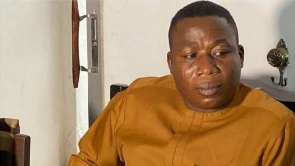
Yoruba nation agitator, Sunday Adeyemo, popularly known as Sunday Igboho, has dismissed comments by human rights activist and former presidential candidate, Omoyele Sowore, over what he described as transactional politics and activism.....TAP TO CONTINUE READING
PUNCH Online reports that Sowore’s comment followed a viral video in which the activist criticised what he described as “transactional politics” among some regional agitators and influencers, accusing them of aligning with political actors for personal or material benefit.
In the video, Sowore appeared to reference Igboho, suggesting that his recent political positions, including support for President Bola Tinubu’s potential re-election bid, reflected what he termed “amala politics” — a colloquial expression often used to imply opportunistic or interest-driven engagement rather than principled activism.
Igboho, in a statement issued by his media aide, Olayomi Koiki, in Ibadan, the Oyo State capital, on Tuesday, criticised Sowore for allegedly describing his activism as “amala politics” in a recent viral video circulating on social media.
He described the comment as an inconsequential rant that should be ignored by the public.
Igboho argued that his agitation for improved security in the South-West and his support for the second-term bid of President Bola Tinubu in 2027 were constitutional rights aimed at promoting the collective interests of the Yoruba people and the development of Nigeria.
He said, “We strongly reject the characterisation of Igboho’s activism as transactional. Such a myopic position misrepresents the intent and focus of our agitation on effective grassroots security in the South-West and Nigeria as a whole.
“How many protests did Sowore organise to push for my freedom? Sowore’s claim of fighting for the masses contradicts his alleged daily lodging expenses of N450,000 at a popular Lagos hotel.
“I cannot be compelled to endorse political figures such as Peter Obi or Atiku Abubakar, or even align with Sowore’s political platform. I have the right to make independent political decisions based on the security and collective interests of the Yoruba people.”
He added that Igboho’s advocacy prioritises addressing insecurity across Yorubaland, including killings of farmers, kidnappings along highways and attacks on traditional rulers and royal institutions.
Koiki, however, clarified that these concerns form the basis of Igboho’s movement rather than any ambition for political office or revolutionary leadership.
The statement added, “While Sowore has consistently promoted nationwide revolution as a pathway to leadership, Igboho’s approach is rooted in protecting lives, land and property within Yoruba territory. This agitation is a response to real and ongoing threats faced by communities in the region.
“Latest security incidents in northern Nigeria, including reported explosions in Maiduguri on March 16, 2026, also raise questions about the broader effectiveness of long-term revolutionary advocacy.
“We challenge Sowore to assess the situation in his home state of Ondo State, considering the growing cases of banditry, kidnapping and attacks on rural communities.”
The statement added that the impact of insecurity on vulnerable groups, including farmers, traditional rulers, women and children, had been severe, with several communities reportedly affected.
“These realities reinforce Igboho’s long-standing call since 2020 for localised security measures and stronger regional protection strategies.
“Labelling our agitation and efforts as ‘amala politics’ undermines the urgency of the security crisis and the legitimacy of grassroots agitation,” the statement concluded
Read The Full Article Here Now
👉 Are You A WhatsApp User? Do You Want To Get Our News As Fast As Possible On Daily Basis? 👉 Click This Link To Join WhatsApp Channel Now.
Art & Commercial students don’t fail JAMB because they’re dull. They fail because they’re taught like Science students. Science students calculate — JAMB rewards that. Art students explain — JAMB doesn’t. So you read hard, attend lessons, yet your score disappoints you. This online class fixes that. No theory overload. No confusion. Just real JAMB questions, clear breakdowns, and winning strategies. 📌 JAMB is not hard — you were just taught the wrong way.Click The Link To Reach Us Now 👉 https://wa.me/2349063958940
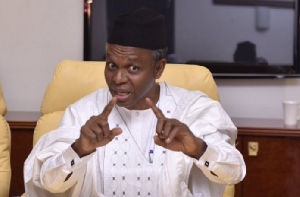
The continuous detention of the former governor of Kaduna State, Mallam Nasir El-Rufai, has sparked reactions from politicians and socio-political activists.....TAP TO CONTINUE READING
DAILY POST reports that the former governor has been in the custody of the Independent Corrupt Practices and Other Related Offences Commission, ICPC, over an ongoing investigation into alleged financial impropriety when he was governor.
El-Rufai had earlier spent two nights in the custody of the Economic and Financial Crimes Commission, EFCC, before he was picked up by the Department of State Services and then later handed over to the ICPC.
His continuous detention has sparked outrage among citizens who are calling on the commission to immediately charge the former governor to court.
Popular socio-political activist, Aisha Yesufu, said in a post on X that “holding a citizen indefinitely without trial” is impossible.
According to her, “that is not justice. That is not accountability. That begins to look like persecution.
“Every Nigerian, no matter how powerful or unpopular, has the right to a fair hearing. That right is not a favour from the government. It is a constitutional guarantee. If El-Rufai committed crimes, then prosecute him. Nigerians will support that. But what we must never
Support is a system where the government can detain anyone endlessly, simply because it can.
“Today, it may be El-Rufai. Tomorrow, it could be anyone else who speaks or acts in a way that those in power do not like. A democracy must be better than that.
“So the message is simple: charge him in court or release him. Let justice be done openly, lawfully, and transparently. That is the only way a nation that claims to respect the rule of law should act”.
Similarly, an activist lawyer, Deji Adeyanju, in an interview he posted on X on Wednesday, demanded that the former governor be charged to court immediately, condemning El-Rufai’s incarceration.
“No matter the allegations, I think he should be charged in a court of competent jurisdiction so that he can face the music.
“All these things currently going on don’t look tidy to me”, he said.
On his part, Paul Ibe, a media aide to the former vice president, Atiku Abubakar, lambasted ICPC for not charging the former governor to court.
In a statement on his X handle, Ibe accused the Commission of taking sides with the President Bola Tinubu-led administration.
He wrote, “The matter of the former Governor of Kaduna State, Mallam Nasir el-Rufai @elrufai has proven beyond measure that the ‘I’ in ICPC (Independent Corrupt Practices and Other Related Offences Commission) @icpcnigeria represents Illegal or Irresponsible.
“There’s nothing Independent about the Commission. They’re no different from all the other institutions of state that are standing on Tinubu’s mandate. The ICPC is nauseatingly pliable and has disgracefully made itself available in coercing members of the opposition into the ruling party”!
Read The Full Article Here Now
👉 Are You A WhatsApp User? Do You Want To Get Our News As Fast As Possible On Daily Basis? 👉 Click This Link To Join WhatsApp Channel Now.
Art & Commercial students don’t fail JAMB because they’re dull. They fail because they’re taught like Science students. Science students calculate — JAMB rewards that. Art students explain — JAMB doesn’t. So you read hard, attend lessons, yet your score disappoints you. This online class fixes that. No theory overload. No confusion. Just real JAMB questions, clear breakdowns, and winning strategies. 📌 JAMB is not hard — you were just taught the wrong way.Click The Link To Reach Us Now 👉 https://wa.me/2349063958940
-

 Breaking News6 months ago
World’s Youngest Undergraduate is Nigerian JOSHUA BECKFORD, gained admission in Oxford University at the age of Six years
-

 Breaking News5 months ago
JUST IN: Finally United States President Donald Trump Revokes 80,000 Visas of Nigerians, Other Foreign Nationals
-

 Breaking News6 months ago
BREAKING NEWS: Woman in Trouble For Burning 7-year-old Girl’s Private Parts With Hot Knife
-

 Breaking News6 months ago
BREAKING NEWS: FULL DETAILS! Top Secret Leaked Why SIM Fubara Fails to Return to Government House After Reinstatement
-

 Breaking News5 months ago
BREAKING NEWS: Nigerian Billionaire Lawmaker Ned Nwoko, Orders Arrest of His Mother In Law Regina Daniels’ Mother, Rita
-

 Breaking News6 months ago
BREAKING NEWS: Federal Government Releases Proof of N25,000 Cash Transfers to 71 Million Nigerians in 8.1 Million Households
-

 Breaking News6 months ago
BREAKING NEWS: Another Rivers Saga: Just Reinstated Fubara Told to Sack All Sole Administrators Appointees, Seek Tinubu’s Assurance Over Impeachment
-

 Breaking News6 months ago
BREAKING NEWS: Finally Department of State Services (DSS) summons Sowore over post on Tinubu