
Breaking News
The kidnap gangs, jihadists and separatists wreaking havoc in Nigeria

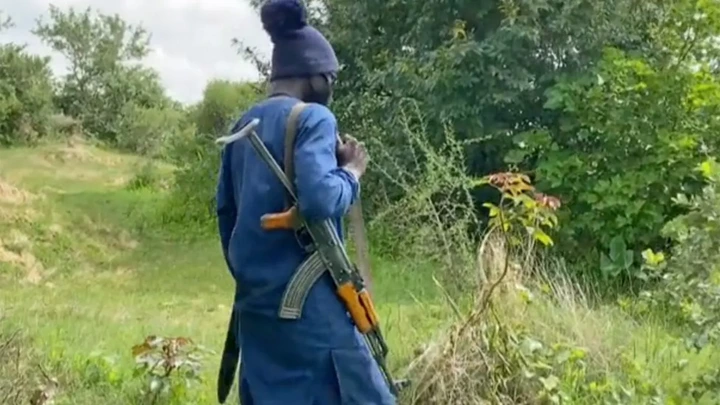
BBC A bandit in Zamfara state dressed in dark blue and holding a gun over his shoulder walks away from the camera in a forested area.
Many of the bandits who are part of the criminal gangs of the north-west hide out in forested areas....TAP TO CONTINUE READING
Nigeria is currently grappling with a spate of mass abductions. But the vast country – bigger than France and Germany combined – also faces many other security challenges.
Recent attempts by US President Donald Trump and his supporters to frame the insecurity purely as the persecution of Christians overlooks the complexity of Africa’s most-populous nation.
There are more than 250 ethnic groups in Nigeria, which is roughly divided into a mainly Muslim north, a largely Christian south, with intermingling in the middle – and the government says people of all faiths have been victims of attacks.
There are criminal gangs in the north-west, an Islamist insurgency in the north-east, clashes over land in central regions and separatist unrest in the south-east – leaving the 400,000-strong army and the police force of 370,000 officers overstretched.
Here’s a breakdown of the main armed groups and flashpoints:
‘Bandits’ – kidnap gangs
These criminal gangs, known locally as “bandits”, are largely composed of people from the Fulani ethnic group, who traditionally make their living by raising animals. They have traded their pastoral tools for assault rifles, which have flooded Nigeria – and other states in the region – since Libya descended into anarchy following the overthrow in 2011 of long-time strongman Muammar Gadaffi by Nato-backed forces.
The gangs are not known to be motivated by any religious or political ideology, but see kidnapping people for ransom as a quick and easy way to make money rather than walking for miles with their livestock in search of water and grazing land.
They typically move in large numbers on motorcycles, which makes them highly mobile and allows them to strike quickly and escape before the security forces can respond – a tactic used during two recent school abductions.
There is no centrally organised leadership – each gang, often drawn from one family or a specific community, tends to be loyal to its own leader. The police have placed bounties on some of the notable leaders, including Ado Aleru and Bello Turji, and in 2022 the government designated the bandits as “terrorists” in a bid to stem their violence.
Aleru is from Yankuzo town – an area in the north-western state of Zamfara which has been a hub for bandit activity over the last three years.
The gangs, which sometimes fight one another, also travel to neighbouring states and central regions to carry out kidnappings. They also prey on their local communities and are indiscriminate in their ransom demands. In some areas, they tax residents.
Younger bandits, some in their teens, are increasingly taking to TikTok to show off their ransom money, guns and motorcycles – and have garnered thousands of followers.
Boko Haram – jihadist group
This Islamist militant group became infamous around the world in 2014 for kidnapping more than 200 schoolgirls from the village of Chibok – around 90 of whom remain missing.
It evolved from a local Islamist sect founded in 2002 by Mohammed Yusuf in the north-eastern city of Maiduguri with the official name of Jama’atu Ahlis Sunna Lidda’awati wal-Jihad and a political goal of creating an Islamic state. Local residents dubbed it Boko Haram – a name which in the Hausa language loosely translates as “Western education is forbidden” because of their opposition to Western-style schools.
Its full-blown insurgency was triggered in 2009 by the killing of Yusuf who had been taken into police custody after Boko Haram clashed with the security forces.
At one point under its new leader, Abubakar Shekau, Boko Haram controlled large swathes of territory in Nigeria’s north-east – and appointed “emirs” to administer some areas.
The Chibok girls were only a small fraction of the many thousands of women and children taken into captivity and forced into sexual slavery, domestic servitude or used as suicide bombers by the militants.
Boko Haram then split into rival factions. After the death of Shekau four years ago, its strength has diminished, however it still conducts regular attacks on both civilians and security forces.
Boko Haram has spawned a range of groups that use kidnapping to raise funds, focusing on soft targets such as schools, churches, mosques and remote villages where paved roads and bridges are either inadequate or absent.
Iswap – Boko Haram splinter group
Several Boko Haram commanders – including Abu Musab al-Barnawi, believed to be the son of Boko Haram founder Mohammed Yusuf – formed what became known as the Islamic State in West Africa Province (Iswap) in around 2016 as they felt Abubakar Shekau was violating Islamic doctrine by killing Muslims.
Boko Haram routinely targeted markets and mosques, often with suicide bombers. Iswap generally avoids attacking Muslim civilians and focuses on military and government targets.
Iswap is still locked in a violent turf war with Boko Haram, with reports of deadly clashes between the two groups around Lake Chad earlier this month. In fact, Shekau is said to have killed himself during a battle with Iswap, exploding a suicide vest.
It remains active and last week killed a Nigerian general, Brig Gen Musa Uba, after an ambush in Borno state.
Iswap commander Hussaini Ismaila was recently sentenced to 20 years in jail for multiple attacks in the northern city of Kano in 2012.
The north-eastern jihadist group was initially blamed for an attack on a Catholic church in the south-west of the country in June 2022 that killed at least 50 worshippers.
But prosecutors now believe it was a single cell linked to Somalia’s al-Shabab jihadist group that was responsible. Five men are currently on trial for the attack and it is alleged they went to Somalia for training.
No group has said it was behind the two recent school kidnappings in the north-west of Nigeria in Kebbi and Niger states, but the government believes that Boko Haram and Iswap are behind them, presidential spokesman Sunday Dare told the BBC.
But it is a claim disputed by some experts.
“I don’t think that’s accurate. There is no Iswap or Boko Haram cell resident in the north-west. The recent kidnappings, including the mass abductions, were carried out by bandits,” conflict analyst Bulama Bukarti told the BBC.
Ansaru – Boko Haram splinter group
This splinter group has moved away from the north-east, where Boko Haram and Iswap dominate, to carry out its operations.
It is believed to have participated in the 2022 attack on a high-speed train travelling between the capital, Abuja – in the centre of the country – and the city of Kaduna, about 200km (124 miles) north, in which at least seven people were killed and more than 100 commuters were abducted for ransom.
Its leader, Khalid al-Barnawi, was arrested in 2016 and is facing trial over several attacks, including the 2011 bombing of the UN building in Abuja. His trial is scheduled to resume in December 2025.
Mahmuda – suspected Boko Haram splinter group
Believed to be a breakaway faction of Boko Haram, it has set up in rural areas around Kainji Lake National Park in the west of the country since around 2020.
It is linked to the Islamic State group and has emphasised more moderate messaging in comparison to Boko Haram and proselytises in Hausa and other local languages to attract recruits.
The group has carried out targeted killings, often riding in on motorcycles and attacking markets, vigilante groups set up to protect villagers from bandits and local communities in the western state of Kwara. In April, its fighters killed several vigilantes and attacked a market there, killing Fulani men and others.
Their recent focus has shifted slightly north of Kwara – to Niger and Kebbi states – areas long plagued by bandit violence, where the two recent school abductions occurred.
A graphic showing people killed in armed attack across Nigeria from January 2014 to 21 November 2025, according to Acled.
Lakurawa – jihadist group
A relatively new Islamist militant group, Lakurawa has been attacking communities in Sokoto and Kebbi states in the north-west and in Niger, the country which borders Nigeria to the north.
The authorities say it maintains ties with jihadist networks in Mali and Niger, and members have settled among border communities, marrying locally and recruiting young people.
Initially presenting itself as a protector against the bandits that roam the north-west, the group has gradually imposed harsh controls – such as checking villagers’ phones for music, which is banned as it is considered un-Islamic, and flogging offenders.
It was declared a terrorist organisation in 2025 and accused of cattle rustling, kidnapping for ransom, hostage-taking and attacking top government officials.
JNIM – Sahel jihadist group
Active mainly in Mali and Burkina Faso, where it controls large areas, Jama’at Nasr al-Islam wal Muslimin (JNIM), may be making inroads into Nigeria.
A confirmed JNIM attack in northern Benin early in 2025 occurred close to the Nigerian border. In October 2025, the group claimed what would be its first attack inside Nigeria, in Kwara – the same state where more than 30 worshippers were abducted from a church last week and which has also seen increasing incursions by bandits.
If JNIM activities are confirmed, it would complicate an already dire situation in parts of the country where Ansaru, Lakurawa, Mahmuda and the bandits are all active.
Herders v farmers – battles over resources
This long-running conflict in central Nigeria – also known as the Middle Belt – has devastated communities, fuelling displacement and the spread of small arms as both herders and farmers arm themselves for what has become a deadly cycle of reprisal attacks.
It has been framed by some as a religious fight, but the central grievance is over grazing rights – access to land and water.
The herders are mainly Fulani Muslims, while the farmers are largely Christians from various ethnic communities, although some are Muslim. Fulani families traditionally walk for hundreds of kilometres from the extreme north to central Nigeria and beyond at least twice a year to find land for their prized cattle.
But urbanisation has seen encroachment onto these age-old grazing routes and locals accuse the Fulani of letting their cattle trample their crops and forcing them out of their homes and fields.
Notable clashes have taken place in Kaduna, Plateau, Nasarawa, Benue and Taraba states. In order to try and curb the violence, some state governments have imposed anti-open grazing laws and set up ranches for the herders – but have faced resistance from all sides.
One fallout from the conflict is the establishment of ethnic militias that, in some cases, have turned to criminality, plundering the people they ostensibly claim to be protecting. Ethnic Tiv militias in Benue have been accused carrying out mass killings and some of their leaders have been killed or arrested by the security forces.
Ipob – separatist group
The separatist violence in the south-east has its roots in calls for Biafran independence that date back nearly 60 years to the brutal civil war that led to the deaths of up to a million people.
That rebellion was crushed but demands for an independent state for the Igbo people of the region continued as some Igbos continue to feel that they are marginalised by the Nigerian state.
The Indigenous People of Biafra (Ipob), led by Nnamdi Kanu, is one of the groups promoting that call for secession. In 2009 Kanu launched Radio Biafra that broadcast separatist messages to Nigeria from London. Ipob was designated as terrorist organisation in 2017 – and three years later Kanu created an armed wing.
The Eastern Security Network (ESN), as it was called, and other splinter groups have since been implicated in arson, kidnappings and killings of civilians and security personnel in five states across the south-east. ESN has been in control of several towns in Imo and Anambra states where thousands were forced from their homes.
For years, the separatists, who have killed many prominent people in the south-east, have imposed a stay-at-home order on Mondays, causing much economic hardship.
Earlier this year, Simon Ekpa, leader of a breakaway faction of Ipob called Biafra Republic Government In Exile, was convicted in Finland of terrorism and other activities in Nigeria’s south-east.
Last week, Kanu was convicted in Nigeria on terrorism-related charges and given a life sentence.
Ahead of the judgement, he had written to Trump urging the US to investigate “killings of Christians and Igbo people” and his group and others have been promoting the “Christian genocide” narrative in America, a BBC investigation into documents filed with the US justice department shows.
Read The Full Article Here Now
👉 Are You A WhatsApp User? Do You Want To Get Our News As Fast As Possible On Daily Basis? 👉 Click This Link To Join WhatsApp Channel Now.

Art & Commercial students don’t fail JAMB because they’re dull. They fail because they’re taught like Science students. Science students calculate — JAMB rewards that. Art students explain — JAMB doesn’t. So you read hard, attend lessons, yet your score disappoints you. This online class fixes that. No theory overload. No confusion. Just real JAMB questions, clear breakdowns, and winning strategies. 📌 JAMB is not hard — you were just taught the wrong way.Click The Link To Reach Us Now 👉 https://wa.me/2349063958940
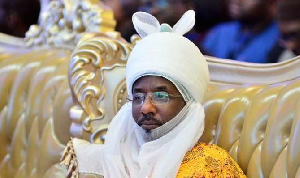
The Kano State Government has announced that the Emir of Kano, Muhammadu Sanusi II, will lead this year’s Eid-el-Fitr Durbar, even as it unveiled strict guidelines to prevent a breakdown of law and order during the celebrations.....TAP TO CONTINUE READING
The government said the decision, approved by Governor Abba Kabir Yusuf, followed credible intelligence reports indicating attempts by some individuals to create unrest during the Sallah period.
In a statement issued on Wednesday by the Commissioner for Information and Internal Affairs, Ibrahim Abdullahi Waiya, the government said it remained committed to preserving Kano’s cultural heritage but would prioritise peace and security.
According to the statement, Hawan Idi (Eid Durbar) will be conducted by Emir Sanusi from the Kofar Mata Eid Ground through designated routes to Gidan Shettima, terminating at Kofar Fatalwa of the emir’s palace.
It added that Hawan Nasarawa would be held in a modified form without horseback displays, while Hawan Daushe, Hawan Fanisau and Hawan Dorayi have been suspended for the time being in the interest of public safety.
The government said all security agencies had been directed to intensify surveillance and ensure strict compliance with the directives before, during and after the festive period.
It urged residents to remain calm, law-abiding and cooperative with security agencies, while cautioning against the spread of unverified information.
The government further assured the public of its commitment to a peaceful and hitch-free Sallah celebration, wishing Muslims in the state a joyous Eid-el-Fitr.
The Durbar, a centuries-old cultural procession, has been thrown into uncertainty following conflicting statements from government officials on whether it will hold this year, given the unresolved legal battle between Sanusi II and Aminu Ado Bayero.
While Governor Yusuf reinstated Sanusi II in 2024, Bayero continues to contest his dethronement in court, leaving the emirship in dispute.
The government recently hinted that the stool controversy would soon be resolved.
Read The Full Article Here Now
👉 Are You A WhatsApp User? Do You Want To Get Our News As Fast As Possible On Daily Basis? 👉 Click This Link To Join WhatsApp Channel Now.
Art & Commercial students don’t fail JAMB because they’re dull. They fail because they’re taught like Science students. Science students calculate — JAMB rewards that. Art students explain — JAMB doesn’t. So you read hard, attend lessons, yet your score disappoints you. This online class fixes that. No theory overload. No confusion. Just real JAMB questions, clear breakdowns, and winning strategies. 📌 JAMB is not hard — you were just taught the wrong way.Click The Link To Reach Us Now 👉 https://wa.me/2349063958940
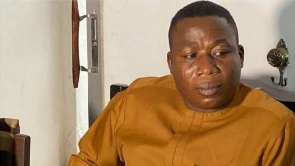
Yoruba nation agitator, Sunday Adeyemo, popularly known as Sunday Igboho, has dismissed comments by human rights activist and former presidential candidate, Omoyele Sowore, over what he described as transactional politics and activism.....TAP TO CONTINUE READING
PUNCH Online reports that Sowore’s comment followed a viral video in which the activist criticised what he described as “transactional politics” among some regional agitators and influencers, accusing them of aligning with political actors for personal or material benefit.
In the video, Sowore appeared to reference Igboho, suggesting that his recent political positions, including support for President Bola Tinubu’s potential re-election bid, reflected what he termed “amala politics” — a colloquial expression often used to imply opportunistic or interest-driven engagement rather than principled activism.
Igboho, in a statement issued by his media aide, Olayomi Koiki, in Ibadan, the Oyo State capital, on Tuesday, criticised Sowore for allegedly describing his activism as “amala politics” in a recent viral video circulating on social media.
He described the comment as an inconsequential rant that should be ignored by the public.
Igboho argued that his agitation for improved security in the South-West and his support for the second-term bid of President Bola Tinubu in 2027 were constitutional rights aimed at promoting the collective interests of the Yoruba people and the development of Nigeria.
He said, “We strongly reject the characterisation of Igboho’s activism as transactional. Such a myopic position misrepresents the intent and focus of our agitation on effective grassroots security in the South-West and Nigeria as a whole.
“How many protests did Sowore organise to push for my freedom? Sowore’s claim of fighting for the masses contradicts his alleged daily lodging expenses of N450,000 at a popular Lagos hotel.
“I cannot be compelled to endorse political figures such as Peter Obi or Atiku Abubakar, or even align with Sowore’s political platform. I have the right to make independent political decisions based on the security and collective interests of the Yoruba people.”
He added that Igboho’s advocacy prioritises addressing insecurity across Yorubaland, including killings of farmers, kidnappings along highways and attacks on traditional rulers and royal institutions.
Koiki, however, clarified that these concerns form the basis of Igboho’s movement rather than any ambition for political office or revolutionary leadership.
The statement added, “While Sowore has consistently promoted nationwide revolution as a pathway to leadership, Igboho’s approach is rooted in protecting lives, land and property within Yoruba territory. This agitation is a response to real and ongoing threats faced by communities in the region.
“Latest security incidents in northern Nigeria, including reported explosions in Maiduguri on March 16, 2026, also raise questions about the broader effectiveness of long-term revolutionary advocacy.
“We challenge Sowore to assess the situation in his home state of Ondo State, considering the growing cases of banditry, kidnapping and attacks on rural communities.”
The statement added that the impact of insecurity on vulnerable groups, including farmers, traditional rulers, women and children, had been severe, with several communities reportedly affected.
“These realities reinforce Igboho’s long-standing call since 2020 for localised security measures and stronger regional protection strategies.
“Labelling our agitation and efforts as ‘amala politics’ undermines the urgency of the security crisis and the legitimacy of grassroots agitation,” the statement concluded
Read The Full Article Here Now
👉 Are You A WhatsApp User? Do You Want To Get Our News As Fast As Possible On Daily Basis? 👉 Click This Link To Join WhatsApp Channel Now.
Art & Commercial students don’t fail JAMB because they’re dull. They fail because they’re taught like Science students. Science students calculate — JAMB rewards that. Art students explain — JAMB doesn’t. So you read hard, attend lessons, yet your score disappoints you. This online class fixes that. No theory overload. No confusion. Just real JAMB questions, clear breakdowns, and winning strategies. 📌 JAMB is not hard — you were just taught the wrong way.Click The Link To Reach Us Now 👉 https://wa.me/2349063958940
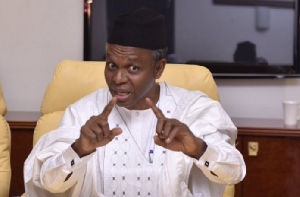
The continuous detention of the former governor of Kaduna State, Mallam Nasir El-Rufai, has sparked reactions from politicians and socio-political activists.....TAP TO CONTINUE READING
DAILY POST reports that the former governor has been in the custody of the Independent Corrupt Practices and Other Related Offences Commission, ICPC, over an ongoing investigation into alleged financial impropriety when he was governor.
El-Rufai had earlier spent two nights in the custody of the Economic and Financial Crimes Commission, EFCC, before he was picked up by the Department of State Services and then later handed over to the ICPC.
His continuous detention has sparked outrage among citizens who are calling on the commission to immediately charge the former governor to court.
Popular socio-political activist, Aisha Yesufu, said in a post on X that “holding a citizen indefinitely without trial” is impossible.
According to her, “that is not justice. That is not accountability. That begins to look like persecution.
“Every Nigerian, no matter how powerful or unpopular, has the right to a fair hearing. That right is not a favour from the government. It is a constitutional guarantee. If El-Rufai committed crimes, then prosecute him. Nigerians will support that. But what we must never
Support is a system where the government can detain anyone endlessly, simply because it can.
“Today, it may be El-Rufai. Tomorrow, it could be anyone else who speaks or acts in a way that those in power do not like. A democracy must be better than that.
“So the message is simple: charge him in court or release him. Let justice be done openly, lawfully, and transparently. That is the only way a nation that claims to respect the rule of law should act”.
Similarly, an activist lawyer, Deji Adeyanju, in an interview he posted on X on Wednesday, demanded that the former governor be charged to court immediately, condemning El-Rufai’s incarceration.
“No matter the allegations, I think he should be charged in a court of competent jurisdiction so that he can face the music.
“All these things currently going on don’t look tidy to me”, he said.
On his part, Paul Ibe, a media aide to the former vice president, Atiku Abubakar, lambasted ICPC for not charging the former governor to court.
In a statement on his X handle, Ibe accused the Commission of taking sides with the President Bola Tinubu-led administration.
He wrote, “The matter of the former Governor of Kaduna State, Mallam Nasir el-Rufai @elrufai has proven beyond measure that the ‘I’ in ICPC (Independent Corrupt Practices and Other Related Offences Commission) @icpcnigeria represents Illegal or Irresponsible.
“There’s nothing Independent about the Commission. They’re no different from all the other institutions of state that are standing on Tinubu’s mandate. The ICPC is nauseatingly pliable and has disgracefully made itself available in coercing members of the opposition into the ruling party”!
Read The Full Article Here Now
👉 Are You A WhatsApp User? Do You Want To Get Our News As Fast As Possible On Daily Basis? 👉 Click This Link To Join WhatsApp Channel Now.
Art & Commercial students don’t fail JAMB because they’re dull. They fail because they’re taught like Science students. Science students calculate — JAMB rewards that. Art students explain — JAMB doesn’t. So you read hard, attend lessons, yet your score disappoints you. This online class fixes that. No theory overload. No confusion. Just real JAMB questions, clear breakdowns, and winning strategies. 📌 JAMB is not hard — you were just taught the wrong way.Click The Link To Reach Us Now 👉 https://wa.me/2349063958940
-

 Breaking News6 months ago
World’s Youngest Undergraduate is Nigerian JOSHUA BECKFORD, gained admission in Oxford University at the age of Six years
-
 Breaking News4 months ago
JUST IN: Finally United States President Donald Trump Revokes 80,000 Visas of Nigerians, Other Foreign Nationals
-
 Breaking News6 months ago
BREAKING NEWS: Woman in Trouble For Burning 7-year-old Girl’s Private Parts With Hot Knife
-
 Breaking News6 months ago
BREAKING NEWS: FULL DETAILS! Top Secret Leaked Why SIM Fubara Fails to Return to Government House After Reinstatement
-
 Breaking News4 months ago
BREAKING NEWS: Nigerian Billionaire Lawmaker Ned Nwoko, Orders Arrest of His Mother In Law Regina Daniels’ Mother, Rita
-
 Breaking News6 months ago
BREAKING NEWS: Federal Government Releases Proof of N25,000 Cash Transfers to 71 Million Nigerians in 8.1 Million Households
-
 Breaking News6 months ago
BREAKING NEWS: Another Rivers Saga: Just Reinstated Fubara Told to Sack All Sole Administrators Appointees, Seek Tinubu’s Assurance Over Impeachment
-
 Breaking News6 months ago
BREAKING NEWS: Finally Department of State Services (DSS) summons Sowore over post on Tinubu