
Foreign News
Trump orders US withdrawal from 66 international organisations

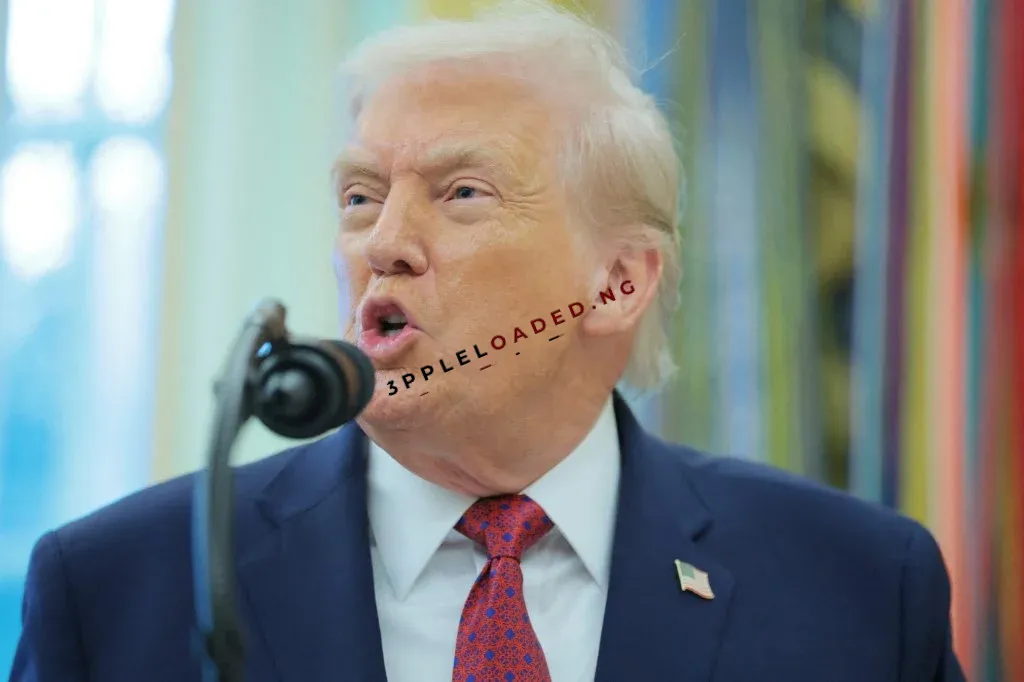
President Donald Trump on Wednesday ordered the United States to withdraw from 66 international organisations.....TAP TO CONTINUE READING
This, he said marks one of the most sweeping rollbacks of US participation in multilateral institutions in modern history, as the administration moves aggressively to realign foreign engagement with what it calls core American interests.
According to a Fact Sheet released by the White House on January 7, 2026, Trump signed a Presidential Memorandum directing the withdrawal from organisations that, in the administration’s words, “no longer serve American interests.”
“Today, President Donald J. Trump signed a Presidential Memorandum directing the withdrawal of the United States from 66 international organisations that no longer serve American interests,” the White House said on it website.
The directive orders all Executive Departments and Agencies to cease participating in and funding 35 non-UN organizations and 31 United Nations entities, which the administration says operate “contrary to US national interests, security, economic prosperity, or sovereignty.”
The move follows an extensive review initiated earlier in the year examining “all international intergovernmental organisations, conventions, and treaties that the United States is a member of or party to, or that the United States funds or supports.”
The White House said the withdrawals are intended to end American taxpayer funding for institutions that, it argues, prioritise global agendas over US needs.
“These withdrawals will end American taxpayer funding and involvement in entities that advance globalist agendas over U.S. priorities, or that address important issues inefficiently or ineffectively such that U.S. taxpayer dollars are best allocated in other ways,” the statement further read.
‘Restoring American Sovereignty’
Framing the decision as a matter of national independence, the administration said Trump is acting to “end US participation in international organisations that undermine America’s independence and waste taxpayer dollars on ineffective or hostile agendas.”
The White House accused many of the organisations of promoting policies at odds with U.S. values and economic strength.
“Many of these bodies promote radical climate policies, global governance, and ideological programs that conflict with US sovereignty and economic strength,” the Fact Sheet stated.
It added that despite years of US financial support, the returns have been minimal.
“American taxpayers have spent billions on these organisations with little return, while they often criticise US policies, advance agendas contrary to our values, or waste taxpayer dollars by purporting to address important issues but not achieving any real results,” the administration said.
By exiting the entities, the White House said the president is “saving taxpayer money and refocusing resources on America First priorities.”
Continuation of Trump’s Global Pullback
The decision builds on a series of high-profile withdrawals since Trump returned to office, reinforcing a foreign policy doctrine centered on sovereignty and unilateral decision-making.
“Immediately upon returning to office, President Trump initiated the withdrawal of the United States from the World Health Organization and the Paris Climate Agreement,” the White House noted.
On his first day back in office, Trump also moved against international tax coordination.
“On Day One of his Administration, President Trump signed a Presidential Memorandum to notify the Organization for Economic Co-operation and Development that its Global Tax Deal has no force or effect in the United States,” the Fact Sheet said, adding that he ordered an investigation into whether foreign tax rules “disproportionately affect American companies.”
Weeks later, Trump escalated further.
“President Trump signed an Executive Order withdrawing the United States from the UN Human Rights Council (UNHRC) and prohibiting any future funding for the UN Relief and Works Agency for the Near East (UNRWA),” the White House said.
Domestic Focus
The administration emphasised that the withdrawals are part of a broader reallocation of resources toward domestic priorities.
“He has prioritised American interests by redirecting focus and resources toward domestic priorities such as infrastructure, military readiness, and border security, and acting swiftly to protect American companies from foreign interference,” the statement said.
While critics are expected to warn of diminished U.S. influence abroad, the White House framed the move as a recalibration rather than retreat.
The message, officials said, is clear: international engagement must serve the United States first—or not at all.
On X, the White House noted that from the 66 international organisations, 31 are UN entities while 35 are not.
“Today, President Donald J. Trump signed a Presidential Memorandum directing the withdrawal of the United States from 66 international organisations that no longer serve American interests including: 35-non UN organisations and 31 UN entities,” it concluded.
Read The Full Article Here Now
👉 Are You A WhatsApp User? Do You Want To Get Our News As Fast As Possible On Daily Basis? 👉 Click This Link To Join WhatsApp Channel Now.

Art & Commercial students don’t fail JAMB because they’re dull. They fail because they’re taught like Science students. Science students calculate — JAMB rewards that. Art students explain — JAMB doesn’t. So you read hard, attend lessons, yet your score disappoints you. This online class fixes that. No theory overload. No confusion. Just real JAMB questions, clear breakdowns, and winning strategies. 📌 JAMB is not hard — you were just taught the wrong way.Click The Link To Reach Us Now 👉 https://wa.me/2349063958940
Foreign News
Organisation of Petroleum Exporting Countries – OPEC+ raises oil quotas amid Middle East tension

Key members of the Organisation of Petroleum Exporting Countries and their allies, jointly known as OPEC+, on Sunday announced a higher-than-expected increase in production quotas following United States and Israeli strikes on Iran, which triggered retaliation by Tehran across the Middle East.....TAP TO CONTINUE READING
The eight-member V8 (Voluntary Eight) group within the alliance, which includes major oil producers Saudi Arabia and Russia, as well as several Gulf states affected by Tehran’s missile strikes, said it had agreed to a “production adjustment” of 206,000 barrels per day.
“This adjustment will be implemented in April,” the group said in a statement, according to a report by AFP. Nigeria is also a strong member of OPEC.
The statement did not directly reference the outbreak of conflict involving Iran, instead citing “a steady global economic outlook and current healthy market fundamentals” as justification for the increase.
Before the weekend meeting, analysts had projected a more modest rise of 137,000 barrels per day. However, Jorge Leon, an analyst at Rystad Energy, cautioned that the agreed increase might not be sufficient to prevent the Iran conflict from triggering a spike in oil prices when trading resumes on Monday.
Leon pointed to the possibility of Iran targeting the Strait of Hormuz, a strategic waterway through which nearly a quarter of the world’s seaborne oil supply passes, in retaliation.
Iran’s Revolutionary Guards have reportedly contacted vessels to announce that the strait is closed. On Sunday, Iranian state television reported that an oil tanker in the strait was struck while allegedly attempting to “illegally” pass through and was sinking. Footage aired by the broadcaster showed a tanker ablaze at sea.
“If oil cannot move through Hormuz, an extra 206,000 barrels per day does very little to ease the market,” Leon said, adding that “logistics and transit risk matter more than production targets right now.”
He said the OPEC+ decision “is unlikely to calm markets.”
“Prices will respond to developments in the Gulf and the status of shipping flows, not to a relatively small increase in output,” he added.
Apart from Russia and Saudi Arabia, the V8 group within OPEC+ comprises Kuwait, Oman, Iraq, and the United Arab Emirates, all of which were targeted by Iranian attacks for a second consecutive day on Sunday. Algeria and Kazakhstan are also members of the group.
Read The Full Article Here Now
👉 Are You A WhatsApp User? Do You Want To Get Our News As Fast As Possible On Daily Basis? 👉 Click This Link To Join WhatsApp Channel Now.
Art & Commercial students don’t fail JAMB because they’re dull. They fail because they’re taught like Science students. Science students calculate — JAMB rewards that. Art students explain — JAMB doesn’t. So you read hard, attend lessons, yet your score disappoints you. This online class fixes that. No theory overload. No confusion. Just real JAMB questions, clear breakdowns, and winning strategies. 📌 JAMB is not hard — you were just taught the wrong way.Click The Link To Reach Us Now 👉 https://wa.me/2349063958940
Breaking News
BREAKING: Has Israel Prime Minister Benjamin Netanyahu Been Killed in Drone Airstrike? Fact Emerges
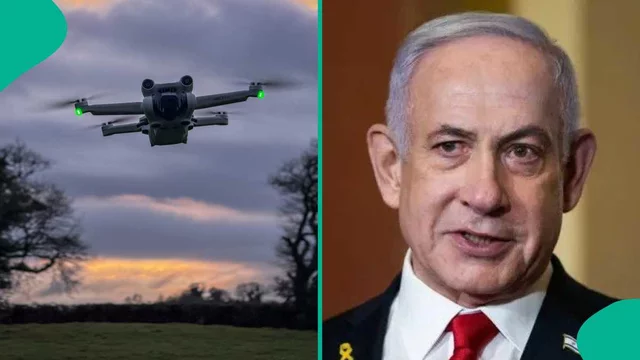
On February 28, an X account named ReversingTrend posted: “Initial reports indicate that Prime Minister Benjamin Netanyahu was killed by an Iranian drone strike inside his residence in Tel Aviv.”....TAP TO CONTINUE READING
The post quickly gained traction, recording 954,000 views, 1,100 retweets, and 7,700 likes.
Factcheck Africa tool confirmed that the claim was false. Multiple reliable sources confirmed that Benjamin Netanyahu was alive and continued to serve as the Prime Minister of Israel.
See the X post
below:
Further checks by Legit Nigeria showed that his profile entry on Israel’s official website listed his birthdate and current position with no mention of his death. The International Criminal Court (ICC) page also confirmed his status, noting that an arrest warrant was issued against him on November 21, 2024. The existence of this warrant implied that he was alive and subject to ongoing legal proceedings.
The evidence showed that Benjamin Netanyahu had not been killed in a drone strike. He remained in office as Prime Minister of Israel, and no credible reports supported the claim of his death. The viral post was therefore misleading, spreading false information about a sitting world leader.
Verdict
: False – Benjamin Netanyahu was not killed in a drone strike. He was alive and serving as Prime Minister of Israel at the time of the claim.
Who is Benjamin Netanyahu?
According to Israel government, Benjamin Netanyahu was born in 1949 in Tel Aviv and grew up in Jerusalem. His high school years were spent in the United States, where his father, the historian Benzion Netanyahu, taught and conducted historical research. Returning to Israel in 1967, Mr. Netanyahu enlisted in the IDF and served as a soldier and officer in Sayeret Matkal, a special unit of the Israeli army. He took part in several operations, including the rescue of hostages in a hijacked Sabena airplane in 1972. In the same year, he was cited for outstanding operational command by General Mordechai Gur, Chief of Israel’s Northern Command. After his discharge from the IDF in 1972, Mr. Netanyahu served in the Yom Kippur War of 1973 and was promoted after the war to the rank of captain in the Reserves.
Netanyahu received a B.Sc. degree in Architecture and an M.Sc. in Business Management from MIT. He also studied political science at MIT and at Harvard University.
Business
Experience Between 1976 and 1982 Mr. Netanyahu worked in the private sector, first with the Boston Consulting Group, an international business consultancy, and then as Marketing Director of Rim Industries in Jerusalem, an industrialized furniture manufacturer.
According to IndiaTimes, Trump described Khamenei as “one of the most evil people in history” and said he was tracked using “highly sophisticated tracking systems.” He called the strike “the single greatest chance for the Iranian people to take back their country.”
Read The Full Article Here Now
👉 Are You A WhatsApp User? Do You Want To Get Our News As Fast As Possible On Daily Basis? 👉 Click This Link To Join WhatsApp Channel Now.
Art & Commercial students don’t fail JAMB because they’re dull. They fail because they’re taught like Science students. Science students calculate — JAMB rewards that. Art students explain — JAMB doesn’t. So you read hard, attend lessons, yet your score disappoints you. This online class fixes that. No theory overload. No confusion. Just real JAMB questions, clear breakdowns, and winning strategies. 📌 JAMB is not hard — you were just taught the wrong way.Click The Link To Reach Us Now 👉 https://wa.me/2349063958940
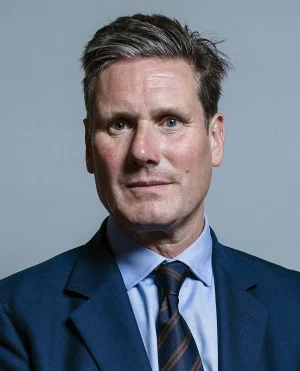
UK Prime Minister Keir Starmer has strongly criticized remarks by US President Donald Trump that appeared to dismiss the contributions and sacrifices of NATO allies during the Afghanistan war. Speaking to Fox News in Davos, Trump suggested NATO troops “stayed a little back, a little off the front lines” and claimed the US “never needed” its allies. Starmer described the comments as “insulting and frankly appalling,” emphasizing the courage and sacrifice of British and allied troops. Prince Harry and former US diplomat Nicholas Burns also condemned Trump’s statements, which have sparked widespread backlash among European leaders.....TAP TO CONTINUE READING
Key Points:
The remarks risk straining transatlantic relations and undermining the solidarity of the NATO alliance, especially ahead of future security collaborations.
They disrespect the documented sacrifices of thousands of NATO troops from multiple countries who served, were injured, or died in Afghanistan.
The backlash reflects broader European concerns about the reliability and diplomatic approach of US leadership under Trump’s administration.
Such statements may influence public and political perceptions of the US commitment to multilateral defense partnerships.
The timing, amid ongoing global security challenges, highlights tensions in how military contributions and alliances are acknowledged and valued.
The controversy is likely to fuel diplomatic discussions on alliance solidarity and the public recognition of collective military sacrifices.
Sources: The Cable, Channels
Read The Full Article Here Now
👉 Are You A WhatsApp User? Do You Want To Get Our News As Fast As Possible On Daily Basis? 👉 Click This Link To Join WhatsApp Channel Now.
Art & Commercial students don’t fail JAMB because they’re dull. They fail because they’re taught like Science students. Science students calculate — JAMB rewards that. Art students explain — JAMB doesn’t. So you read hard, attend lessons, yet your score disappoints you. This online class fixes that. No theory overload. No confusion. Just real JAMB questions, clear breakdowns, and winning strategies. 📌 JAMB is not hard — you were just taught the wrong way.Click The Link To Reach Us Now 👉 https://wa.me/2349063958940
-

 Breaking News6 months ago
World’s Youngest Undergraduate is Nigerian JOSHUA BECKFORD, gained admission in Oxford University at the age of Six years
-
 Breaking News4 months ago
JUST IN: Finally United States President Donald Trump Revokes 80,000 Visas of Nigerians, Other Foreign Nationals
-

 Breaking News6 months ago
BREAKING NEWS: Woman in Trouble For Burning 7-year-old Girl’s Private Parts With Hot Knife
-
 Breaking News6 months ago
BREAKING NEWS: FULL DETAILS! Top Secret Leaked Why SIM Fubara Fails to Return to Government House After Reinstatement
-

 Breaking News4 months ago
BREAKING NEWS: Nigerian Billionaire Lawmaker Ned Nwoko, Orders Arrest of His Mother In Law Regina Daniels’ Mother, Rita
-
 Breaking News6 months ago
BREAKING NEWS: Federal Government Releases Proof of N25,000 Cash Transfers to 71 Million Nigerians in 8.1 Million Households
-

 Breaking News6 months ago
BREAKING NEWS: Another Rivers Saga: Just Reinstated Fubara Told to Sack All Sole Administrators Appointees, Seek Tinubu’s Assurance Over Impeachment
-
 Breaking News6 months ago
BREAKING NEWS: Finally Department of State Services (DSS) summons Sowore over post on Tinubu