
Breaking News
Weekend of Horror: Terrorists use drones, arms to monitor, kidnap, kill in four Nigerian states


The faint mechanical buzz that drifted across Ejiba, a community in Yagba West Area of Kogi State, sometime between 8 and 9 a.m. on Sunday, was unusual enough to make residents look up. In this agrarian settlement, morning sounds usually come from grinding cassava mills or the call to prayer — not the high-pitched hum of aerospace technology.....TAP TO CONTINUE READING
At first, villagers assumed the device was harmless — perhaps a wedding videographer testing equipment. But as the sound lingered, moving slowly and deliberately across the sky, a sense of unease began to settle. The drone wasn’t passing through; it was circling. It was watching.
Minutes later, armed men stormed the Cherubim and Seraphim Church, where worshippers were deep in prayer. Guided, it seemed, by the invisible eyes above, the attackers abducted the pastor, his wife, and several congregants before melting into the surrounding bush.
For locals, the connection was unmistakable: the drone was the scout; the gunmen were the infantry.
But for the Kogi State Government, the immediate concern appeared not to be how bandits launched a drone-assisted operation in the heart of Nigeria, but why the church held its service “in a bush.” In a statement confirming the attack, Commissioner for Information Kingsley Fanwo queried the church’s location and warned residents to “apply wisdom.”
His remarks revealed a troubling disconnect between official rhetoric and the sophistication of emerging threats.
Do you live in Ogijo
The Ejiba attack is among the clearest indications yet that Nigeria’s insecurity has entered a more advanced phase — one defined by aerial surveillance, operational mobility, and a renewed appetite for symbolic targets.
And it was only one chapter in a weekend of coordinated desecration.
A Weekend of Desecration
Violence swept through four northern states between Saturday night and Sunday evening. Viewed together, the attacks formed a chilling pattern: a direct assault on Nigeria’s sacred spaces — churches, weddings, farms, and homes.
Around 11 p.m. on Saturday, terror descended on Chacho village in Wurno LGA of Sokoto State. It was the eve of a wedding, a night typically filled with the laughter and song of the Lalle (henna) ceremony. Instead, gunfire shattered the festivities.
The bride-to-be, Halima (name changed), was indoors with bridesmaids and relatives making final preparations. But instead of the groom’s family arriving with gifts, gunmen arrived with rifles. They abducted Halima, several bridesmaids, and guests, and looted livestock meant for the wedding feast.
“Her room is empty now,” a local source told our reporter, asking not to be named for security reasons. “The henna bowl is still there. The wedding dress is half-sewn.”
The symbolism was devastating. A ceremony meant to unite families and affirm continuity had become another theatre of fear.
In Kwara State, the gatekeepers of tradition were also targeted. The Ojibara of Bayagan, Kamilu Salami, was abducted from his farm. His captors demanded ₦150 million.
And in Kano State’s Yankamaye village, Tsanyanwa LGA, a similar incident occurred. A woman was killed, and three others abducted in another targeted night raid that left the border community paralysed with fear.
Across the North, the message was unmistakable: no space is sacred anymore.
The Technological Leap: When Bandits Watch from the Sky
For years, Nigeria’s armed groups relied on a “low-tech” intelligence network. They used coercion, paid local informants, and utilised spotters stationed along major roads – often disguised as hawkers – to map the movement of villagers and security agents.
Security analysts say the device reportedly used in Ejiba was likely a commercial quadcopter costing between ₦1.5 million and ₦3 million. But its significance lies not in the price — it lies in what it allows: terrain scanning, escape-route mapping, target confirmation, counting worshippers, detecting security presence, and real-time video feed from the bush.
“A drone allows them to watch us before we know they’re there,” a serving security official said. “It marks a troubling escalation.”
France-based forensic consultant, Yusuf Aliu, warns of a rapidly widening intelligence gap.
“Criminals no longer rely solely on compromised villagers,” he said. “They can sit in a forest camp and stream a church service live.”
While authorities urge citizens to “say something when they see something,” the criminals are now seeing everything — from 200 feet above.
State Denial and the Ostrich in the Room
The Nigerian military had admitted that insurgents in the country now use drones, including armed ones. In October, the army said terrorists used armed drones, RPGs and other weapons to attack troops in Borno State.
However, authorities appear unprepared for such warfare by the armed groups.
Mr Fanwo’s remarks — effectively blaming the Kogi church for its location — reflect a worrying trend in official communication: shifting responsibility onto unarmed citizens.
But the weekend’s events dismantle this logic. The bride in Sokoto was inside her family home, surrounded by relatives; the monarch in Kwara was on his own land, within his ancestral domain; and the women in Kano were attacked in their village.
When homes, churches, farms and wedding gatherings all fall within the danger zone, the state’s definition of “safe areas” collapses.
‘The Darkness Before Dawn’: A Nation in Denial
In a sermon on Sunday, titled “The Darkness Before Dawn,” Tunde Bakare, a pastor and church leader, accused the Bola Tinubu administration of “playing the ostrich” — burying its head while terror networks expand.
Mr Bakare, known for his fiery intersection of theology and politics, argued that the government appears more focused on the political permutations of the 2027 elections than on the immediate threat to national cohesion.
“The level of insecurity seems to have worsened,” he said. “Terrorists and bandits brazenly dare the Nigerian state.”
His criticism resonated because the state appears slow to adapt while armed groups innovate rapidly – expanding their capabilities faster than the state is reforming its response. While the government creates committees, the bandits create drone units.
When Survival Becomes a Curriculum
Speaking at his alma mater, Government College Ibadan, Nobel laureate Wole Soyinka argued that insecurity has become so pervasive in the national fabric that schools should begin teaching “security awareness” as a formal subject.
“Security should be treated with such seriousness that it becomes a discipline taught in schools,” the literary icon said.
His suggestion was stark: a curriculum on how to spot danger, informants, survive abductions, and how to hide from gunmen—highlights a painful truth: Nigerians are being forced to learn survival skills in response to state failure.
The Economics of Terror: Funding the Next Drone
Behind every kidnapping lies a cold, hard business model. The ₦150 million ransom demanded for the release of the Ojibara of Bayagan stands out not simply because of the exorbitant amount, but because of what it signifies: investment capital.
Security experts warn against viewing these ransoms merely as a manifestation of greed. Bandit groups today are running sophisticated paramilitary organisations that require significant overhead to maintain.
Consider the “Start-Up Costs” of a modern bandit cell:
Drones: A surveillance drone with a decent range costs between ₦1.5 million and ₦3 million.
Connectivity: To operate these drones and negotiate ransoms, bandits are increasingly bypassing local telecom shutdowns by using satellite internet services like Starlink, which require hardware costs of over ₦500,000 and monthly subscriptions of ₦38,000.
Logistics: Fuel for motorcycles (which has tripled in price), informant networks on government payrolls, and food supplies for hundreds of foot soldiers require a steady cash flow.
In effect, every ransom paid—especially high-value ones—funds the next round of violence. The victims are effectively forced to finance the upgrading of their own oppressors.
The ‘Balloon Effect’ Reshaping Nigeria’s Map of Danger
The recent violence is not occurring in isolation. The surge is tied to a southward migration of armed groups driven by military pressure in the North-west — a phenomenon known as the balloon effect, where squeezing one side causes the pressure to expand elsewhere.
For years, banditry was concentrated in the “axis of violence”—Zamfara, Katsina, and Sokoto. However, intensive military bombardments and air raids in these states have displaced many groups, forcing them southwards.
They are migrating into the “Triangle of Terror”—the lush, unguarded forest corridors connecting Kebbi, Niger, Kwara, and Kogi states. These areas offer dense cover (forests like Kamuku and Kwiambana) and, crucially, a weaker security presence than the militarised North-west.
Executive Governor of Kogi State, Ahmed Usman Ododo
Governor of Kogi State, Ahmed Usman Ododo
On 15 November, this movement became visible to the public. Security operatives in Eruku, Kwara State, intercepted a trailer transporting about 40 suspected bandits. They were not local criminals; they were allegedly displaced from the Zamfara–Katsina corridor, seeking new territory.
A police signal dated 22 November further warned of an influx of bandits into Kogi East. The warning came barely a week before the Ejiba church attack, which security officers now consider a direct consequence of this unchecked migration.
“The contagion has broken through the North-central buffer,” said a retired military intelligence officer who asked not to be named for security reasons. “Abuja’s backdoor is now exposed.”
Drones vs. Diplomacy: A Race Against Time
In response to this spiral, the federal government has signalled a pivot toward international help. President Bola Tinubu recently ordered the establishment of a high-level team to engage the United States on new security cooperation.
But Yusuf Aliu, the forensic expert, warns that bureaucracy and slow diplomacy could become the enemy’s greatest allies.
“While government committees meet to discuss cooperation and write white papers,” Mr Aliu said, “the bandits are already deploying drones for tactical engagement.”
He dismissed the often-cited political fears that foreign assistance undermines national sovereignty.
“Sovereignty is not eroded by accepting support,” he argued. “It is eroded when violent groups control territory, collect taxes, and decide who gets to pray in a church or sleep in their home.”
For many Nigerians, the concern is not whether external help is needed—that is now obvious. The question is whether the help will arrive faster than the next drone-assisted attack.
A Nation Under Hovering Shadows
From the savannas of Sokoto to the forests of Kogi, the message from last weekend’s violence was very clear: Nigeria is confronting adversaries who are innovating, expanding, and entrenching their presence.
The attacks across four states, including the use of a drone in one of them, mark a turning point. The enemy is evolving faster than the state’s capacity to respond.
Unless the government addresses the intelligence failures that allow drones to fly over villages, tackles the financing that allows bandits to demand N150 million, and reinforces the border communities in the “Triangle of Terror,” Nigeria risks losing more than just territory.
It risks losing the sanctuaries that define its spiritual, cultural, and communal life – churches, weddings, farms and homes.
The places where Nigerians gather to pray, celebrate, mourn, and live are now battlegrounds. And as the drone that hovered over Ejiba has shown, the threat is no longer just at the gate. It is already in the sky.
Read The Full Article Here Now
👉 Are You A WhatsApp User? Do You Want To Get Our News As Fast As Possible On Daily Basis? 👉 Click This Link To Join WhatsApp Channel Now.

Art & Commercial students don’t fail JAMB because they’re dull. They fail because they’re taught like Science students. Science students calculate — JAMB rewards that. Art students explain — JAMB doesn’t. So you read hard, attend lessons, yet your score disappoints you. This online class fixes that. No theory overload. No confusion. Just real JAMB questions, clear breakdowns, and winning strategies. 📌 JAMB is not hard — you were just taught the wrong way.Click The Link To Reach Us Now 👉 https://wa.me/2349063958940
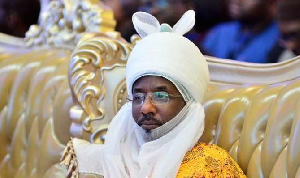
The Kano State Government has announced that the Emir of Kano, Muhammadu Sanusi II, will lead this year’s Eid-el-Fitr Durbar, even as it unveiled strict guidelines to prevent a breakdown of law and order during the celebrations.....TAP TO CONTINUE READING
The government said the decision, approved by Governor Abba Kabir Yusuf, followed credible intelligence reports indicating attempts by some individuals to create unrest during the Sallah period.
In a statement issued on Wednesday by the Commissioner for Information and Internal Affairs, Ibrahim Abdullahi Waiya, the government said it remained committed to preserving Kano’s cultural heritage but would prioritise peace and security.
According to the statement, Hawan Idi (Eid Durbar) will be conducted by Emir Sanusi from the Kofar Mata Eid Ground through designated routes to Gidan Shettima, terminating at Kofar Fatalwa of the emir’s palace.
It added that Hawan Nasarawa would be held in a modified form without horseback displays, while Hawan Daushe, Hawan Fanisau and Hawan Dorayi have been suspended for the time being in the interest of public safety.
The government said all security agencies had been directed to intensify surveillance and ensure strict compliance with the directives before, during and after the festive period.
It urged residents to remain calm, law-abiding and cooperative with security agencies, while cautioning against the spread of unverified information.
The government further assured the public of its commitment to a peaceful and hitch-free Sallah celebration, wishing Muslims in the state a joyous Eid-el-Fitr.
The Durbar, a centuries-old cultural procession, has been thrown into uncertainty following conflicting statements from government officials on whether it will hold this year, given the unresolved legal battle between Sanusi II and Aminu Ado Bayero.
While Governor Yusuf reinstated Sanusi II in 2024, Bayero continues to contest his dethronement in court, leaving the emirship in dispute.
The government recently hinted that the stool controversy would soon be resolved.
Read The Full Article Here Now
👉 Are You A WhatsApp User? Do You Want To Get Our News As Fast As Possible On Daily Basis? 👉 Click This Link To Join WhatsApp Channel Now.
Art & Commercial students don’t fail JAMB because they’re dull. They fail because they’re taught like Science students. Science students calculate — JAMB rewards that. Art students explain — JAMB doesn’t. So you read hard, attend lessons, yet your score disappoints you. This online class fixes that. No theory overload. No confusion. Just real JAMB questions, clear breakdowns, and winning strategies. 📌 JAMB is not hard — you were just taught the wrong way.Click The Link To Reach Us Now 👉 https://wa.me/2349063958940
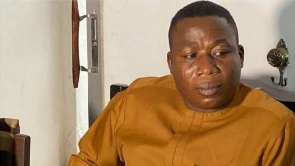
Yoruba nation agitator, Sunday Adeyemo, popularly known as Sunday Igboho, has dismissed comments by human rights activist and former presidential candidate, Omoyele Sowore, over what he described as transactional politics and activism.....TAP TO CONTINUE READING
PUNCH Online reports that Sowore’s comment followed a viral video in which the activist criticised what he described as “transactional politics” among some regional agitators and influencers, accusing them of aligning with political actors for personal or material benefit.
In the video, Sowore appeared to reference Igboho, suggesting that his recent political positions, including support for President Bola Tinubu’s potential re-election bid, reflected what he termed “amala politics” — a colloquial expression often used to imply opportunistic or interest-driven engagement rather than principled activism.
Igboho, in a statement issued by his media aide, Olayomi Koiki, in Ibadan, the Oyo State capital, on Tuesday, criticised Sowore for allegedly describing his activism as “amala politics” in a recent viral video circulating on social media.
He described the comment as an inconsequential rant that should be ignored by the public.
Igboho argued that his agitation for improved security in the South-West and his support for the second-term bid of President Bola Tinubu in 2027 were constitutional rights aimed at promoting the collective interests of the Yoruba people and the development of Nigeria.
He said, “We strongly reject the characterisation of Igboho’s activism as transactional. Such a myopic position misrepresents the intent and focus of our agitation on effective grassroots security in the South-West and Nigeria as a whole.
“How many protests did Sowore organise to push for my freedom? Sowore’s claim of fighting for the masses contradicts his alleged daily lodging expenses of N450,000 at a popular Lagos hotel.
“I cannot be compelled to endorse political figures such as Peter Obi or Atiku Abubakar, or even align with Sowore’s political platform. I have the right to make independent political decisions based on the security and collective interests of the Yoruba people.”
He added that Igboho’s advocacy prioritises addressing insecurity across Yorubaland, including killings of farmers, kidnappings along highways and attacks on traditional rulers and royal institutions.
Koiki, however, clarified that these concerns form the basis of Igboho’s movement rather than any ambition for political office or revolutionary leadership.
The statement added, “While Sowore has consistently promoted nationwide revolution as a pathway to leadership, Igboho’s approach is rooted in protecting lives, land and property within Yoruba territory. This agitation is a response to real and ongoing threats faced by communities in the region.
“Latest security incidents in northern Nigeria, including reported explosions in Maiduguri on March 16, 2026, also raise questions about the broader effectiveness of long-term revolutionary advocacy.
“We challenge Sowore to assess the situation in his home state of Ondo State, considering the growing cases of banditry, kidnapping and attacks on rural communities.”
The statement added that the impact of insecurity on vulnerable groups, including farmers, traditional rulers, women and children, had been severe, with several communities reportedly affected.
“These realities reinforce Igboho’s long-standing call since 2020 for localised security measures and stronger regional protection strategies.
“Labelling our agitation and efforts as ‘amala politics’ undermines the urgency of the security crisis and the legitimacy of grassroots agitation,” the statement concluded
Read The Full Article Here Now
👉 Are You A WhatsApp User? Do You Want To Get Our News As Fast As Possible On Daily Basis? 👉 Click This Link To Join WhatsApp Channel Now.
Art & Commercial students don’t fail JAMB because they’re dull. They fail because they’re taught like Science students. Science students calculate — JAMB rewards that. Art students explain — JAMB doesn’t. So you read hard, attend lessons, yet your score disappoints you. This online class fixes that. No theory overload. No confusion. Just real JAMB questions, clear breakdowns, and winning strategies. 📌 JAMB is not hard — you were just taught the wrong way.Click The Link To Reach Us Now 👉 https://wa.me/2349063958940
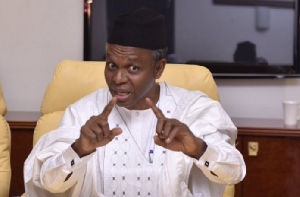
The continuous detention of the former governor of Kaduna State, Mallam Nasir El-Rufai, has sparked reactions from politicians and socio-political activists.....TAP TO CONTINUE READING
DAILY POST reports that the former governor has been in the custody of the Independent Corrupt Practices and Other Related Offences Commission, ICPC, over an ongoing investigation into alleged financial impropriety when he was governor.
El-Rufai had earlier spent two nights in the custody of the Economic and Financial Crimes Commission, EFCC, before he was picked up by the Department of State Services and then later handed over to the ICPC.
His continuous detention has sparked outrage among citizens who are calling on the commission to immediately charge the former governor to court.
Popular socio-political activist, Aisha Yesufu, said in a post on X that “holding a citizen indefinitely without trial” is impossible.
According to her, “that is not justice. That is not accountability. That begins to look like persecution.
“Every Nigerian, no matter how powerful or unpopular, has the right to a fair hearing. That right is not a favour from the government. It is a constitutional guarantee. If El-Rufai committed crimes, then prosecute him. Nigerians will support that. But what we must never
Support is a system where the government can detain anyone endlessly, simply because it can.
“Today, it may be El-Rufai. Tomorrow, it could be anyone else who speaks or acts in a way that those in power do not like. A democracy must be better than that.
“So the message is simple: charge him in court or release him. Let justice be done openly, lawfully, and transparently. That is the only way a nation that claims to respect the rule of law should act”.
Similarly, an activist lawyer, Deji Adeyanju, in an interview he posted on X on Wednesday, demanded that the former governor be charged to court immediately, condemning El-Rufai’s incarceration.
“No matter the allegations, I think he should be charged in a court of competent jurisdiction so that he can face the music.
“All these things currently going on don’t look tidy to me”, he said.
On his part, Paul Ibe, a media aide to the former vice president, Atiku Abubakar, lambasted ICPC for not charging the former governor to court.
In a statement on his X handle, Ibe accused the Commission of taking sides with the President Bola Tinubu-led administration.
He wrote, “The matter of the former Governor of Kaduna State, Mallam Nasir el-Rufai @elrufai has proven beyond measure that the ‘I’ in ICPC (Independent Corrupt Practices and Other Related Offences Commission) @icpcnigeria represents Illegal or Irresponsible.
“There’s nothing Independent about the Commission. They’re no different from all the other institutions of state that are standing on Tinubu’s mandate. The ICPC is nauseatingly pliable and has disgracefully made itself available in coercing members of the opposition into the ruling party”!
Read The Full Article Here Now
👉 Are You A WhatsApp User? Do You Want To Get Our News As Fast As Possible On Daily Basis? 👉 Click This Link To Join WhatsApp Channel Now.
Art & Commercial students don’t fail JAMB because they’re dull. They fail because they’re taught like Science students. Science students calculate — JAMB rewards that. Art students explain — JAMB doesn’t. So you read hard, attend lessons, yet your score disappoints you. This online class fixes that. No theory overload. No confusion. Just real JAMB questions, clear breakdowns, and winning strategies. 📌 JAMB is not hard — you were just taught the wrong way.Click The Link To Reach Us Now 👉 https://wa.me/2349063958940
-

 Breaking News6 months ago
World’s Youngest Undergraduate is Nigerian JOSHUA BECKFORD, gained admission in Oxford University at the age of Six years
-

 Breaking News5 months ago
JUST IN: Finally United States President Donald Trump Revokes 80,000 Visas of Nigerians, Other Foreign Nationals
-

 Breaking News6 months ago
BREAKING NEWS: Woman in Trouble For Burning 7-year-old Girl’s Private Parts With Hot Knife
-

 Breaking News6 months ago
BREAKING NEWS: FULL DETAILS! Top Secret Leaked Why SIM Fubara Fails to Return to Government House After Reinstatement
-

 Breaking News5 months ago
BREAKING NEWS: Nigerian Billionaire Lawmaker Ned Nwoko, Orders Arrest of His Mother In Law Regina Daniels’ Mother, Rita
-
 Breaking News6 months ago
BREAKING NEWS: Federal Government Releases Proof of N25,000 Cash Transfers to 71 Million Nigerians in 8.1 Million Households
-

 Breaking News6 months ago
BREAKING NEWS: Another Rivers Saga: Just Reinstated Fubara Told to Sack All Sole Administrators Appointees, Seek Tinubu’s Assurance Over Impeachment
-

 Breaking News6 months ago
BREAKING NEWS: Finally Department of State Services (DSS) summons Sowore over post on Tinubu