
Breaking News
WHAT YOU NEED TO KNOW: Secret Lives Of Abuja’s Domestic Workers

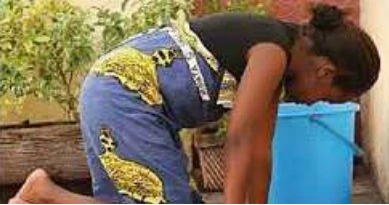
At 5:10am, before the first light hits the rooftops of Lokogoma, Grace, a 19-year-old housemaid from Benue State, is already sweeping the compound of the duplex where she works. By the time the rest of the household wakes up, she will have cooked breakfast, packed two school lunchboxes, boiled hot water for her madam, fed the dogs, wiped down the parlour furniture, and cleaned the kitchen — all for a monthly pay of ₦18,000. Her workday ends at 11 p.m., sometimes later, especially on weekends when visitors arrive and she must continue serving food until the last guest leaves. Her off day? Once in three months.
Grace is one of the countless invisible hands powering the homes of Abuja’s middle- and upper-class families — an underregulated, understudied labour force that has become critical to life in the capital yet remains unprotected, unspoken for, and often exploited. Their contribution fuels the very idea of “middle-class comfort,” yet their lives exist at the edge of survival and silence. This is the hidden world of Abuja’s domestic workers.
Booming Underground Economy
Domestic work has become one of the fastest-growing informal sectors in Abuja. From Wuse to Gwarimpa, from Lugbe to Apo, nearly every middle-income household now employs a nanny, cleaner, cook, driver, or gatekeeper. Gated estates such as Sunnyvale, Citec, and Crown Estate appear polished and orderly — but the truth is that these streets run on the labour of domestic workers tucked into Boys’ Quarters, shared rooms, or tiny corridor spaces. Behind the demand lies a dark economy driven by: Extreme unemployment in rural communities. Organised but unregistered agents who recruit girls as young as 13 with zero regulatory oversight and cash payments without contracts.A silent social acceptance of exploitation
Many homes prefer “live-in” workers because they are cheaper, more compliant, easier to control, and cut off from any support system. For employers, it guarantees round-the-clock service. For the worker, it is a life lived in someone else’s home, under someone else’s rules, with no clear boundaries of work and rest.
A resident of Garki who employs two housemaids described it bluntly: “If they go home every day, they will give excuses. Live-in is better. You control everything.”
It is exactly that sense of control that defines the underground domestic labour economy in Abuja.
The Brokerage System: A ₦40,000 Girl for ₦10,000 Commission.
In Nyanya, Karu, and Mararaba, domestic labour agents operate openly. They recruit girls and young women from Plateau, Benue, Kogi, Niger, and Taraba, bring them to Abuja in groups, and “assign” them to households like commodities.
A typical arrangement works like this: An agent collects ₦20,000–₦50,000 from the employer as a placement fee.
The worker receives ₦15,000– ₦25,000 monthly. Some agents keep the first one or two months’ salary as commission. In many cases, the worker is not allowed to leave the house, partly to prevent her from discovering the real salary level negotiated. Some employers demand “obedience guarantees” from the agents. Workers are often told to “manage” whatever their madam gives them.
Sometimes the worker is not told the real salary the employer pays. Sometimes she never receives the pay at all. Agents advertise freely in WhatsApp groups with messages such as: “Fresh girl from Taraba. 18 years. Polite. Can cook. 20k salary. Pay the agent fee first.”
Behind these short messages are real human lives being processed like products.
On average, Abuja domestic workers labour between 16 and 18 hours daily. The workload is enormous, often covering responsibilities normally done by three different people in more regulated economies.
Typical tasks include childcare and school preparation; cleaning the entire house daily; cooking meals and grocery shopping; laundry and ironing, washing cars, taking care of elderly relatives, running errands within gated estates, taking delivery of parcels, washing dishes multiple times a day, feeding pets and serving visitors.
Many of these young women are teenagers who have never performed such workload before coming to Abuja.
Several interviewed maids reported: Physical abuse (slaps, beatings, threats)
Verbal abuse (insults, humiliation, name-calling), food deprivation (being fed separately or given leftovers); no privacy or personal space, no rest days, confiscation of phones and prohibitions from attending church or mosque
One housemaid narrated how her madam forbids her from drinking bottled water: “Drink tap water. Bottled water is not for you.”
Another said she sleeps on a thin foam at the back of the kitchen because the Boys’ Quarters is “for visitors”.
Living in Fear: The Growing Cases of Sexual Abuse
Perhaps the darkest part of the domestic work economy is the widespread but unspoken epidemic of sexual abuse.
Common perpetrators include male employers, teenage boys in the house, visiting male relatives, security guards inside estates, and neighbours who lure the girls with small gifts.
Because most maids live inside the homes of their employers, proximity becomes a vulnerability. Many victims cannot speak up. They fear losing their only income or being sent back home in disgrace.
One 17-year-old housemaid in Jikwoyi narrated: “The man will touch me when madam goes out. If I talk, they will say I am lying. I just keep quiet.”
Some domestic workers who become pregnant are summarily dismissed and replaced. A community leader in Masaka confirmed that the number of “abandoned housemaid pregnancies” has risen in the last three years.
The police usually treat these cases as “family matters,” and because most workers have no identity documents or contracts, they have no legal standing.
Several factors contribute to the silence surrounding domestic workers in Abuja. To begin with, Nigeria’s Labour Act barely recognises domestic service as a formal sector. There is no minimum wage requirement for domestic workers, no regulation of work hours, no guaranteed rest days, and no formal system for reporting grievances. This legal vacuum leaves workers unprotected and employers unregulated.
Another layer of the silence comes from the absence of unions or associations. Unlike drivers, traders, or artisans, domestic workers in Abuja have no organised body to represent their interests, negotiate better conditions, or defend them when abuse occurs. They operate as isolated individuals, which makes them easy to exploit and easy to silence.
Cultural factors deepen the problem. Families often conceal abuse to avoid public shame, while domestic workers themselves remain quiet out of fear of losing their jobs or being thrown out without pay. The power imbalance between employer and worker is reinforced by this mutual silence.
Many domestic workers are recruited through unregistered agents who operate in legal grey zones. These agents exploit poverty, take commission cuts from employers, and often disappear when conflicts arise. Because they are not formally regulated, they avoid responsibility for welfare, safety, or fair treatment.
Police attitudes further entrench the silence. Officers frequently dismiss reports of abuse or exploitation as “household issues,” a private matter not worth official attention. As a result, domestic workers are left with no meaningful avenue for justice or protection, trapped in a system where their suffering rarely makes it past the compound gate.
Many Abuja families claim they cannot function without housemaids. The reasons include: Both parents working long hours; Traffic reducing available family time; High cost of daycare; Affordability of maids compared to creches and Social pressure to maintain middle-class lifestyles
A mother in Lugbe explained: “My salary cannot pay for daycare. A nanny is cheaper and helps with housework, too.”
But the wages — often less than what households spend on WiFi, pets, or weekend outings — show a sharp imbalance between labour given and compensation received.
Life in Boys’ Quarters
Most domestic workers sleep in Boys’ Quarters (BQ), but some sleep in kitchens, store rooms, corridors, or shared spaces with security guards. Privacy is nearly nonexistent.
Grace, the 19-year-old maid in Lokogoma, sleeps on the floor of the laundry room. She folds her mattress every morning so the space can be used for ironing.
Another girl, 15-year-old Patience, sleeps in a store room in Apo, next to bags of rice and cleaning chemicals.
They accept these conditions because they believe it is still better than the crushing poverty back home. Many come from households where parents cannot send all their children to school.
Beyond the physical exhaustion, domestic workers suffer from homesickness, isolation, depression, emotional abuse and low self-worth. Many are cut off from their families because their employers confiscate their phones “to prevent distractions.” Some talk to their parents only once a month.
A 22-year-old nanny in Gwarimpa said: “Sometimes I cry at night. Nobody to talk to. I cannot go out. Even church, they don’t allow me.”
For some, domestic work in Abuja becomes a slow erosion of identity. A cycle of poverty that never ends.
Agents prefer workers who are young, from poor, rural backgrounds, uneducated, easy to control and desperate enough to accept any conditions. This creates a revolving door of broken young women, cycling in and out of abusive homes without any new skills or empowerment. Most end up returning to their villages with nothing but trauma and exhaustion. Some do not return at all — they simply vanish into the maze of city slums, becoming vulnerable to prostitution or street survival.
Experts recommend several steps to protect domestic workers in Abuja, beginning with the formalisation of domestic work. They argue that domestic service should have clearly defined minimum wages, standardised employment contracts, and regulated working hours to prevent overwork and exploitation.
They also call for the registration and proper background checks of agents who recruit domestic workers. This would help curb trafficking networks and reduce the exploitation driven by unregulated intermediaries. Alongside this, experts emphasise the need for training and certification programmes. Domestic workers should receive training in childcare, cooking, safety, and first aid, while employers should be educated on labour rights, ethical conduct, and boundaries.
Ensuring the rights of domestic workers is also seen as critical. Live-in staff, in particular, must be guaranteed basic entitlements such as off days, access to medical care, and personal privacy—elements that are often denied under the current informal system.
Another major recommendation is the creation of a Domestic Workers Union in Abuja. Such a union would provide legal support, negotiation power, and a sense of community protection for workers who are currently isolated. Finally, experts stress the importance of sustained public awareness campaigns to challenge the culture of silence, highlight workers’ rights, and encourage households to treat domestic service as dignified and legitimate labour.
To break the silence that shields abuse.
A labour rights activist in Abuja said: “Domestic workers are the backbone of urban life, but we treat them like shadows. Until society acknowledges their humanity, exploitation will continue.”
As Abuja expands, the number of domestic workers will continue to rise. The housing boom in Gaduwa, Dawaki, Lokogoma, Apo, and Karshi means more families will rely on live-in help. Yet the question remains whether these workers will continue to live in invisibility and silence.
“I just want to go to school one day,” Grace tells me quietly. But for now, I clean other people’s houses so my younger ones can eat.”
Her story is one of thousands — a reminder that behind every neat Abuja home is a girl carrying the burden of a broken system.
And until Nigeria confronts this hidden economy, domestic work in the capital will remain a place where childhoods are exchanged for survival, dignity is traded for monthly stipends, and human beings are reduced to silent shadows in the corridors of the city’s comfort
👉 Are You A WhatsApp User? Do You Want To Get Our News As Fast As Possible On Daily Basis? 👉 Click This Link To Join WhatsApp Channel Now.

Kaduna-based Islamic cleric Ahmad Gumi has alleged that American intelligence agencies are behind the activities of bandits and Boko Haram terrorists in Nigeria. Gumi made the claim in a Facebook post on Saturday while reacting to comments by Mike Arnold, who had spoken about the alleged persecution of Christians in Nigeria.
Gumi accused Arnold of promoting a false narrative about Christian killings while ignoring the insecurity affecting parts of northern Nigeria. He wrote that bandits and Boko Haram are “allegedly sponsored by the same American intelligence.” Gumi added: “One of the things Islam abhors is lies and liars.”
Key Points:
Gumi’s allegation could strain Nigeria-US counterterrorism cooperation if taken seriously.
The cleric’s claims may fuel anti-American sentiment among Nigerians already frustrated with insecurity.
Families of victims of banditry and Boko Haram attacks may feel their suffering is being used for political narratives.
The US government has not responded to Gumi’s allegations at the time of this report.
The timing of this claim, amid ongoing counterterrorism talks between Nigerian and US officials, is highly sensitive.
Sources: Daily Post Nigeria
👉 Are You A WhatsApp User? Do You Want To Get Our News As Fast As Possible On Daily Basis? 👉 Click This Link To Join WhatsApp Channel Now.
Breaking News
Airstrike Kills Several Civilians in Niger Village During Military Pursuit of Terrorists
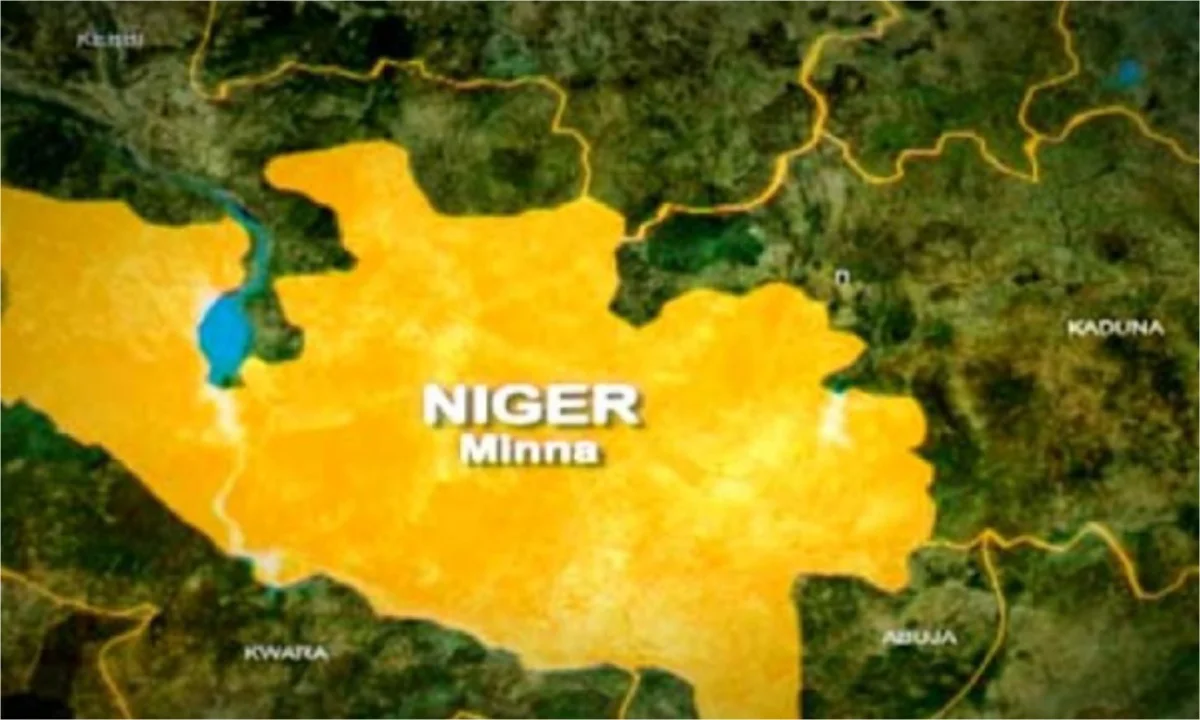
Several civilians were reportedly killed after a military airstrike hit Guradnayi village near Kusasu in Shiroro Local Government Area of Niger State early on Sunday morning.
According to Premium Times, residents said the attack happened around 5 am and followed the movement of armed terrorists on motorcycles through the area.
A resident of Kusasu said at least 12 people died in the house of one of his relatives in Guradnayi, including his cousin’s son. Residents claimed military aircraft were pursuing terrorists before the bombs were dropped. The Nigerian Air Force has not yet released an official statement.
Key Points:
Families in rural Niger State have lost multiple relatives in a single night of bombing.
Accidental airstrikes continue to kill civilians instead of the terrorists they target.
Residents fleeing from terrorists were reportedly among those killed in their homes.
Communities now face the impossible choice: stay and face bandits, or flee and face bombs.
Timing of this incident, without an official statement, leaves families in agonising uncertainty.
Sources : Daily Post Nigeria
👉 Are You A WhatsApp User? Do You Want To Get Our News As Fast As Possible On Daily Basis? 👉 Click This Link To Join WhatsApp Channel Now.

A cruise ship where hantavirus cases were detected has arrived in Spain’s Canary Islands. The vessel docked after reports emerged of passengers infected with the rare and potentially deadly rodent-borne virus. Local health authorities are expected to implement quarantine and testing protocols for affected passengers and crew.
The situation has raised concerns about the spread of infectious diseases on international cruise liners. Further details on the number of cases and the severity of infections are awaited from Spanish health officials.
Key Points:
Passengers and crew on board face potential quarantine and health monitoring.
The cruise industry may face renewed scrutiny over infectious disease protocols.
Tourists planning cruises could reconsider bookings following the outbreak.
Local health systems in the Canary Islands must prepare for possible hospital admissions.
The timing of the arrival, peak tourist season, could impact regional tourism.
Watch for updates from Spanish health authorities on the number of confirmed cases and any quarantine measures implemented.
Sources: AFP
👉 Are You A WhatsApp User? Do You Want To Get Our News As Fast As Possible On Daily Basis? 👉 Click This Link To Join WhatsApp Channel Now.

 Breaking News8 months ago
World’s Youngest Undergraduate is Nigerian JOSHUA BECKFORD, gained admission in Oxford University at the age of Six years

 Breaking News6 months ago
JUST IN: Finally United States President Donald Trump Revokes 80,000 Visas of Nigerians, Other Foreign Nationals

 Breaking News8 months ago
BREAKING NEWS: Woman in Trouble For Burning 7-year-old Girl’s Private Parts With Hot Knife

 Breaking News8 months ago
BREAKING NEWS: FULL DETAILS! Top Secret Leaked Why SIM Fubara Fails to Return to Government House After Reinstatement

 Breaking News6 months ago
BREAKING NEWS: Nigerian Billionaire Lawmaker Ned Nwoko, Orders Arrest of His Mother In Law Regina Daniels’ Mother, Rita

 Breaking News8 months ago
BREAKING NEWS: Federal Government Releases Proof of N25,000 Cash Transfers to 71 Million Nigerians in 8.1 Million Households

 Breaking News8 months ago
BREAKING NEWS: Another Rivers Saga: Just Reinstated Fubara Told to Sack All Sole Administrators Appointees, Seek Tinubu’s Assurance Over Impeachment

 Breaking News8 months ago
BREAKING NEWS: Finally Department of State Services (DSS) summons Sowore over post on Tinubu