
Foreign News
BREAKING NEWS: U.S. Deploys Shahed-136 Clones To Middle East As A Warning To Iran

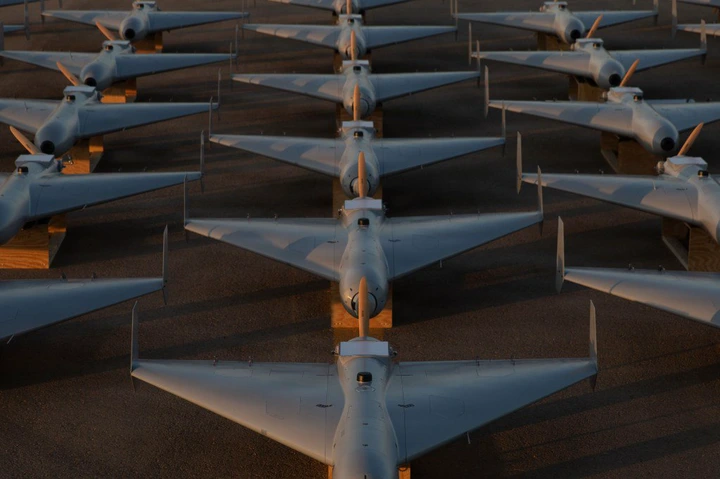
The U.S. military has stood up its first operational unit armed with Low-Cost Uncrewed Combat Attack System (LUCAS) kamikaze drones, a design reverse-engineered from the Iranian-designed Shahed-136, in the Middle East. The establishment of Task Force Scorpion Strike (TFSS) is a major development, and offers a way “to flip the script on Iran,” according to a U.S. official. Earlier this year, TWZ laid out a detailed case for why America’s armed forces should be investing heavily in rapidly-produced Shahed-136 clones as an adaptable capability that could be critical in future operations globally, as you can read here.....TAP TO CONTINUE READING
U.S. Central Command announced the creation of TFSS today, which it said is a direct response to Secretary of War Pete Hegseth’s “Unleashing U.S. Military Drone Dominance” initiative that kicked off earlier this year. TFSS falls more specifically under the auspices of U.S. Special Operations Command Central (SOCCENT), which oversees U.S. special operations activities across the Middle East. CENTCOM’s Rapid Employment Joint Task Force (REJTF), established in September to help fast-track the fielding of new capabilities in the region, was also involved.
Secretary of War Pete Hegseth observes a Low-Cost Uncrewed Combat Attack System (LUCAS) drone during an event at the Pentagon in July 2025. US Army
TFSS consists of about two dozen troops that will oversee the establishment and operations of drones, the U.S. official told us, speaking on condition of anonymity to discuss operational details. The delta wing LUCAS drone, which is roughly 10 feet long and has a wingspan of eight feet, was developed by Arizona-based SpektreWorks in cooperation with the U.S. military.
“I do not want to get into numbers [of drones fielded], but they are definitely based and delivered at an amount that provides us with a significant level of capability,” the official added. The LUCAS design includes features that allow for “autonomous coordination, making them suitable for swarm tactics and network-centric strikes.”
“Costing approximately $35,000 per platform, LUCAS is a low-cost, scalable system that provides cutting-edge capabilities at a fraction of the cost of traditional long-range U.S. systems that can deliver similar effects,” Navy Capt. Tim Hawkins, a CENTCOM spokesperson, also told TWZ. “The drone system has an extensive range and the ability to operate beyond line of sight, providing significant capability across CENTCOM’s vast operating area.”
“LUCAS drones deployed by CENTCOM have an extensive range and are designed to operate autonomously,” CENTCOM added in a press release. “They can be launched with different mechanisms to include catapults, rocket-assisted takeoff, and mobile ground and vehicle systems.”
A SpektreWorks FLM 136 target drone, a design directly related to LUCAS seen performing a rocket-assisted takeoff. SpektreWorks
“We can push them from various points,” the U.S. official told TWZ when asked about whether the LUCAS drones could be launched from ships. “They can be launched through various mechanisms, and land is not the only place from which to launch these.”
As an aside here, TWZ has previously explored in great depth the arguments for adding a variety of drone types to the arsenals of U.S. Navy ships to provide additional layers of defense, as well as enhanced strike, electronic warfare, intelligence-gathering, and networking capabilities, which you can find here.
Overall, the LUCAS drone’s core design was based directly on the Shahed-136.
“The U.S. military got hold of an Iranian Shahed,” according to the U.S. official. “We took a look and reverse-engineered it. We are working with a number of U.S. companies in the innovation space.”
An infographic from the US Defense Intelligence Agency with details about the Shahed-136 and Russian derivatives. DIA
“The LUCAS drone is the product of that [reverse-engineering] effort,” they added. “It pretty much follows the Shahed design.”
SpektreWorks’ website provides basic specifications for a related target drone design called the FLM 136, which has a stated maximum range of 444 miles and can stay aloft for up to six hours. Its total payload capacity, not counting fuel, is 40 pounds, and it cruises at a speed of around 74 knots (with a dash speed of up to 105 knots). Whether these details reflect the capabilities of the operationalized LUCAS design is unclear.
For comparison, the baseline Shahed-136, which is powered by a small 50-horsepower internal combustion engine, has a top speed of around 100 knots (185 kilometers per hour) and a maximum range of approximately 1,242 miles (2,000 kilometers) while carrying an 88-pound (40-kilogram) warhead, according to the U.S. Army’s Operational Environment Data Integration Network (ODIN) training portal. It was designed to strike static targets based on targeting data programmed in before launch. Iran has shown additional versions over the years with other guidance options, as well as a jet-powered derivative. Russia also now produces a still-expanding array of variants and derivatives of this design, referred to locally as the Geran. Iran and Russia have both been notably working to integrate more dynamic targeting capabilities into their respective versions of the drone.
A picture showing a trio of jet-powered Shahed-238 derivatives of the Shahed-136, or mock-ups thereof, with different guidance options. Iranian State Media
Iranian forces, as well as the country’s various regional proxies in the Middle East, have extensively employed variations of the Shahed-136 in combat in recent years, especially against targets in Israel. Russian forces routinely use their versions of the drones in the ongoing conflict in Ukraine. U.S. military experience aiding in the defense of Israel, as well as observations from the war in Ukraine, have been key drivers in recent pushes to develop and field new drone and counter-drone capabilities, now including the LUCAS design.
Beyond the particulars of the LUCAS drones themselves, the confirmation that an operational American unit in the Middle East is now armed with them is a major development. Before now, at least publicly, the U.S. military had only shown concrete interest in LUCAS and similar designs for use as threat representative targets for testing and training purposes rather than as operational weapons.
“We are now at a point where not only are we building them in mass, but we have already based them in [the] Middle East for the first time,” the U.S. official stressed to TWZ. “In essence, we are able to flip the script on Iran.”
“I’ll let you read between the lines, but the fact that we are basing it where we are basing it, and the fact that we have seen what the Russians have done to Ukraine, what Iran has done to fomenting instability with the use of drone technology, the 12-Day War threats they posed to Israel and how partners and allies have to expend vast amounts of resources to defend against these attacks, we are now taking a page from their playbook and throwing it back at them,” the U.S. official continued. “In essence, Iran enjoyed overmatch and an advantage through the high volume of drone attacks they were able to effectively deploy, and they are hard to defend against at such a high volume.”
The video below includes a montage of clips from Iranian state media showing Shahed-136s being employed during an exercise.
To date, TFSS has not employed its LUCAS drones in real combat operations, but they have been launched at test targets in the region to demonstrate their capabilities, according to the U.S. official.
“We are shoring up our defense, and a good defense can sometimes be a good offense, as well,” they added. “We are adding an offensive firepower capability that we have seen, [that] can be effective, especially when you have a country [that] previously wreaked havoc with this technology, now vulnerable.”
In addition to Iran, “we don’t have a problem hitting the [Iranian-backed] Houthis [in Yemen], we could throw it in their face as well,” the U.S. official continued. However, “with the Houthis, you have more of a target-find problem, [rather] than sending a bunch of things into Iran with lots of stuff to hit.”
The official also noted that the U.S. government currently has a formal ceasefire in place with the Houthis.
As mentioned, the benefits that Shahed-type drones could offer U.S. forces extend well beyond the Middle East. This includes the sheer mass of additional strike capacity and the ability, by extension, to overwhelm finite enemy defensive assets. This all aligns well with broader efforts across the services to extend the scale and scope of their long-range fires capabilities, especially when it comes to fielding new, lower-cost, and readily producible weapon systems. TWZ‘s feature in September explored these realities in deep detail.
LUCAS drones in display at the Pentagon in July 2025. US Military US Military
These are capabilities that could also be steadily built upon as time goes on, especially if the designs are highly modular and put emphasis on open architectures for the integration of new and improved capabilities. As we wrote:
“Modern positioning, navigation, and timing (PNT) technologies will only improve upon this resilience to electronic warfare, even for those drones configured to strike with precision. Basic infusion of artificial intelligence (AI) is fast approaching over the horizon for lower-end drones, which will enable adaptive autonomous navigation without GPS and strikes even on mobile targets of opportunity. Again, you can read all about this in our previous feature linked here. Electronic warfare will not be able to impact these systems.”
“The key takeaway is that having tens of thousands of real threats that cost a fraction of the price of a standard cruise or ballistic missile, ready to gobble up precious air defense effectors, will be an absolutely critical factor in any major future conflict.”
“We will continue to develop these platforms,” like LUCAS, the U.S. official also told us. “One of the upsides to them is that they are not only scalable systems, but they can be developed and improved over time.”
SpektreWorks is not the only company in this marketspace. In the United States, at least one other firm, Griffon Aerospace, has been pitching a Shahed-esque drone called the MQM-172 Arrowhead to America’s armed forces.
While the general concept has existed for decades, similar delta-winged one-way attack munitions are steadily emerging globally among allies and potential foes alike, including in China. Russia is also said to be assisting North Korea in establishing its own domestic capacity to produce Shahed-136s, or derivatives thereof, as part of an exchange for Pyongyang’s help in fighting Ukraine.
At the same time, while today’s announcement about TFSS and its LUCAS drones is significant, it is still being presented heavily as a regionally limited capability to be employed by special operations forces. Whether or not there are efforts to stand up similar units elsewhere within the U.S. military in other locales is unclear. Top U.S. Army and U.S. Air Force officers have openly expressed an extremely high desire to field a Shahed-like kamikaze drone capability as soon as possible.
Still, the U.S. military’s standing up of its first operational unit armed with Shahed-like long-range kamikaze drones is a major development — one that has a high chance of serving as a springboard to much broader fielding of similar capabilities.
Update: 9:16 AM Eastern –
The Pentagon published three photos of the LUCAS drones on its image-sharing portal, which you can see below. We will have an analysis of these weapons shortly.
U.S. CENTRAL COMMAND AREA OF RESPONSIBILITY (Nov. 23, 2025) Low-cost Unmanned Combat Attack System (LUCAS) drones are positioned on the tarmac at a base in the U.S. Central Command operating area, Nov. 23. Costing approximately $35,000 per platform, LUCAS drones are providing U.S. forces in the Middle East low-cost, scalable capabilities to strengthen regional security and deterrence. (Courtesy Photo)
U.S. CENTRAL COMMAND AREA OF RESPONSIBILITY (Nov. 23, 2025) Low-cost Unmanned Combat Attack System (LUCAS) drones are positioned on the tarmac at a base in the U.S. Central Command operating area, Nov. 23. Costing approximately $35,000 per platform, LUCAS drones are providing U.S. forces in the Middle East low-cost, scalable capabilities to strengthen regional security and deterrence.
U.S. CENTRAL COMMAND AREA OF RESPONSIBILITY (Nov. 23, 2025) Low-cost Unmanned Combat Attack System (LUCAS) drones are positioned on the tarmac at a base in the U.S. Central Command (CENTCOM) operating area, Nov. 23. The LUCAS platforms are part of a one-way attack drone squadron CENTCOM recently deployed to the Middle East to strengthen regional security and deterrence.
U.S. CENTRAL COMMAND AREA OF RESPONSIBILITY (Nov. 23, 2025) Low-cost Unmanned Combat Attack System (LUCAS) drones are positioned on the tarmac at a base in the U.S. Central Command (CENTCOM) operating area, Nov. 23. The LUCAS platforms are part of a one-way attack drone squadron CENTCOM recently deployed to the Middle East to strengthen regional security and deterrence.
Read The Full Article Here Now
👉 Are You A WhatsApp User? Do You Want To Get Our News As Fast As Possible On Daily Basis? 👉 Click This Link To Join WhatsApp Channel Now.

Art & Commercial students don’t fail JAMB because they’re dull. They fail because they’re taught like Science students. Science students calculate — JAMB rewards that. Art students explain — JAMB doesn’t. So you read hard, attend lessons, yet your score disappoints you. This online class fixes that. No theory overload. No confusion. Just real JAMB questions, clear breakdowns, and winning strategies. 📌 JAMB is not hard — you were just taught the wrong way.Click The Link To Reach Us Now 👉 https://wa.me/2349063958940
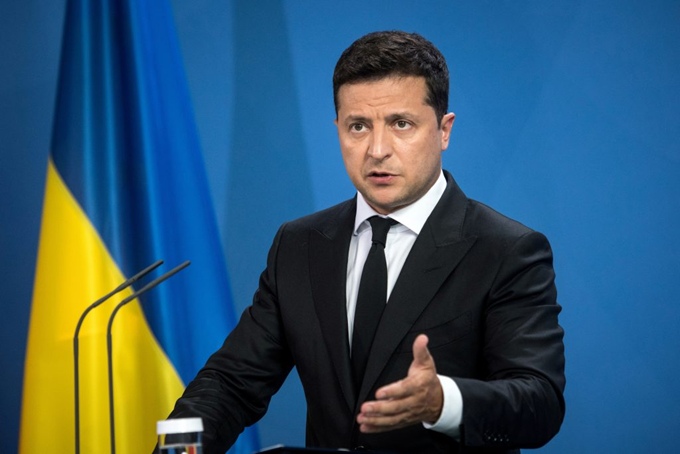
President of Ukraine, Volodymyr Zelenskyy has said that large numbers of Iranian drones cannot be effectively countered with Patriot missile systems alone.....TAP TO CONTINUE READING
According to him, the cost and production time of the missiles make it difficult to compete with mass-produced drones.
In an interview with the New York Post, Zelenskyy explained that a single Iranian “Shahed” drone is significantly cheaper than a Patriot interceptor missile, making it impractical to rely solely on such systems against large-scale drone attacks.
According to him, even thousands of Patriot missiles would not be enough to stop tens of thousands of drones, as the drones are far cheaper and easier to produce.
“Thousands of Patriot missiles cannot stop tens of thousands of Iranian “shaheds.” One such drone is forty times cheaper than a single Patriot missile. Therefore, in terms of production time and the cost of missiles, it is impossible to compete with drones. There simply will not be enough capacity,” Zelenskyy said.
Zelenskyy added that Ukraine has developed extensive air defense experience during the war with Russia, noting that the country now possesses most components of a comprehensive air defense system, except anti-ballistic capabilities.
He stated that the United States has strong anti-ballistic systems and suggested that combining Ukraine’s air defense experience with US capabilities could help create a more effective system capable of protecting countries facing large-scale aerial threats.
Zelenskyy also warned that drone technology is evolving rapidly and that their operational range could expand significantly in the future.
The Ukrainian leader proposed a partnership between the United States and Ukraine focused on exchanging technology, experience and security cooperation to counter emerging threats.
Read The Full Article Here Now
👉 Are You A WhatsApp User? Do You Want To Get Our News As Fast As Possible On Daily Basis? 👉 Click This Link To Join WhatsApp Channel Now.
Art & Commercial students don’t fail JAMB because they’re dull. They fail because they’re taught like Science students. Science students calculate — JAMB rewards that. Art students explain — JAMB doesn’t. So you read hard, attend lessons, yet your score disappoints you. This online class fixes that. No theory overload. No confusion. Just real JAMB questions, clear breakdowns, and winning strategies. 📌 JAMB is not hard — you were just taught the wrong way.Click The Link To Reach Us Now 👉 https://wa.me/2349063958940
Foreign News
Organisation of Petroleum Exporting Countries – OPEC+ raises oil quotas amid Middle East tension

Key members of the Organisation of Petroleum Exporting Countries and their allies, jointly known as OPEC+, on Sunday announced a higher-than-expected increase in production quotas following United States and Israeli strikes on Iran, which triggered retaliation by Tehran across the Middle East.....TAP TO CONTINUE READING
The eight-member V8 (Voluntary Eight) group within the alliance, which includes major oil producers Saudi Arabia and Russia, as well as several Gulf states affected by Tehran’s missile strikes, said it had agreed to a “production adjustment” of 206,000 barrels per day.
“This adjustment will be implemented in April,” the group said in a statement, according to a report by AFP. Nigeria is also a strong member of OPEC.
The statement did not directly reference the outbreak of conflict involving Iran, instead citing “a steady global economic outlook and current healthy market fundamentals” as justification for the increase.
Before the weekend meeting, analysts had projected a more modest rise of 137,000 barrels per day. However, Jorge Leon, an analyst at Rystad Energy, cautioned that the agreed increase might not be sufficient to prevent the Iran conflict from triggering a spike in oil prices when trading resumes on Monday.
Leon pointed to the possibility of Iran targeting the Strait of Hormuz, a strategic waterway through which nearly a quarter of the world’s seaborne oil supply passes, in retaliation.
Iran’s Revolutionary Guards have reportedly contacted vessels to announce that the strait is closed. On Sunday, Iranian state television reported that an oil tanker in the strait was struck while allegedly attempting to “illegally” pass through and was sinking. Footage aired by the broadcaster showed a tanker ablaze at sea.
“If oil cannot move through Hormuz, an extra 206,000 barrels per day does very little to ease the market,” Leon said, adding that “logistics and transit risk matter more than production targets right now.”
He said the OPEC+ decision “is unlikely to calm markets.”
“Prices will respond to developments in the Gulf and the status of shipping flows, not to a relatively small increase in output,” he added.
Apart from Russia and Saudi Arabia, the V8 group within OPEC+ comprises Kuwait, Oman, Iraq, and the United Arab Emirates, all of which were targeted by Iranian attacks for a second consecutive day on Sunday. Algeria and Kazakhstan are also members of the group.
Read The Full Article Here Now
👉 Are You A WhatsApp User? Do You Want To Get Our News As Fast As Possible On Daily Basis? 👉 Click This Link To Join WhatsApp Channel Now.
Art & Commercial students don’t fail JAMB because they’re dull. They fail because they’re taught like Science students. Science students calculate — JAMB rewards that. Art students explain — JAMB doesn’t. So you read hard, attend lessons, yet your score disappoints you. This online class fixes that. No theory overload. No confusion. Just real JAMB questions, clear breakdowns, and winning strategies. 📌 JAMB is not hard — you were just taught the wrong way.Click The Link To Reach Us Now 👉 https://wa.me/2349063958940
Breaking News
BREAKING: Has Israel Prime Minister Benjamin Netanyahu Been Killed in Drone Airstrike? Fact Emerges
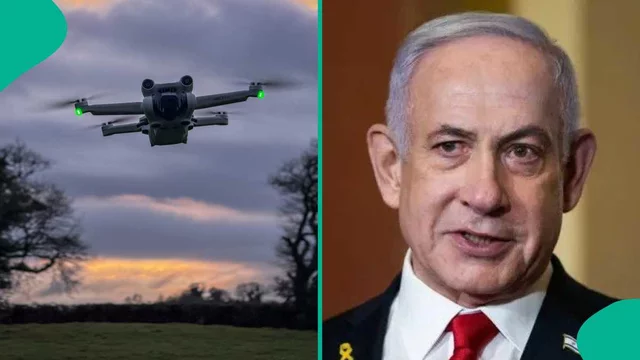
On February 28, an X account named ReversingTrend posted: “Initial reports indicate that Prime Minister Benjamin Netanyahu was killed by an Iranian drone strike inside his residence in Tel Aviv.”....TAP TO CONTINUE READING
The post quickly gained traction, recording 954,000 views, 1,100 retweets, and 7,700 likes.
Factcheck Africa tool confirmed that the claim was false. Multiple reliable sources confirmed that Benjamin Netanyahu was alive and continued to serve as the Prime Minister of Israel.
See the X post
below:
Further checks by Legit Nigeria showed that his profile entry on Israel’s official website listed his birthdate and current position with no mention of his death. The International Criminal Court (ICC) page also confirmed his status, noting that an arrest warrant was issued against him on November 21, 2024. The existence of this warrant implied that he was alive and subject to ongoing legal proceedings.
The evidence showed that Benjamin Netanyahu had not been killed in a drone strike. He remained in office as Prime Minister of Israel, and no credible reports supported the claim of his death. The viral post was therefore misleading, spreading false information about a sitting world leader.
Verdict
: False – Benjamin Netanyahu was not killed in a drone strike. He was alive and serving as Prime Minister of Israel at the time of the claim.
Who is Benjamin Netanyahu?
According to Israel government, Benjamin Netanyahu was born in 1949 in Tel Aviv and grew up in Jerusalem. His high school years were spent in the United States, where his father, the historian Benzion Netanyahu, taught and conducted historical research. Returning to Israel in 1967, Mr. Netanyahu enlisted in the IDF and served as a soldier and officer in Sayeret Matkal, a special unit of the Israeli army. He took part in several operations, including the rescue of hostages in a hijacked Sabena airplane in 1972. In the same year, he was cited for outstanding operational command by General Mordechai Gur, Chief of Israel’s Northern Command. After his discharge from the IDF in 1972, Mr. Netanyahu served in the Yom Kippur War of 1973 and was promoted after the war to the rank of captain in the Reserves.
Netanyahu received a B.Sc. degree in Architecture and an M.Sc. in Business Management from MIT. He also studied political science at MIT and at Harvard University.
Business
Experience Between 1976 and 1982 Mr. Netanyahu worked in the private sector, first with the Boston Consulting Group, an international business consultancy, and then as Marketing Director of Rim Industries in Jerusalem, an industrialized furniture manufacturer.
According to IndiaTimes, Trump described Khamenei as “one of the most evil people in history” and said he was tracked using “highly sophisticated tracking systems.” He called the strike “the single greatest chance for the Iranian people to take back their country.”
Read The Full Article Here Now
👉 Are You A WhatsApp User? Do You Want To Get Our News As Fast As Possible On Daily Basis? 👉 Click This Link To Join WhatsApp Channel Now.
Art & Commercial students don’t fail JAMB because they’re dull. They fail because they’re taught like Science students. Science students calculate — JAMB rewards that. Art students explain — JAMB doesn’t. So you read hard, attend lessons, yet your score disappoints you. This online class fixes that. No theory overload. No confusion. Just real JAMB questions, clear breakdowns, and winning strategies. 📌 JAMB is not hard — you were just taught the wrong way.Click The Link To Reach Us Now 👉 https://wa.me/2349063958940
-

 Breaking News6 months ago
World’s Youngest Undergraduate is Nigerian JOSHUA BECKFORD, gained admission in Oxford University at the age of Six years
-

 Breaking News4 months ago
JUST IN: Finally United States President Donald Trump Revokes 80,000 Visas of Nigerians, Other Foreign Nationals
-

 Breaking News6 months ago
BREAKING NEWS: Woman in Trouble For Burning 7-year-old Girl’s Private Parts With Hot Knife
-

 Breaking News6 months ago
BREAKING NEWS: FULL DETAILS! Top Secret Leaked Why SIM Fubara Fails to Return to Government House After Reinstatement
-

 Breaking News4 months ago
BREAKING NEWS: Nigerian Billionaire Lawmaker Ned Nwoko, Orders Arrest of His Mother In Law Regina Daniels’ Mother, Rita
-

 Breaking News6 months ago
BREAKING NEWS: Federal Government Releases Proof of N25,000 Cash Transfers to 71 Million Nigerians in 8.1 Million Households
-

 Breaking News6 months ago
BREAKING NEWS: Another Rivers Saga: Just Reinstated Fubara Told to Sack All Sole Administrators Appointees, Seek Tinubu’s Assurance Over Impeachment
-

 Breaking News6 months ago
BREAKING NEWS: Finally Department of State Services (DSS) summons Sowore over post on Tinubu