
Breaking News
GENCOs reject FG’s offer to forfeit 50% of N5trn debt


Power generation companies, GENCOs, have rejected contract offers from the Federal Government requiring them to accept 50 per cent of the total debt owed them for electricity supplied to the national grid.
Described as a 50 per cent “haircut”, the proposed contracts were sent out to each power generation company, with the exception of Azura Power West Africa.
The government proposed to pay the companies about N2.4 trillion or 49.9 per cent of the total debt...TAP TO CONTINUE FULL READING.
Government debt to the GenCos rose to over N5 trillion at the end of June, with President Bola Tinubu agreeing to pay off the debt through bond issuance during a meeting with the companies in July.
Following the approval of the proposal by the Federal Executive Council, FEC, in August, top government officials met with the owners of the GenCos in early October, with the Special Adviser on Energy, Olu Verheijen announcing that an agreement had been reached with the companies on the debt repayment model.
In furtherance to this, the government on October 16, 2025, sent out two contract documents to the GenCos which, among other clauses, requested them to forfeit 50 per cent of the debt owed them as final payment.
Copies of the documents, sighted by Vanguard, titled “NBET deed of settlement” and “Deed of novation”, among other things, sort to transfer government debt from the Nigerian Bulk Electricity Trading Plc, NBET, to a new special purpose vehicle, named NBET Bond Finance Company Plc.
The contracts read: “GenCo, hereby, accepts the sum of (“Settlement Amount”) as the full and final settlement of the outstanding legacy Ddebt, including any interest thereon and any other claim for losses, whether present or future and whether known or unknown, in respect of the legacy debt.
“For the avoidance of doubt, GenCo agrees that the settlement amount, as a compromise of its rights to the legacy debt, hereby (i.e., from the date of this Agreement), extinguishes its right to any claims to the legacy debt, including any contractual claims for losses whatsoever and howsoever, arising whether from deemed capacity, true ups and interest on delayed payment of substantive invoice amounts, true-up compensations or deemed capacity payments referenced in Appendix A or elsewhere.
“The parties agree that subject to prompt payment of the settlement amount as contemplated in the payment structure under Clause 3 below and Appendix B, the settlement amount shall not bear any interest or give rise to any further claims for any losses whatsoever.
“NBET’s obligation to pay the settlement amount to GenCo shall be novated to Bond SPV, via the Novation Agreement and upon its execution, Bond SPV shall be solely responsible for payment of the settlement amount.
“The parties acknowledge and are aligned on the PPSFRP’s plan for the settlement amount to be paid by Bond SPV solely from the outcome of an FGN-backed public bond issuance programme that will be conducted by the Bond SPV (“Bond Programme”).
“These bond proceeds are expected in successive issuance phases and tranches that will have an impact on the exact timeline for payment of the settlement amount in installments (where applicable).”
However, a source in one of the GenCos told Vanguard that the deal which was being pushed through by the Presidential Power Sector Debt Reduction Plan Committee, was in bad faith and calculated to undermine the pledge by President Tinubu to resolve the financial crisis facing the Nigerian Electricity Supply Industry, NESI.
The source, who did not want to be named for fear of victimization, noted that at the meeting between the Ministers of Finance and Power, the Special Adviser to the President on Energy and selected chairmen of power generation companies, the 50 per cent offer was roundly rejected.
“For them now to draw up individual contracts for the companies and force it down on them is quite unfortunate. The GenCos have again rejected it and we are insisting that the government should pay off the debt in full,” the source added.
The source explained that after the GenCos rejected the offer, the companies presented two potential approaches to the government, which the contract documents ignored.
According to the source, the first option was for the government to immediately pay N2.4 trillion to the GenCos, with the balance deferred to later dates.
The second option was for the application of a 10 per cent haircut on interest relating to energy and capacity delivered while paying deemed capacity and true-up in full.
Another GenCo source, who confirmed the contract offers, said the companies were given just five days to accept the offer.
“The contract papers were sent on October 16, with companies given October 21, as the deadline to respond to the offer. As far as I know, all the GenCos rejected it,” the source said.
On what would happen if nothing was done (about the debt), the document said: “Without this debt settlement and refinancing, financial distress within the NESI value chain would worsen, leading to reduced power generation and ultimately low supply to customers, higher risks of system collapse, and further erosion of investor confidence”.
Approached for comments on the government’s plan, the Managing Director of Mainstream Energy Solution Limited (Operators of Kainji and Jebba Hydro plants), Lamu Audu, said the solution to the debt crisis must be one that was agreeable to all parties.
He stated that the only way to attract more investments into the sector was to resolve the issue of financial challenges facing power generation companies and observed that while the realities facing hydro power plants were different from gas powered plants, the financial challenges were crippling operations.
He said the company was working with the government on a deal that would convert some parts of the debt to concessionaire fees payable to the Bureau of Public Enterprises, BPE.
Speaking on the deal offered by the government, energy market expert, Lanre Elatuyi, said it sent the wrong signal to investors.
Elatuyi noted that power generation companies were struggling to remain in business, adding that the government had an obligation to its commitment to the operators.
“Though I haven’t heard about this, if this is true, then we are sending a very wrong signal that will deter investments in the electricity sector.
“GenCos are currently faced with liquidity issues that affect optimal performance and ability to expand their capacities. With this haircut, their situations get worsened and the Nigerian electricity supply industry will soon experience serious resource adequacy problems.
“Also, we may experience high generation costs as GenCos will try to raise their marginal cost to accommodate anticipated loss of revenue,” he explained.
He pointed out that the government “should not expect more investors to come to a sector where cost recovery is very uncertain.”
👉 Are You A WhatsApp User? Do You Want To Get Our News As Fast As Possible On Daily Basis? 👉 Click This Link To Join WhatsApp Channel Now.
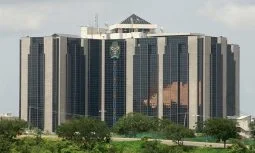
The Central Bank of Nigeria (CBN) has introduced new Bank Verification Number (BVN) rules effective from May 1, 2026, aimed at reducing fraud, especially SIM swap and identity theft cases. The regulations include stricter controls on phone number changes, age restrictions, device limits, and temporary account restrictions for suspicious activities. Here is a simple breakdown of what you need to know.
One phone number change in a lifetime – Customers can only change the phone number linked to their BVN once. Choose carefully.
24-hour watchlist for suspicious BVNs – Banks can temporarily restrict accounts flagged for suspicious activity while investigations are conducted.
BVN registration is now for adults only – Only individuals aged 18 and above can independently register for a BVN. Minors require guardian-linked arrangements.
One device per banking app – You can only use your banking app on one device at a time. Switching devices triggers a 24-hour transaction limit of N20,000.
Authorised channels only – BVN services are now limited to CBN-approved banks and financial institutions. Avoid third-party apps or unofficial agents.
The new rules may feel strict, but they are designed to protect your money and reduce fraud. Be more careful with your phone number, devices, and banking activities to avoid unnecessary restrictions...TAP TO CONTINUE FULL READING.
Sources: Nigerian Tribune
👉 Are You A WhatsApp User? Do You Want To Get Our News As Fast As Possible On Daily Basis? 👉 Click This Link To Join WhatsApp Channel Now.
Breaking News
‘Nigeria is a safe country’ Reno Omokri Tells Portuguese Ambassador Who Drives Nigeria Highways Without Escort, Calls Trips Safe

The Portuguese Ambassador to Nigeria has driven from Abuja to Bauchi and back without a security escort, describing the journeys as “very normal” and safe. Reno Omokri shared a video of the ambassador, praising Nigeria’s overall safety under President Tinubu. The ambassador also reportedly drove from Enugu to Abuja without incident. However, critics point to over 1,000 abductions since January 2026 and frequent highway kidnappings, questioning the safety claims.
Key Points:
Critics noted bandit attacks in Bauchi and other regions.
Many questioned why top Nigerian officials don’t take the same unescorted routes.
The ambassador acknowledged “some localized issues” but highlighted safety overall.
Over 1.5 million safe visitors to Lagos during the December holidays were cited.
Social media users expressed a divide between official accounts and citizens’ realities...TAP TO CONTINUE FULL READING.
The ambassador’s experience contrasts sharply with the lived reality of many Nigerians.
Sources: X
I Drove From Abuja To Bauchi And Back Without An Escort And It Was Safe-Paulo Santos, Portuguese Ambassador To Nigeria pic.twitter.com/GZmEJTHi0p
— Reno Omokri (@renoomokri) April 30, 2026
👉 Are You A WhatsApp User? Do You Want To Get Our News As Fast As Possible On Daily Basis? 👉 Click This Link To Join WhatsApp Channel Now.
More than 1,000 victims across 19 countries were defrauded of about $215 million in a sprawling business email compromise scheme, leading to convictions of Nigerian nationals, the US attorney’s office has said. Twenty-five defendants were convicted on April 24. Among them were four Nigerian nationals and five naturalised US citizens of Nigerian descent. The scheme involved hacking email accounts and crafting fraudulent payment requests.
Key Points:
Victims were located in the US, UK, Germany, UAE, Australia, and 14 other countries.
One victim’s business sent $2.7 million to a shell company account.
Seized items included luxury watches worth over $215,000 and a Georgia residence.
The FBI, US Postal Inspection Service, and Border Patrol conducted the investigation.
A Chicago-area money service business owner was a co-defendant...TAP TO CONTINUE FULL READING.
Each defendant’s sentence will be determined based on their role and criminal history.
Sources: The Cable, Punch
👉 Are You A WhatsApp User? Do You Want To Get Our News As Fast As Possible On Daily Basis? 👉 Click This Link To Join WhatsApp Channel Now.

 Breaking News8 months ago
World’s Youngest Undergraduate is Nigerian JOSHUA BECKFORD, gained admission in Oxford University at the age of Six years
 Breaking News6 months ago
JUST IN: Finally United States President Donald Trump Revokes 80,000 Visas of Nigerians, Other Foreign Nationals

 Breaking News8 months ago
BREAKING NEWS: Woman in Trouble For Burning 7-year-old Girl’s Private Parts With Hot Knife
 Breaking News8 months ago
BREAKING NEWS: FULL DETAILS! Top Secret Leaked Why SIM Fubara Fails to Return to Government House After Reinstatement

 Breaking News6 months ago
BREAKING NEWS: Nigerian Billionaire Lawmaker Ned Nwoko, Orders Arrest of His Mother In Law Regina Daniels’ Mother, Rita
 Breaking News8 months ago
BREAKING NEWS: Federal Government Releases Proof of N25,000 Cash Transfers to 71 Million Nigerians in 8.1 Million Households

 Breaking News8 months ago
BREAKING NEWS: Another Rivers Saga: Just Reinstated Fubara Told to Sack All Sole Administrators Appointees, Seek Tinubu’s Assurance Over Impeachment

 Breaking News8 months ago
BREAKING NEWS: Finally Department of State Services (DSS) summons Sowore over post on Tinubu