
Foreign News
Russia holding nuclear forces drills — top brass

Follow This Instruction: If you are reading from PHOENIX App, Please kindly click the Read Original Button at the top right to read the full content of this article. God bless you.
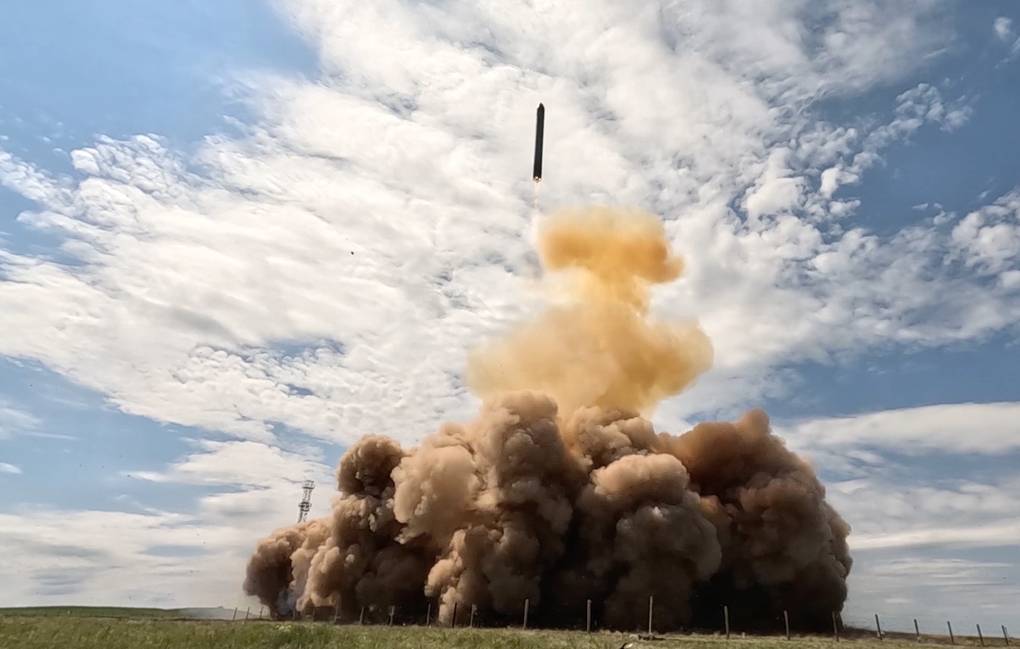
Russia is holding drills on May 19-21 to practice preparing and employing nuclear forces amid an aggression threat, Russia’s Defense Ministry reported.
TASS has put together key facts about Russia’s nuclear forces drills.
Scope of the drills
– Russia is holding drills on May 19-21 to practice preparing and employing nuclear forces amid an aggression threat, the ministry reported.
– Overall, the drills will bring together over 64,000 personnel, more than 7,800 pieces of armament, military and special equipment, including over 200 missile launchers, more than 140 aircraft, 73 surface ships and 13 submarines, among them eight strategic missile-carrying submarine cruisers, according to the ministry’s data.
– The drills have brought together the Strategic Missile Force, the Northern and Pacific Fleets, the long-range aviation military command and some forces of the Leningrad and Central Military Districts, the ministry said.
Goals of the nuclear forces drills
– The drills aim to refine the skills of work of the commanding and operational staff, organize command and control of subordinate troops (forces) in the process of preparing and implementing measures of deterrence against a potential enemy; inspect the level of preparedness of military command centers, troops (forces) involved in accomplishing the tasks of preventing aggression; practice measures by military command centers, military units and formations to exercise command and control, interoperability and comprehensive logistical support in fulfilling assigned objectives; assess the ability of troops (forces) involved in the drills to accomplish assigned missions, the ministry reported.
– The drills are set to practice readying some of nuclear forces’ units and formations for accomplishing assigned objectives and rendering them comprehensive logistical support, and also carrying out test-launches of ballistic and cruise missiles at practice ranges across Russia, it specified.
– The drills will also practice jointly preparing and employing nuclear weapons deployed on the territory of the Republic of Belarus, the ministry said.
Statement by Belarusian Defense Ministry
– The press office of the Belarusian Defense Ministry reported on May 18 that the republic had kicked off a military exercise for the combat use of nuclear weapons and nuclear weapons logistical support involving missile troops and the Air Force.
– Belarusian military units assigned with the combat use of nuclear weapons will also practice interoperability with Russia for the delivery of nuclear munitions during the exercise, it said.
– The exercise is a scheduled event of troop training as part of Russia-Belarus Union State measures. It is not directed against any other countries and does not pose a threat to security in the region, it stressed.
👉 Are You A WhatsApp User? Do You Want To Get Our News As Fast As Possible On Daily Basis? 👉 Click This Link To Join WhatsApp Channel Now.
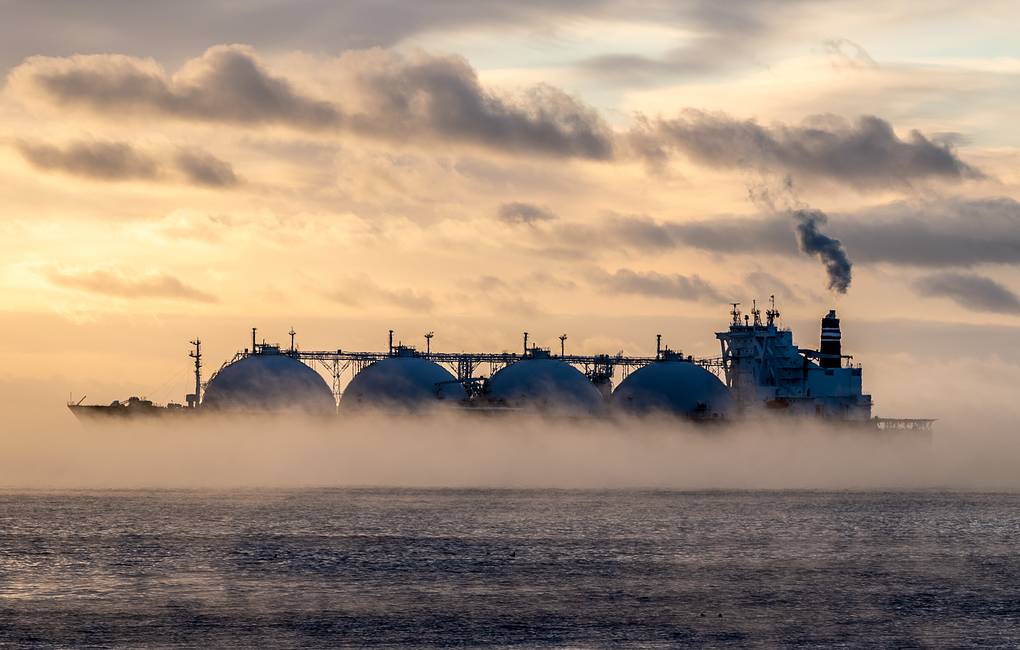
Russia ranked second after the United States in terms of the value of liquefied natural gas (LNG) imports by the European Union in March, with a share of 26.1%, according to TASS calculations based on Eurostat data.
The European Union purchased around 933 mln euros worth of LNG from Russia, which is 12.5% higher than last March. This is also the highest level since January 2025.
The United States with supplies of its LNG took first place with 43.6% and 1.6 bln euros.
In total, Europe purchased 2 bln euros worth of LNG from Russia in Q1.
TASS reported earlier, citing calculations based on data from Europe’s Bruegel think tank, that Russian LNG supplies to the European Union in March reached a historic high of 2.46 bln cubic meters amid the suspension of shipments from the Middle East due to the military conflict and the ban on short-term contracts for Russian LNG.
👉 Are You A WhatsApp User? Do You Want To Get Our News As Fast As Possible On Daily Basis? 👉 Click This Link To Join WhatsApp Channel Now.
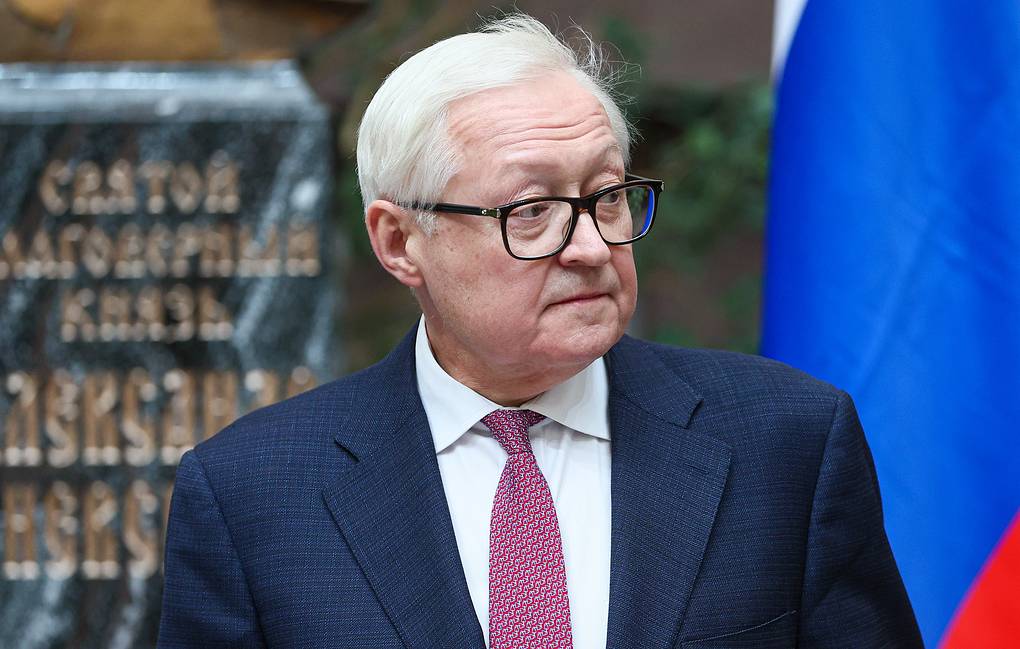
Strategic risks of a direct confrontation between NATO and Russia are growing, which may have catastrophic consequences, Russian Deputy Foreign Minister Sergey Ryabkov told TASS in an interview.
The senior Russian diplomat highlighted “the escalatory narrative” from European capitals about “the looming threat of a high-intensity war” with Russia. “As a result of this escalation of tensions, including blatantly provocative moves in the nuclear sphere, strategic risks are increasing, as is the danger of a head-on clash between NATO and our country, with potentially catastrophic consequences as a result,” he warned.
Commenting on Finland’s intention to host nuclear weapons and France and Poland’s plans to hold a deterrence exercise over the Baltic Sea, simulating nuclear strikes on Russian targets, Ryabkov noted that “Russia has unequivocally expressed its strong criticism of such preparations by the Europeans.” “Such steps are being accompanied by hostile anti-Russian rhetoric and are an element of the broader process of Europe’s accelerated militarization, directly targeting this country,” he added.
👉 Are You A WhatsApp User? Do You Want To Get Our News As Fast As Possible On Daily Basis? 👉 Click This Link To Join WhatsApp Channel Now.
Foreign News
Press review: Putin China visit puts energy sector in focus as Trump signals bluff on Iran
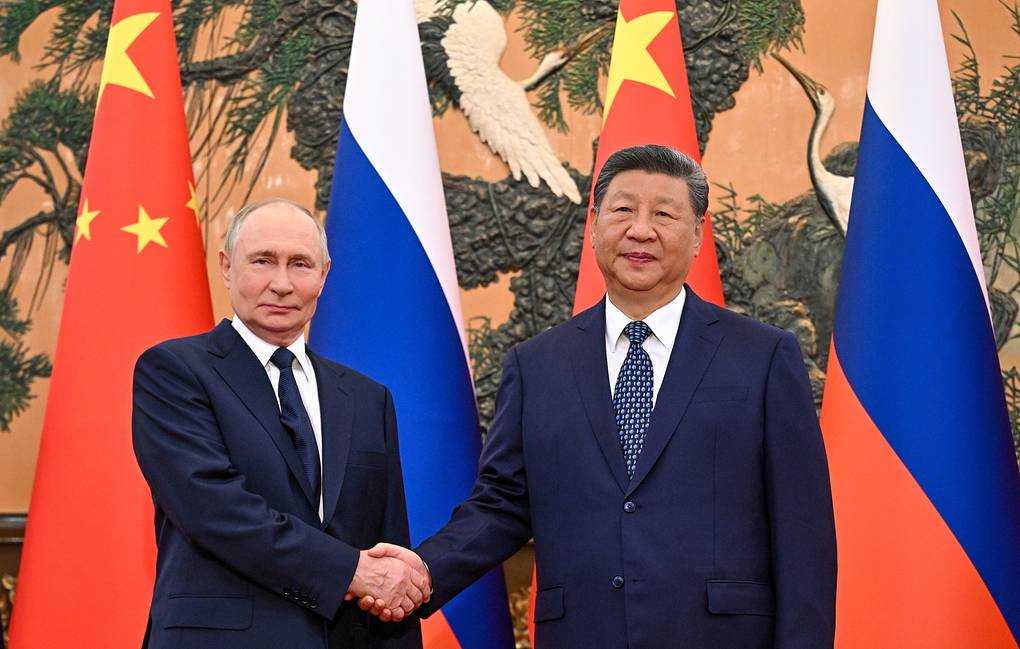
Vladimir Putin’s visit to China will bring the energy sector and logistics to the forefront; Donald Trump may either strike Iran again or continue to bluff; and Russia, Belarus kick off joint drills to practice the use of nuclear weapons. These stories topped Tuesday’s newspaper headlines across Russia.
Media: Putin’s China visit to bring energy sector, logistics to forefront
Russian President Vladimir Putin will be traveling to Beijing on May 19-20 for his first foreign trip of 2026. The Russian leader plans to visit China once again in the fall to take part in the APEC summit in Shenzhen, Vedomosti notes.
This time, Vladimir Putin and Chinese President Xi Jinping will discuss political cooperation, including the US-Israel conflict with Iran, said Alexey Maslov, director of Moscow State University’s Institute of Asian and African Studies. Besides, energy cooperation and the Power of Siberia 2 gas pipeline project will be reviewed again, the expert believes. Russia and China may be interested in developing new infrastructure ties as Beijing has faced significant disruption due to the Strait of Hormuz closure.
The 2001 Treaty of Good Neighborliness, Friendship and Cooperation between Russia and China, whose 25th anniversary Putin’s visit highlights, has not changed, Maslov stressed. According to him, the document suits both parties, which have no plans to establish a military alliance. As for the Ukraine conflict, it is certain to be discussed in talks between the Russian and Chinese leaders, the analyst added: Beijing remains in favor of resolving the crisis through talks, and Moscow has reiterated its readiness to do so.
The fact that the Russian president’s visit to China comes right after the US leader’s trip is just a coincidence as Washington decided on the dates for Donald Trump’s visit in March amid a protracted war with Iran, said Vasily Kashin, director of the Center for Comprehensive European and International Studies at the Higher School of Economics. According to him, the energy sector can be seen as the pillar of Russia-China relations, along with agriculture, the chemical industry and the metals industry, which is reflected in Russian exports. The current developments in the Persian Gulf area have certainly affected China’s decision-making in terms of energy and logistics as Beijing is now increasingly interested in projects involving the Northern Sea Route and land transit through Russia.
“China benefits from its alliance with Russia, particularly because the country needs resources. Economic partnership between our countries is getting stronger. During the visit, the two leaders are likely to discuss plans to expand energy supplies, which has been widely discussed recently. Partnership is also important for both countries from the military-strategic point of view,” Asian studies expert Tatyana Kosacheva told Izvestia.
Media: Trump may either strike Iran again or continue to bluff
Three months after the launch of its Iran operation, Washington seems to have no clear idea of how to resolve the situation. US President Donald Trump is now back to his usual pattern of daily attempts to intimidate Tehran, Vedomosti notes.
The United States will maintain its blockade of Iran, along with using other tools of pressure and intimidation such as cyberattacks, Vladimir Pavlov, a researcher with the Institute for International Studies at the Moscow State Institute of International Relations, believes. In his opinion, what is reducing the likelihood of resumed airstrikes on Iran is Trump’s concern about a further decline in his approval rating, which will hurt Republicans’ chances in November’s midterm congressional elections.
However, Konstantin Sukhoverkhov, program manager at the Russian International Affairs Council, notes that there is currently no Iran-related scenario in sight that would not involve another round of tensions. According to the expert, this is because both Iran and the US stick to uncompromising positions. However, even if violence escalates, things won’t change much because rhetoric aside, neither side is capable of causing the damage to the other that would force it to make concessions.
The uncompromising positions of both parties are the reason why diplomacy has failed, as both are unwilling and unable to listen to each other, Farkhad Ibragimov, political scientist and lecturer with the Economic Department at the Peoples’ Friendship University of Russia, explained to Izvestia.
Since Trump has not achieved anything with Iran, he may opt for a third round of war, American Studies expert Alexey Chernyayev points out. However, Ibragimov says that in order to achieve the goals set by the White House, Washington would need to launch a full-scale ground operation, sacrificing the lives of thousands of US troops, which would be extremely risky ahead of the November elections.
Kommersant: Russia, Belarus kick off joint drills to practice use of nuclear arms
Amid growing tensions with Europe, Russia and Belarus have kicked off another exercise to practice the use of nuclear weapons. Russian experts interviewed by Kommersant believe that this is a way for Moscow and Minsk to demonstrate their unity and send a message to their opponents.
Dmitry Kornev, founder of the Military Russia website and editor of the New Defense Order magazine, sees the Russia-Belarus drills as “an important political and military message, which should be interpreted at multiple levels.”
“First, it is a demonstration of the unity between the two countries’ armed forces, as Moscow and Minsk openly confirm their readiness for joint action and coordination, thereby enhancing domestic political stability and deterring external threats,” the expert explained. “Second, the exercise sends a message to Ukraine. Even if the practical goal is to practice routine joint operations, Kiev will inevitably see it as a reminder of potential cooperation between Russian and Belarusian forces in Moscow’s special military operation,” Kornev added.
Third, in his words, “as Western countries are expanding military drills along the borders of Belarus and Russia, the two nations of the Union State are demonstrating their ability to deliver a tit-for-tat response to the region’s militarization and maintain their military capabilities in a state of combat readiness.”
Dmitry Stefanovich, researcher with the Center for International Security at the Russian Academy of Sciences’ Institute of World Economy and International Relations, in turn, pointed out that it’s a reminder for the international community that “the Union State has a nuclear umbrella to cover its entire territory.”
According to the analyst, the non-nuclear members of NATO and the European Union are unlikely to lose their clear interest in similar cooperation with nuclear allies (the US, France and the UK), the NATO Nuclear Planning Group cannot be expected to cease its operations, and their Steadfast Noon series of exercises are also certain to continue. “In fact, we are in a situation of a self-sustaining revival of nuclear weapons on the continent,” Stefanovich concluded.
Izvestia: European governments downplay weapons supplies to Kiev to calm public opinion
France does not disclose all information about its military aid to Ukraine, a spokesperson for the Russian embassy in Paris told Izvestia. Other European countries act in a similar manner as concealing the true state of affairs in the defense sector allows them to reduce the risk of public backlash.
“The French make some things public, including the transfer of Mirage fighter jets and SCALP long-range missiles to Kiev. However, they hide some facts, particularly the exact amount of the equipment delivered to Ukraine and delivery schedules,” the Russian diplomat specified.
The UK, Germany, Denmark, the Netherlands, as well as the Baltic and Scandinavian nations, may also be hiding the actual scale of supplies. These countries have sent significant amounts of weapons to Ukraine but the complete supply structure has not been revealed. The Europeans may be concealing supply data not only to cover up their own supply shortages but also to create “strategic uncertainty,” Kirill Pikhtov, researcher with the Department for European Political Studies at the Russian Academy of Sciences’ Institute of World Economy and International Relations, noted.
“This is making it more difficult for Russia to estimate the exact amount of weapons the Ukrainian armed forces have and, consequently, their combat capabilities. However, it’s not easy to assess the effectiveness of these measures. Today, a party to a conflict is capable of obtaining satellite images of the entire opponent’s territory, so such solutions are unlikely to have much of an impact on the situation on the front,” he pointed out.
The Europeans are most likely to continue promoting the idea of the so-called “coalition of the willing,” Russian International Affairs Council Director General Ivan Timofeev emphasized. They see it as an instrument to put political pressure on Russia and a way to demonstrate support for Ukraine. Still, the initiative has no clear future because declining popularity may prevent the current European governments from following through with their plans.
Vedomosti: Analysts upgrade 2026 average oil price forecast
The average price of Brent crude will increase by 14% in 2026 compared to the previous year, Vedomosti writes, citing a review by the Kept consulting company, which is based on a consensus forecast from about 40 think tanks, agencies and investment banks.
Kept experts cited the US-Israeli armed conflict with Iran as the reason, which has led to the almost complete blockade of the Strait of Hormuz. The blockade caused the biggest supply shock in history, Oleg Zhirnov, investment and capital market partner at Kept, pointed out.
It is the physical shortage of oil on the global market that has driven a revision of oil price forecasts, Zhirnov notes. In his view, there are currently no other significant factors to push prices up.
Oil output may start to recover in the third quarter of the year but the actual pace of the process will depend on how the conflict in the Middle East unfolds, the Kept review notes. If the conflict continues into the second half of the year, the average Brent oil price will exceed the $100 per barrel level.
However, even after the Strait of Hormuz reopens to traffic, it will take time to address the damage done to infrastructure facilities and restore tanker routes. As a result, the oil price premium will persist in the market for at least a quarter after the blockade of the strait is over, Zhirnov believes.
Yekaterina Krylova, managing expert with the PSB Center of Expertise and Analytics, expects that oil prices will remain above the $100 per barrel mark until the conflict in the Middle East is resolved. Crude stocks in storage facilities and tankers are running out so supply shortages will be there at least until the fourth quarter of the year, she noted.
👉 Are You A WhatsApp User? Do You Want To Get Our News As Fast As Possible On Daily Basis? 👉 Click This Link To Join WhatsApp Channel Now.

 Breaking News8 months ago
World’s Youngest Undergraduate is Nigerian JOSHUA BECKFORD, gained admission in Oxford University at the age of Six years

 Breaking News6 months ago
JUST IN: Finally United States President Donald Trump Revokes 80,000 Visas of Nigerians, Other Foreign Nationals

 Breaking News8 months ago
BREAKING NEWS: Woman in Trouble For Burning 7-year-old Girl’s Private Parts With Hot Knife

 Breaking News8 months ago
BREAKING NEWS: FULL DETAILS! Top Secret Leaked Why SIM Fubara Fails to Return to Government House After Reinstatement

 Breaking News6 months ago
BREAKING NEWS: Nigerian Billionaire Lawmaker Ned Nwoko, Orders Arrest of His Mother In Law Regina Daniels’ Mother, Rita

 Breaking News8 months ago
BREAKING NEWS: Federal Government Releases Proof of N25,000 Cash Transfers to 71 Million Nigerians in 8.1 Million Households

 Breaking News8 months ago
BREAKING NEWS: Another Rivers Saga: Just Reinstated Fubara Told to Sack All Sole Administrators Appointees, Seek Tinubu’s Assurance Over Impeachment

 Breaking News8 months ago
BREAKING NEWS: Finally Department of State Services (DSS) summons Sowore over post on Tinubu