
Breaking News
WHY Nigerian Senate moves to regulate Opay, Moniepoint, moneylenders, others

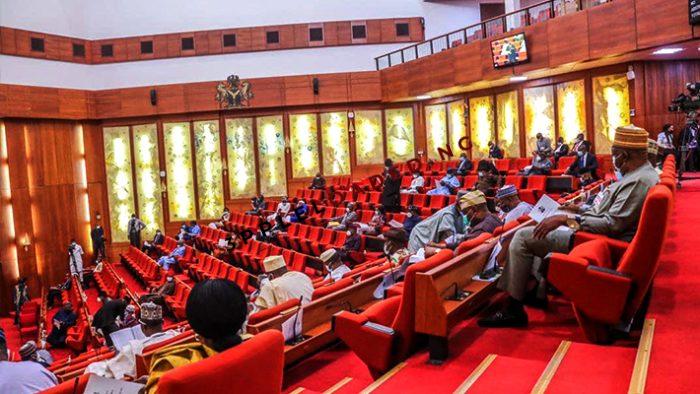
The Senate on Thursday began debate on a bill seeking to amend the Banks and Other Financial Institutions Act (BOFIA) 2020 to empower the Central Bank of Nigeria (CBN) to designate and supervise systemically important non-bank financial institutions, particularly major fintech operators whose activities now constitute critical national infrastructure.
Leading the debate, Tokunbo Abiru, the sponsor of the bill and Chairman of the Senate Committee on Banking, Insurance and Other Financial Institutions, said the amendment had become urgent due to the rapid transformation of Nigeria’s financial ecosystem and the emergence of large technology-enabled service providers operating at a scale previously unseen in the country.
Abiru noted that fintechs such as mobile money operators, payment service banks, wallet providers, digital lenders and switching companies now serve tens of millions of Nigerians, process huge daily transaction volumes and hold vast pools of sensitive financial data, yet operate within a regulatory framework that has not fully evolved to match their systemic importance...TAP TO CONTINUE FULL READING.
“The reality today is that a non-bank institution, because of its market dominance, data concentration, customer reach or technological capacity, may pose risks equal to or even greater than those posed by a traditional bank,” Abiru said.
“We are therefore confronted with a regulatory gap that leaves critical parts of the financial system operating outside the highest tier of statutory oversight. This bill seeks to correct that mischief.”
He warned that without modernising BOFIA, the country risked exposing itself to data insecurity, foreign control of sensitive financial infrastructure and vulnerabilities that could undermine national security.
The senator stressed that many fintechs operate across foreign-owned networks, store customer data offshore, or use cloud systems outside regulatory reach, raising concerns around data sovereignty.
“Today, we cannot say with certainty where all the financial and behavioural data processed by some of these institutions is stored, who has access to it, or which foreign jurisdictions may lay claim to it,” he said.
Abiru recalled the temporary CBN restriction on fintech onboarding in April 2024, following issues around KYC compliance, money-laundering red flags and suspicious transactions, a development that, he said, demonstrated the limitations of existing regulatory tools.
The amendment bill proposes five key objectives, including establishing a statutory framework for designating systemically important institutions, creating a national registry of fintechs, empowering the CBN to impose enhanced supervisory requirements, strengthening data sovereignty, and improving consumer protection.
He dismissed suggestions that a new regulatory agency should be created for fintech oversight, arguing that such duplication would fragment regulation and undermine efficiency.
“Fintech regulation is deeply intertwined with monetary policy, payments oversight, prudential supervision, and systemic-risk monitoring, functions that already reside naturally within the Central Bank,” he said.
“International best practice overwhelmingly favours integrating fintech oversight within existing regulators, not creating new bureaucracies.”
Abiru urged the Senate to support the bill, which carries no financial implications under Senate rules.
Contributing to the debate, Adams Oshiomhole, former President of the Nigerian Labour Congress (NLC), shared the experience of how his accounts were once hacked, disclosing that the hackers accessed him through one of the Fintech banks.
Oshiomhole also said the identities of most of the key owners of online operators were not known and might not be held accountable for infractions since there was no law binding them to any commitments.
“I know the directors of our regular banks, but I can’t say the same of these Fintech banks.
“I don’t know the directors of MoniePoint, Opay and all others”, he added.
Oshiomhole further argued that when properly regulated through an enabling law, the operations of online financial institutions would better serve the interest of Nigerians.
Senators unanimously passed the bill for second reading and referred it to its Committee on Banking, Insurance and Other Financial Institutions for more legislative work.
👉 Are You A WhatsApp User? Do You Want To Get Our News As Fast As Possible On Daily Basis? 👉 Click This Link To Join WhatsApp Channel Now.
The Central Bank of Nigeria (CBN) has introduced new Bank Verification Number (BVN) rules effective from May 1, 2026, aimed at reducing fraud, especially SIM swap and identity theft cases. The regulations include stricter controls on phone number changes, age restrictions, device limits, and temporary account restrictions for suspicious activities. Here is a simple breakdown of what you need to know.
One phone number change in a lifetime – Customers can only change the phone number linked to their BVN once. Choose carefully.
24-hour watchlist for suspicious BVNs – Banks can temporarily restrict accounts flagged for suspicious activity while investigations are conducted.
BVN registration is now for adults only – Only individuals aged 18 and above can independently register for a BVN. Minors require guardian-linked arrangements.
One device per banking app – You can only use your banking app on one device at a time. Switching devices triggers a 24-hour transaction limit of N20,000.
Authorised channels only – BVN services are now limited to CBN-approved banks and financial institutions. Avoid third-party apps or unofficial agents.
The new rules may feel strict, but they are designed to protect your money and reduce fraud. Be more careful with your phone number, devices, and banking activities to avoid unnecessary restrictions...TAP TO CONTINUE FULL READING.
Sources: Nigerian Tribune
👉 Are You A WhatsApp User? Do You Want To Get Our News As Fast As Possible On Daily Basis? 👉 Click This Link To Join WhatsApp Channel Now.
Breaking News
‘Nigeria is a safe country’ Reno Omokri Tells Portuguese Ambassador Who Drives Nigeria Highways Without Escort, Calls Trips Safe
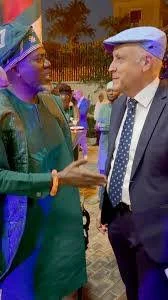
The Portuguese Ambassador to Nigeria has driven from Abuja to Bauchi and back without a security escort, describing the journeys as “very normal” and safe. Reno Omokri shared a video of the ambassador, praising Nigeria’s overall safety under President Tinubu. The ambassador also reportedly drove from Enugu to Abuja without incident. However, critics point to over 1,000 abductions since January 2026 and frequent highway kidnappings, questioning the safety claims.
Key Points:
Critics noted bandit attacks in Bauchi and other regions.
Many questioned why top Nigerian officials don’t take the same unescorted routes.
The ambassador acknowledged “some localized issues” but highlighted safety overall.
Over 1.5 million safe visitors to Lagos during the December holidays were cited.
Social media users expressed a divide between official accounts and citizens’ realities...TAP TO CONTINUE FULL READING.
The ambassador’s experience contrasts sharply with the lived reality of many Nigerians.
Sources: X
I Drove From Abuja To Bauchi And Back Without An Escort And It Was Safe-Paulo Santos, Portuguese Ambassador To Nigeria pic.twitter.com/GZmEJTHi0p
— Reno Omokri (@renoomokri) April 30, 2026
👉 Are You A WhatsApp User? Do You Want To Get Our News As Fast As Possible On Daily Basis? 👉 Click This Link To Join WhatsApp Channel Now.
More than 1,000 victims across 19 countries were defrauded of about $215 million in a sprawling business email compromise scheme, leading to convictions of Nigerian nationals, the US attorney’s office has said. Twenty-five defendants were convicted on April 24. Among them were four Nigerian nationals and five naturalised US citizens of Nigerian descent. The scheme involved hacking email accounts and crafting fraudulent payment requests.
Key Points:
Victims were located in the US, UK, Germany, UAE, Australia, and 14 other countries.
One victim’s business sent $2.7 million to a shell company account.
Seized items included luxury watches worth over $215,000 and a Georgia residence.
The FBI, US Postal Inspection Service, and Border Patrol conducted the investigation.
A Chicago-area money service business owner was a co-defendant...TAP TO CONTINUE FULL READING.
Each defendant’s sentence will be determined based on their role and criminal history.
Sources: The Cable, Punch
👉 Are You A WhatsApp User? Do You Want To Get Our News As Fast As Possible On Daily Basis? 👉 Click This Link To Join WhatsApp Channel Now.

 Breaking News8 months ago
World’s Youngest Undergraduate is Nigerian JOSHUA BECKFORD, gained admission in Oxford University at the age of Six years
 Breaking News6 months ago
JUST IN: Finally United States President Donald Trump Revokes 80,000 Visas of Nigerians, Other Foreign Nationals

 Breaking News8 months ago
BREAKING NEWS: Woman in Trouble For Burning 7-year-old Girl’s Private Parts With Hot Knife
 Breaking News8 months ago
BREAKING NEWS: FULL DETAILS! Top Secret Leaked Why SIM Fubara Fails to Return to Government House After Reinstatement

 Breaking News6 months ago
BREAKING NEWS: Nigerian Billionaire Lawmaker Ned Nwoko, Orders Arrest of His Mother In Law Regina Daniels’ Mother, Rita
 Breaking News8 months ago
BREAKING NEWS: Federal Government Releases Proof of N25,000 Cash Transfers to 71 Million Nigerians in 8.1 Million Households
 Breaking News8 months ago
BREAKING NEWS: Another Rivers Saga: Just Reinstated Fubara Told to Sack All Sole Administrators Appointees, Seek Tinubu’s Assurance Over Impeachment
 Breaking News8 months ago
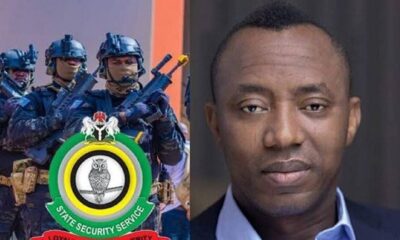
BREAKING NEWS: Finally Department of State Services (DSS) summons Sowore over post on Tinubu