
Breaking News
‘We skip meals to save money on food’

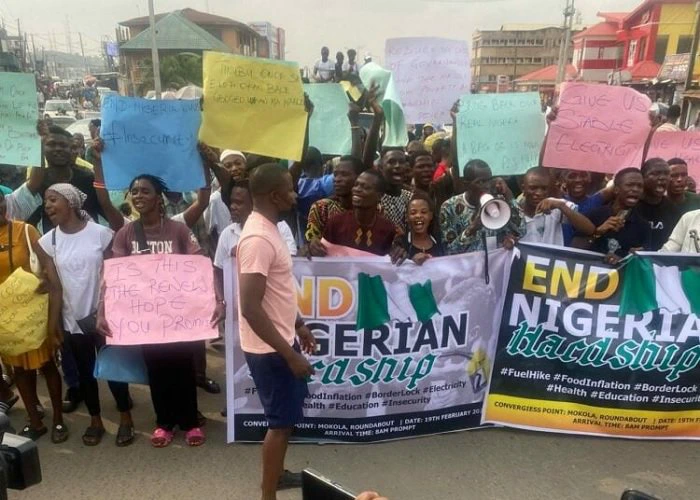
A large part of Maryam Ibrahim’s bean cake business (Akara) profit hardly gives her a decent living let alone of catering for other essentials that are necessary for life. Akara is a type of fritter made from beans in Nigeria,
Maryam, until displaced in 2022 by Boko Haram insurgency in the North East Nigeria was a farmer and petty trader who worked very hard to feed her family of four consisting of her and three kids. She is caught between rationing food and not eating at all sometimes.
Today, after escaping Boko Haram onslaught in Borno State to take refuge in Durumi, a sleepy town in Abuja, Nigeria’s capital city, spends every day agonizing on how she can manage to make her average daily profit of her fried baked beans business of between N2500 which translates to N75, 000 ($47; £34) monthly to sustain her family...TAP TO CONTINUE FULL READING.
While speaking to this reporter and comforting her baby who was not feeling too well, she figures out on the next line of action to conserve money and increase her income to enable her children live a good life.
“We now skip meals to save money on food and to make both ends meet. It is a hard choice to make, but we must do it to keep body and soul together” a mother of three told Peoples Daily.
“All the time, we agonize over the meal to skip either breakfast, lunch or dinner. I have told my children to bear with me promising them that things will take shape soon for them to lead quality life. Most time we skip lunch by taking breakfast late and have dinner later to enable my children sleep.
“I can’t count how many times we went to bed on empty stomach hoping that we will get by as the days go. It is a hellish experience we must live with. We are just existing and not living.
“Most times the reality hardly sinks into my children’s consciousness as they will always like to have their meal whenever they feel famished not knowing what we are going through. The worst thing that will happen to a mother like me is watching my children cry for hunger without me not providing for them. It is better imagined than told” she lamented.
Poverty and high food cost has led to severe malnutrition in Nigeria making it second to India in malnutrition index in the world. Upon these odds, Fatima dreams of pursuing high paying venture to support her family and help them achieve stability, holding onto hope for a peaceful future in North East Nigeria.
This is a naked reality of the excruciating hardship ordinary Nigerians are facing on daily basis with no solution in sight.
Although, National Social Safety-Net Coordinating Office (NASSCO) was established in 2016 by the Government of Nigeria in partnership with the World Bank to strengthen social safety nets and social protection system in Nigeria as a core strategy to help end extreme poverty and to promote shared prosperity, but it has not addressed multidimensional poverty and develop effective solutions for vulnerable populations as poverty is on the increase with many citizens being sunk into poverty at an alarming rate.
Nigeria currently faces recurrent high cost of food due to factors such as floods and internal displacement. This has led to widespread food shortage and malnutrition, further increasing poverty. It struggles with healthcare challenges, including limited access to medical facilities, a shortage of healthcare professionals, and the impact of diseases such as malaria and typhoid owing to lack of access to clean drinking water.
Okon Emmanuel, a cab driver who described the situation as hopeless lamented his condition noting that he now lives on borrowing.
“Life is as hard as nail. Most time I stay awake all night thinking of how to bring myself out of this hash situation of mine. My condition seems hard as essential goods are going up on daily basis with price of food going out of the reach of ordinary Nigerians. The situation is hopeless.
“The surging prices of goods in the market may not abet soon as I am convinced that there are no plans to halt it for people like me to breath.
“To add to the difficulties is that income has remained the same while the price of goods keeps on skyrocketing at alarming rate without any respite in sight.
“The money I made from my cab business cannot even see me through as I always borrow to meet daily need. We have no course to glory any more. We are part and parcel of the forgotten Nigerian Poor” he tearfully said.
Although, the National Bureau of Statistics (NBS) in Nigeria has not yet released its official poverty rate for 2025, but in its 2024 report showed that 63% of Nigerians are multidimensionally poor, meaning they experience multiple deprivations across various aspects of life.
It further projected a further increase in poverty rates in 2025, driven by factors like inflation, high interest rates, and naira depreciation. Poverty levels vary significantly across Nigeria, with the Northern part of the country experiencing higher poverty rates than the South.
According to the World Bank’s latest April 2025 Poverty and Equity Brief for Nigeria, it disclosed that the poverty rate among Nigeria’s rural population has reached an alarming 75.5 per cent, highlighting deepening inequality and widespread economic hardship across the country.
It noted that rural dwellers are overwhelmingly bearing the brunt of economic stagnation, inflation, and structural challenges that have characterized the country’s growth trajectory in recent years.
The data, derived from Nigeria’s most recent nationally representative surveys, shows that while 41.3 per cent of the urban population lives below the poverty line, the figure for rural Nigeria is almost double.
The report noted that overall, 30.9 per cent of Nigerians lived below the international extreme poverty line of $2.15 per day in 2018/19, before the outbreak of COVID-19.
However, multiple economic shocks, mounting insecurity, and inflation have worsened poverty levels since then.
Moreover, Nigeria being an import dependent nation has grappled with earning Forex leading to shortage of foreign currencies making it possible for analysts to blame the current rise on the price of commodities to inflationary trends.
Nigeria has often struggled to earn forex as the country imports much more than it exports with crude oil being its highest dollar earner.
Speaking on the roots of Nigeria’s import dependence, a former Managing Director of Unilever Nigeria, Michael Omolayode said that Agriculture flourished before the Nigerian Civil War, and the country relied minimally on food imports.
“We were reasonably self-reliant, with a thriving agricultural economy,” Omolayode recalls. However, the discovery of crude oil in commercial quantities in 1956 catalyzed a shift.
“The monetization of the economy meant people aspired to imported goods that were not produced locally,” Omolayode explains. “As importation boomed, agriculture suffered, and farmers abandoned their fields for urban opportunities.” He notes that while industrialisation took root, the country’s industries remained dependent on imported machinery and raw materials, creating an enduring cycle of dependence.
“The civil war further disrupted the country’s agricultural productivity. Post-war reconstruction efforts prioritised industrialization, but this strategy lacked a robust framework for sustaining local production.
“Industrial policies of the time inadvertently deepened Nigeria’s reliance on imports for both consumer goods and industrial inputs” he said.
Nigerian President, Mr. Bola Tinubu recently said that Nigeria’s economy which had gone through a tough period has now stabilised under his administration.
“It is not easy to navigate the stormy waters of economic instability. Now, the economy is stabilised—there is no fear for the country except for continued upward movement and sustained growth. I can assure you,” Tinubu stated.
Verifying the key economic parameters that determine if an economy is in a good shape, checks by economic experts show that the main economic indices have revealed that vital factors that qualify an economy to be stabilized are still missing currently in Nigeria.
As such, the claim by Nigerian government that economy has stabilized is misleading and far away from the current realities.
“All the time, we agonize over the meal to skip either breakfast, lunch or dinner. I have told my children to bear with me promising them that things will take shape soon for them to lead quality life. Most time we skip lunch by taking breakfast late and have dinner later to enable my children sleep.
👉 Are You A WhatsApp User? Do You Want To Get Our News As Fast As Possible On Daily Basis? 👉 Click This Link To Join WhatsApp Channel Now.
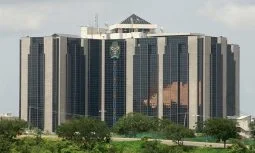
The Central Bank of Nigeria (CBN) has introduced new Bank Verification Number (BVN) rules effective from May 1, 2026, aimed at reducing fraud, especially SIM swap and identity theft cases. The regulations include stricter controls on phone number changes, age restrictions, device limits, and temporary account restrictions for suspicious activities. Here is a simple breakdown of what you need to know.
One phone number change in a lifetime – Customers can only change the phone number linked to their BVN once. Choose carefully.
24-hour watchlist for suspicious BVNs – Banks can temporarily restrict accounts flagged for suspicious activity while investigations are conducted.
BVN registration is now for adults only – Only individuals aged 18 and above can independently register for a BVN. Minors require guardian-linked arrangements.
One device per banking app – You can only use your banking app on one device at a time. Switching devices triggers a 24-hour transaction limit of N20,000.
Authorised channels only – BVN services are now limited to CBN-approved banks and financial institutions. Avoid third-party apps or unofficial agents.
The new rules may feel strict, but they are designed to protect your money and reduce fraud. Be more careful with your phone number, devices, and banking activities to avoid unnecessary restrictions...TAP TO CONTINUE FULL READING.
Sources: Nigerian Tribune
👉 Are You A WhatsApp User? Do You Want To Get Our News As Fast As Possible On Daily Basis? 👉 Click This Link To Join WhatsApp Channel Now.
Breaking News
‘Nigeria is a safe country’ Reno Omokri Tells Portuguese Ambassador Who Drives Nigeria Highways Without Escort, Calls Trips Safe
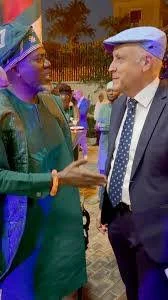
The Portuguese Ambassador to Nigeria has driven from Abuja to Bauchi and back without a security escort, describing the journeys as “very normal” and safe. Reno Omokri shared a video of the ambassador, praising Nigeria’s overall safety under President Tinubu. The ambassador also reportedly drove from Enugu to Abuja without incident. However, critics point to over 1,000 abductions since January 2026 and frequent highway kidnappings, questioning the safety claims.
Key Points:
Critics noted bandit attacks in Bauchi and other regions.
Many questioned why top Nigerian officials don’t take the same unescorted routes.
The ambassador acknowledged “some localized issues” but highlighted safety overall.
Over 1.5 million safe visitors to Lagos during the December holidays were cited.
Social media users expressed a divide between official accounts and citizens’ realities...TAP TO CONTINUE FULL READING.
The ambassador’s experience contrasts sharply with the lived reality of many Nigerians.
Sources: X
I Drove From Abuja To Bauchi And Back Without An Escort And It Was Safe-Paulo Santos, Portuguese Ambassador To Nigeria pic.twitter.com/GZmEJTHi0p
— Reno Omokri (@renoomokri) April 30, 2026
👉 Are You A WhatsApp User? Do You Want To Get Our News As Fast As Possible On Daily Basis? 👉 Click This Link To Join WhatsApp Channel Now.

More than 1,000 victims across 19 countries were defrauded of about $215 million in a sprawling business email compromise scheme, leading to convictions of Nigerian nationals, the US attorney’s office has said. Twenty-five defendants were convicted on April 24. Among them were four Nigerian nationals and five naturalised US citizens of Nigerian descent. The scheme involved hacking email accounts and crafting fraudulent payment requests.
Key Points:
Victims were located in the US, UK, Germany, UAE, Australia, and 14 other countries.
One victim’s business sent $2.7 million to a shell company account.
Seized items included luxury watches worth over $215,000 and a Georgia residence.
The FBI, US Postal Inspection Service, and Border Patrol conducted the investigation.
A Chicago-area money service business owner was a co-defendant...TAP TO CONTINUE FULL READING.
Each defendant’s sentence will be determined based on their role and criminal history.
Sources: The Cable, Punch
👉 Are You A WhatsApp User? Do You Want To Get Our News As Fast As Possible On Daily Basis? 👉 Click This Link To Join WhatsApp Channel Now.

 Breaking News8 months ago
World’s Youngest Undergraduate is Nigerian JOSHUA BECKFORD, gained admission in Oxford University at the age of Six years
 Breaking News6 months ago
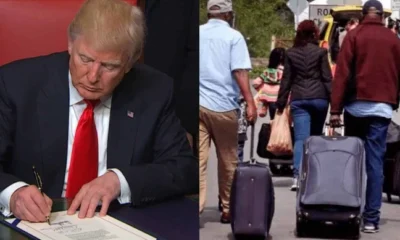
JUST IN: Finally United States President Donald Trump Revokes 80,000 Visas of Nigerians, Other Foreign Nationals

 Breaking News8 months ago
BREAKING NEWS: Woman in Trouble For Burning 7-year-old Girl’s Private Parts With Hot Knife
 Breaking News8 months ago
BREAKING NEWS: FULL DETAILS! Top Secret Leaked Why SIM Fubara Fails to Return to Government House After Reinstatement

 Breaking News6 months ago
BREAKING NEWS: Nigerian Billionaire Lawmaker Ned Nwoko, Orders Arrest of His Mother In Law Regina Daniels’ Mother, Rita
 Breaking News8 months ago
BREAKING NEWS: Federal Government Releases Proof of N25,000 Cash Transfers to 71 Million Nigerians in 8.1 Million Households
 Breaking News8 months ago
BREAKING NEWS: Another Rivers Saga: Just Reinstated Fubara Told to Sack All Sole Administrators Appointees, Seek Tinubu’s Assurance Over Impeachment

 Breaking News8 months ago
BREAKING NEWS: Finally Department of State Services (DSS) summons Sowore over post on Tinubu