
Breaking News
WHAT YOU NEED TO KNOW: Secret Lives Of Abuja’s Domestic Workers


At 5:10am, before the first light hits the rooftops of Lokogoma, Grace, a 19-year-old housemaid from Benue State, is already sweeping the compound of the duplex where she works. By the time the rest of the household wakes up, she will have cooked breakfast, packed two school lunchboxes, boiled hot water for her madam, fed the dogs, wiped down the parlour furniture, and cleaned the kitchen — all for a monthly pay of ₦18,000. Her workday ends at 11 p.m., sometimes later, especially on weekends when visitors arrive and she must continue serving food until the last guest leaves. Her off day? Once in three months.....TAP TO CONTINUE READING
Grace is one of the countless invisible hands powering the homes of Abuja’s middle- and upper-class families — an underregulated, understudied labour force that has become critical to life in the capital yet remains unprotected, unspoken for, and often exploited. Their contribution fuels the very idea of “middle-class comfort,” yet their lives exist at the edge of survival and silence. This is the hidden world of Abuja’s domestic workers.
Booming Underground Economy
Domestic work has become one of the fastest-growing informal sectors in Abuja. From Wuse to Gwarimpa, from Lugbe to Apo, nearly every middle-income household now employs a nanny, cleaner, cook, driver, or gatekeeper. Gated estates such as Sunnyvale, Citec, and Crown Estate appear polished and orderly — but the truth is that these streets run on the labour of domestic workers tucked into Boys’ Quarters, shared rooms, or tiny corridor spaces. Behind the demand lies a dark economy driven by: Extreme unemployment in rural communities. Organised but unregistered agents who recruit girls as young as 13 with zero regulatory oversight and cash payments without contracts.A silent social acceptance of exploitation
Many homes prefer “live-in” workers because they are cheaper, more compliant, easier to control, and cut off from any support system. For employers, it guarantees round-the-clock service. For the worker, it is a life lived in someone else’s home, under someone else’s rules, with no clear boundaries of work and rest.
A resident of Garki who employs two housemaids described it bluntly: “If they go home every day, they will give excuses. Live-in is better. You control everything.”
It is exactly that sense of control that defines the underground domestic labour economy in Abuja.
The Brokerage System: A ₦40,000 Girl for ₦10,000 Commission.
In Nyanya, Karu, and Mararaba, domestic labour agents operate openly. They recruit girls and young women from Plateau, Benue, Kogi, Niger, and Taraba, bring them to Abuja in groups, and “assign” them to households like commodities.
A typical arrangement works like this: An agent collects ₦20,000–₦50,000 from the employer as a placement fee.
The worker receives ₦15,000– ₦25,000 monthly. Some agents keep the first one or two months’ salary as commission. In many cases, the worker is not allowed to leave the house, partly to prevent her from discovering the real salary level negotiated. Some employers demand “obedience guarantees” from the agents. Workers are often told to “manage” whatever their madam gives them.
Sometimes the worker is not told the real salary the employer pays. Sometimes she never receives the pay at all. Agents advertise freely in WhatsApp groups with messages such as: “Fresh girl from Taraba. 18 years. Polite. Can cook. 20k salary. Pay the agent fee first.”
Behind these short messages are real human lives being processed like products.
On average, Abuja domestic workers labour between 16 and 18 hours daily. The workload is enormous, often covering responsibilities normally done by three different people in more regulated economies.
Typical tasks include childcare and school preparation; cleaning the entire house daily; cooking meals and grocery shopping; laundry and ironing, washing cars, taking care of elderly relatives, running errands within gated estates, taking delivery of parcels, washing dishes multiple times a day, feeding pets and serving visitors.
Many of these young women are teenagers who have never performed such workload before coming to Abuja.
Several interviewed maids reported: Physical abuse (slaps, beatings, threats)
Verbal abuse (insults, humiliation, name-calling), food deprivation (being fed separately or given leftovers); no privacy or personal space, no rest days, confiscation of phones and prohibitions from attending church or mosque
One housemaid narrated how her madam forbids her from drinking bottled water: “Drink tap water. Bottled water is not for you.”
Another said she sleeps on a thin foam at the back of the kitchen because the Boys’ Quarters is “for visitors”.
Living in Fear: The Growing Cases of Sexual Abuse
Perhaps the darkest part of the domestic work economy is the widespread but unspoken epidemic of sexual abuse.
Common perpetrators include male employers, teenage boys in the house, visiting male relatives, security guards inside estates, and neighbours who lure the girls with small gifts.
Because most maids live inside the homes of their employers, proximity becomes a vulnerability. Many victims cannot speak up. They fear losing their only income or being sent back home in disgrace.
One 17-year-old housemaid in Jikwoyi narrated: “The man will touch me when madam goes out. If I talk, they will say I am lying. I just keep quiet.”
Some domestic workers who become pregnant are summarily dismissed and replaced. A community leader in Masaka confirmed that the number of “abandoned housemaid pregnancies” has risen in the last three years.
The police usually treat these cases as “family matters,” and because most workers have no identity documents or contracts, they have no legal standing.
Several factors contribute to the silence surrounding domestic workers in Abuja. To begin with, Nigeria’s Labour Act barely recognises domestic service as a formal sector. There is no minimum wage requirement for domestic workers, no regulation of work hours, no guaranteed rest days, and no formal system for reporting grievances. This legal vacuum leaves workers unprotected and employers unregulated.
Another layer of the silence comes from the absence of unions or associations. Unlike drivers, traders, or artisans, domestic workers in Abuja have no organised body to represent their interests, negotiate better conditions, or defend them when abuse occurs. They operate as isolated individuals, which makes them easy to exploit and easy to silence.
Cultural factors deepen the problem. Families often conceal abuse to avoid public shame, while domestic workers themselves remain quiet out of fear of losing their jobs or being thrown out without pay. The power imbalance between employer and worker is reinforced by this mutual silence.
Many domestic workers are recruited through unregistered agents who operate in legal grey zones. These agents exploit poverty, take commission cuts from employers, and often disappear when conflicts arise. Because they are not formally regulated, they avoid responsibility for welfare, safety, or fair treatment.
Police attitudes further entrench the silence. Officers frequently dismiss reports of abuse or exploitation as “household issues,” a private matter not worth official attention. As a result, domestic workers are left with no meaningful avenue for justice or protection, trapped in a system where their suffering rarely makes it past the compound gate.
Many Abuja families claim they cannot function without housemaids. The reasons include: Both parents working long hours; Traffic reducing available family time; High cost of daycare; Affordability of maids compared to creches and Social pressure to maintain middle-class lifestyles
A mother in Lugbe explained: “My salary cannot pay for daycare. A nanny is cheaper and helps with housework, too.”
But the wages — often less than what households spend on WiFi, pets, or weekend outings — show a sharp imbalance between labour given and compensation received.
Life in Boys’ Quarters
Most domestic workers sleep in Boys’ Quarters (BQ), but some sleep in kitchens, store rooms, corridors, or shared spaces with security guards. Privacy is nearly nonexistent.
Grace, the 19-year-old maid in Lokogoma, sleeps on the floor of the laundry room. She folds her mattress every morning so the space can be used for ironing.
Another girl, 15-year-old Patience, sleeps in a store room in Apo, next to bags of rice and cleaning chemicals.
They accept these conditions because they believe it is still better than the crushing poverty back home. Many come from households where parents cannot send all their children to school.
Beyond the physical exhaustion, domestic workers suffer from homesickness, isolation, depression, emotional abuse and low self-worth. Many are cut off from their families because their employers confiscate their phones “to prevent distractions.” Some talk to their parents only once a month.
A 22-year-old nanny in Gwarimpa said: “Sometimes I cry at night. Nobody to talk to. I cannot go out. Even church, they don’t allow me.”
For some, domestic work in Abuja becomes a slow erosion of identity. A cycle of poverty that never ends.
Agents prefer workers who are young, from poor, rural backgrounds, uneducated, easy to control and desperate enough to accept any conditions. This creates a revolving door of broken young women, cycling in and out of abusive homes without any new skills or empowerment. Most end up returning to their villages with nothing but trauma and exhaustion. Some do not return at all — they simply vanish into the maze of city slums, becoming vulnerable to prostitution or street survival.
Experts recommend several steps to protect domestic workers in Abuja, beginning with the formalisation of domestic work. They argue that domestic service should have clearly defined minimum wages, standardised employment contracts, and regulated working hours to prevent overwork and exploitation.
They also call for the registration and proper background checks of agents who recruit domestic workers. This would help curb trafficking networks and reduce the exploitation driven by unregulated intermediaries. Alongside this, experts emphasise the need for training and certification programmes. Domestic workers should receive training in childcare, cooking, safety, and first aid, while employers should be educated on labour rights, ethical conduct, and boundaries.
Ensuring the rights of domestic workers is also seen as critical. Live-in staff, in particular, must be guaranteed basic entitlements such as off days, access to medical care, and personal privacy—elements that are often denied under the current informal system.
Another major recommendation is the creation of a Domestic Workers Union in Abuja. Such a union would provide legal support, negotiation power, and a sense of community protection for workers who are currently isolated. Finally, experts stress the importance of sustained public awareness campaigns to challenge the culture of silence, highlight workers’ rights, and encourage households to treat domestic service as dignified and legitimate labour.
To break the silence that shields abuse.
A labour rights activist in Abuja said: “Domestic workers are the backbone of urban life, but we treat them like shadows. Until society acknowledges their humanity, exploitation will continue.”
As Abuja expands, the number of domestic workers will continue to rise. The housing boom in Gaduwa, Dawaki, Lokogoma, Apo, and Karshi means more families will rely on live-in help. Yet the question remains whether these workers will continue to live in invisibility and silence.
“I just want to go to school one day,” Grace tells me quietly. But for now, I clean other people’s houses so my younger ones can eat.”
Her story is one of thousands — a reminder that behind every neat Abuja home is a girl carrying the burden of a broken system.
And until Nigeria confronts this hidden economy, domestic work in the capital will remain a place where childhoods are exchanged for survival, dignity is traded for monthly stipends, and human beings are reduced to silent shadows in the corridors of the city’s comfort
Read The Full Article Here Now
👉 Are You A WhatsApp User? Do You Want To Get Our News As Fast As Possible On Daily Basis? 👉 Click This Link To Join WhatsApp Channel Now.

Art & Commercial students don’t fail JAMB because they’re dull. They fail because they’re taught like Science students. Science students calculate — JAMB rewards that. Art students explain — JAMB doesn’t. So you read hard, attend lessons, yet your score disappoints you. This online class fixes that. No theory overload. No confusion. Just real JAMB questions, clear breakdowns, and winning strategies. 📌 JAMB is not hard — you were just taught the wrong way.Click The Link To Reach Us Now 👉 https://wa.me/2349063958940
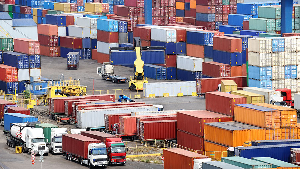
The Association of West African Exporters and Marine Professionals has warned that the worsening scarcity of shipping containers at Lagos ports is threatening the country’s export sector, which is valued at $44.06bn as of 2025.....TAP TO CONTINUE READING
This is even as the group lamented the refusal of shipping lines to pick export cargoes, a development they said is undermining Nigeria’s growing export market.
The President of AWAEMAP, Bunmi Olumekun, stated this in a recent chat with journalists in Lagos. The warning comes as Nigeria’s export sector has recorded significant momentum under President Bola Ahmed Tinubu’s administration.
In February, The PUNCH reported that Nigeria’s total exports in the first nine months of 2025 outpaced the corresponding period of 2024 by $3.76bn. The figures feed into the improving local currency amid calls for inclusive gains for businesses and households.
Data from the Central Bank of Nigeria Quarterly Statistics (December 2025) showed that the country’s total exports in the first nine months of 2025 rose to $44.06bn, an improvement over the $40.29bn recorded in the corresponding period of 2024.
However, Olumekun warned that deliberate actions by foreign shipping lines are now putting those gains at risk.
“The shipping companies don’t even bring vessels to Nigeria to take exports again. They prefer to go to Cotonou rather than coming to Nigeria. They want to make sure that Nigerian goods are not sellable outside Nigeria. You will see a vessel coming in to discharge cargoes and sail empty to Cotonou to carry exports,” he said.
The AWAEMAP president said export cargoes are now piling up inside terminals across the Lagos ports, with no vessels available to evacuate them and no containers to load intended exports.
“Currently, we are having a challenge getting containers to load our export cargoes out of the country. Currently, we have more export than import cargoes lying inside the terminals. Somebody told me that his export containers of perishable items have been at the port since December 2025, and there is no vessel to evacuate them,” Olumekun stated.
He said the problem is further compounded by a lack of space at the terminals to accommodate export containers, adding that the situation has triggered congestion that plagued Lagos ports before the introduction of the e-call-up system.
The AWAEMAP president also raised concerns that the ongoing conflict in the Middle East could provide foreign shipping lines with additional justification to avoid Nigerian ports, further worsening the situation.
Despite the setbacks, Olumekun acknowledged the progress recorded under the current administration. “Under President Bola Tinubu, the Nigerian economy is improving in terms of export, but these foreigners want to cripple it,” he said.
Olumekun called on the Federal Government to urgently address the container scarcity.
Also speaking, an exporter who is the Managing Director of LWL Concept, Lawal Wasiu, said, “One of the challenges we are facing at the port right now is so many empty containers with no vessel to pick them up. And one big reason for that is the Iran-US war, which has affected the routes these ships follow. For example, some shipping lines have cancelled any Middle East consignment because of the war.
“So there are so many containers laden with exports, as we speak, that are still at the port waiting for vessels to come. Some terminal operators have stopped accepting export containers. Even transporters now do not want to drop empty containers at the ports because of the delay. So this is also causing the scarcity of empty containers.”
Read The Full Article Here Now
👉 Are You A WhatsApp User? Do You Want To Get Our News As Fast As Possible On Daily Basis? 👉 Click This Link To Join WhatsApp Channel Now.
Art & Commercial students don’t fail JAMB because they’re dull. They fail because they’re taught like Science students. Science students calculate — JAMB rewards that. Art students explain — JAMB doesn’t. So you read hard, attend lessons, yet your score disappoints you. This online class fixes that. No theory overload. No confusion. Just real JAMB questions, clear breakdowns, and winning strategies. 📌 JAMB is not hard — you were just taught the wrong way.Click The Link To Reach Us Now 👉 https://wa.me/2349063958940
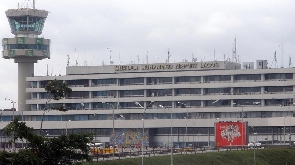
There are indications that airfares may jump in the coming weeks following the hike in the cost of aviation fuel, commonly referred to as Jet A1, a development that is already putting pressure on airline operations and signalling higher ticket costs for passengers.....TAP TO CONTINUE READING
The spike in JetA1 price is largely due to the crisis in the Middle East, which has slowed the production and movement of crude oil across countries, worsening the operational cost of domestic carriers.
Checks by our correspondent with airlines showed an astronomical increase in the operating cost of airlines, particularly caused by the spike in aviation fuel, which has become the dominant cost driver in recent weeks.
At the time of filing this report, aviation fuel, which was sold between N900 and N995 before the Middle East crisis commenced, has jumped to between N2,500 and N2,700, depending on the airport of delivery, sharply raising the cost burden for operators.
Operators said they were monitoring developments, stressing that an increase in airfares was imminent, with strong indications that the prices of air tickets might double if the current trend persists.
Aviation fuel remains the single highest component of airline operations, accounting for about 30 to 35 per cent of total operational costs, a figure that industry players say is rising rapidly under current market conditions.
Airline sources said the price of the product had remained unstable since February 28, 2026, when the war started in Iran, changing about five times since that time, further complicating planning and pricing decisions.
The spokesperson for United Nigeria Airlines, Chibuike Uloka, challenged the Federal Competition and Consumer Protection Commission to urgently engage domestic airline operators over the sustainability of current ticket pricing amid rising operational costs.
The FCCPC recently accused airlines of price fixing, with special attention on five unnamed airlines. This was, however, dismissed by the airline operators.
Uloka noted that despite aviation fuel prices soaring beyond N2,000 per litre, many carriers had continued to maintain fares at around N195,000, raising concerns about how long such pricing could be sustained under prevailing economic conditions.
He, however, warned that the situation could deteriorate further if fuel prices get to N3,000 per litre, stressing that not all airlines would be able to remain in operation under such pressure, a development that could further shrink capacity and push fares even higher.
He said, “Honestly, this is a very good time for FCCPC to come out and ask operators how they have been able to sustain flight tickets at N195,000 despite the increase in aviation fuel crossing N2000 and above. They should please ask how operators have kept on with operations? These are hard times. But most definitely, the current prices can’t be sustained for long periods.
“If this continues the way it is, because the way we are now, the price is also getting to N3000 per litre, and if it eventually gets to N3000, not all operators will be able to fly. And the ones that will be able to fly will not be Father Christmas. What we are asking now is not even profit, but at least to be able to operate optimally. Aviation has become a daily necessity because people must be able to move from one place to another. But FCCPC must be able to come out now and ask operators how we are faring.”
The PUNCH understands that Nigeria has been unable to produce enough crude oil for the Dangote Petroleum Refinery, forcing the indigenous refining company to import crude.
Crude prices have jumped from $65–$69 to about $112 per barrel as of the time of filing this report, further worsening the cost of aviation fuel and pushing airlines closer to inevitable fare adjustments.
This effect has also upped gantry prices, with operators warning that sustained increases will ultimately be transferred to passengers through higher ticket fares.
Industry expert, Samuel Caulcrick, projected an imminent rise in airfares, attributing it to the growing burden of operational costs on airlines, which is increasingly being driven by the surge in aviation fuel prices.
He explained that current market conditions suggest that operating expenses have surged significantly, with aviation fuel now accounting for about 45 per cent of total airline costs, making it the single largest cost component in the sector and leaving operators with little choice but to adjust fares.
Caulcrick noted that the shift in cost structure marks a departure from previous years when maintenance expenses dominated airline spending. However, the persistent increase in the price of Jet A1 fuel has altered the dynamics, placing greater financial pressure on operators and inevitably influencing ticket pricing across the industry.
He stated, “Before now, the highest component of airline operation was maintenance, but that has changed with the continuous rise in the prices of Jet A1. In those days when aviation fuel was less costly, the maintenance cost was higher, but now fueling has taken over.
“If that component goes up, it will definitely affect the prices of every seat. But we should expect the airfares to go up by 20 to 25 per cent in the coming days.”
Read The Full Article Here Now
👉 Are You A WhatsApp User? Do You Want To Get Our News As Fast As Possible On Daily Basis? 👉 Click This Link To Join WhatsApp Channel Now.
Art & Commercial students don’t fail JAMB because they’re dull. They fail because they’re taught like Science students. Science students calculate — JAMB rewards that. Art students explain — JAMB doesn’t. So you read hard, attend lessons, yet your score disappoints you. This online class fixes that. No theory overload. No confusion. Just real JAMB questions, clear breakdowns, and winning strategies. 📌 JAMB is not hard — you were just taught the wrong way.Click The Link To Reach Us Now 👉 https://wa.me/2349063958940
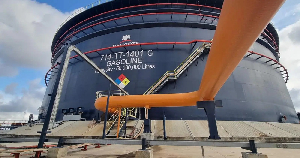
The Dangote Petroleum Refinery has ramped up its regional footprint with the export of 12 cargoes of refined petroleum products totalling 456,000 tonnes to five African countries, amid a growing fuel supply crisis triggered by geopolitical tensions in the Middle East.....TAP TO CONTINUE READING
The PUNCH gathered on Sunday that the cargoes, sold through international traders on a Free on Board basis, were shipped to Côte d’Ivoire, Cameroon, Tanzania, Ghana, and Togo, marking a significant milestone since the refinery attained its 650,000 barrels-per-day capacity in February 2026.
A senior official at the refinery, who spoke on condition of anonymity because he was not authorised to speak publicly, described the development as a reflection of growing confidence in Nigeria’s refining capacity and a shift in Africa’s fuel supply dynamics.
“The Dangote Petroleum Refinery has strengthened Nigeria’s presence in the regional energy market with the successful sales of 12 cargoes by traders, totalling 456,000 tonnes (456KT) of refined petroleum products.
“The shipments by traders, destined for countries such as Côte d’Ivoire, Cameroon, Tanzania, Ghana, and Togo, represent the refinery’s export of Premium Motor Spirit since achieving 650,000 barrels a day capacity in February 2026.
“The products were sold on an FOB (Free on Board) basis to international traders for deliveries to the above-identified countries of export,” the official said.
A total of 456,000 tonnes of refined petroleum products is equivalent to roughly 608 million litres, underscoring the massive scale of the shipments and their potential impact on fuel supply across multiple African markets.
The official further noted that the surge in export volumes aligns with recent reports indicating increased demand from several African countries grappling with fuel supply shortages and rising import costs linked to global market disruptions.
“This accomplishment underscores the Dangote Refinery’s capability to not only meet but also exceed Nigeria’s domestic fuel demands. It also demonstrates the refinery’s growing role in supplying high-quality Euro 5 gasoline and diesel to West Africa, a region long underserved and historically regarded as a dumping ground for lower-quality fuels, and other regions which have become destinations of exports,” he added.
According to him, the refinery’s production of Euro 5 standard gasoline and diesel is also a key factor driving patronage, as many African markets move to phase out lower-quality fuels.
The exports, the official explained, are expected to improve energy security in West, East, and Central Africa by reducing dependence on long-haul imports from Europe and the Middle East, while also cutting logistics costs and delivery timelines.
“By supplying neighbouring and other economies, the Dangote Refinery is expected to contribute to enhanced energy security in West, East, and Central Africa, reducing logistics and supply chain delays associated with long-distance fuel imports, lowering cost pressures on regional fuel markets through proximity sourcing, and building stronger trade relations between Nigeria and key African economies,” the official asserted.
The development signals a gradual reordering of Africa’s fuel supply chain, with Nigeria emerging as a refining hub following years of reliance on imports despite being a major crude oil producer.
The refinery official also addressed concerns that increased exports could tighten supply in the domestic market, insisting that adequate provisions had been made from the outset.
“Solid yes, it won’t affect meeting local demands, because we factored that into our strategy from the time we started constructing the refinery,” he stated.
“We have 54 countries in Africa, but how many of them have functional refineries? The reality is that demand will continue to rise, and we are positioning to meet both domestic and regional needs,” he added.
The export milestone comes as the Dangote refinery continues to scale operations, following its phased ramp-up and eventual attainment of full production capacity earlier this year.
Africa, despite being rich in crude oil resources, relies heavily on imported refined petroleum products due to limited refining capacity across the continent.
Recent geopolitical tensions and supply chain disruptions have further exposed the vulnerability of many African countries, leading to fuel shortages and price volatility.
In response, several nations have increasingly turned to regional suppliers, with Nigeria’s Dangote refinery emerging as a key alternative due to its scale, proximity, and product quality.
A report by Bloomberg on Friday revealed that at least three African countries—South Africa, Ghana, and Kenya—have formally reached out to the refinery, while several others are making enquiries, as disruptions linked to the Iran war continue to choke global fuel supply chains.
According to the report, the refinery, owned by Africa’s richest man, Aliko Dangote, is witnessing an unprecedented surge in demand from across the continent.
A company executive confirmed that the facility “has been approached by South Africa and many other countries” seeking alternative fuel supply arrangements.
The report read, “Dangote Petroleum Refinery and Petrochemicals has been approached by South Africa and many other countries to secure fuel supplies after the Iran war disrupted flows.
“South Africa is seeking a standard contract for fuel supplies with Nigeria, and other countries such as Ghana and Kenya have also reached out to Dangote for fuel supplies.”
This development follows earlier projections that the crisis in the Middle East is tightening the noose around Africa’s fuel supply chain, with many countries now running on just weeks of refined petroleum products as key import routes come under severe strain.
The sustained exports from the refinery would not only stabilise fuel supply across Africa but also boost Nigeria’s foreign exchange earnings and strengthen its strategic influence in the continent’s energy market.
The latest shipments underscore a broader trend of rising intra-African energy trade, positioning Nigeria at the centre of a new regional fuel distribution network.
Read The Full Article Here Now
👉 Are You A WhatsApp User? Do You Want To Get Our News As Fast As Possible On Daily Basis? 👉 Click This Link To Join WhatsApp Channel Now.
Art & Commercial students don’t fail JAMB because they’re dull. They fail because they’re taught like Science students. Science students calculate — JAMB rewards that. Art students explain — JAMB doesn’t. So you read hard, attend lessons, yet your score disappoints you. This online class fixes that. No theory overload. No confusion. Just real JAMB questions, clear breakdowns, and winning strategies. 📌 JAMB is not hard — you were just taught the wrong way.Click The Link To Reach Us Now 👉 https://wa.me/2349063958940
-

 Breaking News6 months ago
World’s Youngest Undergraduate is Nigerian JOSHUA BECKFORD, gained admission in Oxford University at the age of Six years
-

 Breaking News5 months ago
JUST IN: Finally United States President Donald Trump Revokes 80,000 Visas of Nigerians, Other Foreign Nationals
-

 Breaking News6 months ago
BREAKING NEWS: Woman in Trouble For Burning 7-year-old Girl’s Private Parts With Hot Knife
-

 Breaking News6 months ago
BREAKING NEWS: FULL DETAILS! Top Secret Leaked Why SIM Fubara Fails to Return to Government House After Reinstatement
-

 Breaking News5 months ago
BREAKING NEWS: Nigerian Billionaire Lawmaker Ned Nwoko, Orders Arrest of His Mother In Law Regina Daniels’ Mother, Rita
-

 Breaking News6 months ago
BREAKING NEWS: Federal Government Releases Proof of N25,000 Cash Transfers to 71 Million Nigerians in 8.1 Million Households
-

 Breaking News6 months ago
BREAKING NEWS: Another Rivers Saga: Just Reinstated Fubara Told to Sack All Sole Administrators Appointees, Seek Tinubu’s Assurance Over Impeachment
-

 Breaking News7 months ago
BREAKING NEWS: Finally Department of State Services (DSS) summons Sowore over post on Tinubu