Connect with us

Breaking News

How Banks Can Turn ₦33trn Deposits Into Real Opportunities for Nigerians

Published

on

....TAP TO CONTINUE READING

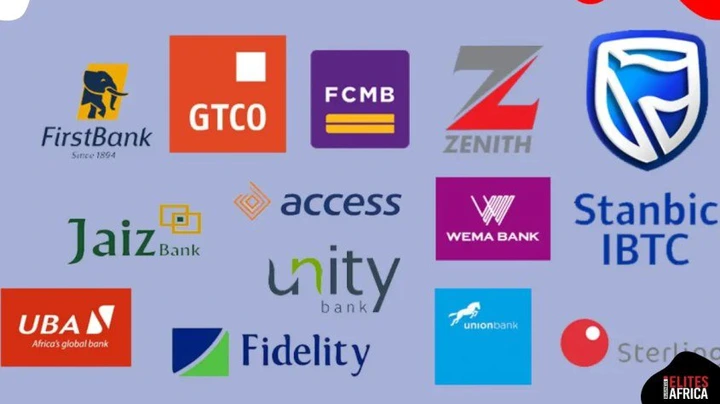
Nigeria’s biggest banks are sitting on a gold mine of customer deposits. Recent reports show that the top 10 banks now hold about ₦33.24 trillion in savings, up from about ₦31.13 trillion the previous year.

That is an enormous amount of money parked in basic savings accounts. For banks, this is cheap and stable funding. For most Nigerians, however, this money is not working hard enough.

The real question is not how much people are saving, but what those savings are doing for the people who own them and for the wider economy. In many cases, the honest answer is that the money is doing very little.

The Problem with Idle Savings

Traditional savings accounts pay low interest. Once inflation, bank charges and the falling value of the naira are taken into account, many savers are actually losing value in real terms.

People keep money in savings mainly out of fear: fear of emergencies, school fees, hospital bills or job loss. Savings accounts feel safe, familiar and easy to access, even if there is little gain.

If banks and regulators are serious about building wealth for citizens, they must shift from seeing customers only as deposit holders to seeing them as partners in investment.

From Passive Savers to Active Investors

Banks can help Nigerians move from being passive savers to becoming active investors, without pushing them into risky or confusing products. The journey can be gradual. A customer may start with a simple salary or savings account, then build an emergency fund, and then move a portion of their money into low-risk investments. Over time, that can grow into a more balanced, diversified portfolio.

This kind of step-by-step progress is possible if banks design products and journeys with ordinary people in mind, not only big corporates and high-net-worth clients.

Mutual Funds as the First Easy Step

Mutual funds are a natural starting point. They are professionally managed, can accept small amounts and are regulated. Many banks already work with asset management firms, but most customers do not know what is available or how these funds work.

Instead of hiding mutual funds in a corner, banks should bring them to the front of their mobile apps and online banking platforms. A customer should be able to move a small amount from savings into a simple money market fund with one or two clicks.

The app should clearly explain expected returns, risks and fees in plain language. Practical examples, such as showing how much more a customer could have earned in a fund over the past year, can make the benefits real.

Unlocking Government Bonds for Ordinary People

Government bonds are another powerful tool. Federal Government of Nigeria (FGN) bonds and Treasury Bills are backed by the government and are seen as some of the safest naira assets. Yet many people think bonds are only for pension funds, big institutions or very rich investors.

Banks can change this by packaging bonds into friendly, easy-to-understand products. For example, they could offer a “Federal Savings Plan – 3 years” with a low minimum amount, so that even small savers can join.

They can allow customers to set automatic monthly purchases in the same way they set standing orders. This would help ordinary people protect and grow their money, while also giving government a more stable source of funding for roads, power, schools and hospitals.

Structured Deposits and Goal-Based Saving

For customers who still feel nervous about the word “investment”, banks can create structured deposits that look and feel like savings but give better returns.

For example, a bank could offer a deposit where interest increases if the customer does not withdraw money for six or twelve months. It could design goal-based plans for rent, school fees or a house deposit, where funds are locked for a fixed period and partly invested in low-risk instruments. This respects the emotional need for safety while quietly improving how hard the money works.

None of these ideas will work without strong financial education. Nigerians are cautious for good reason. Many have seen scams and Ponzi schemes wipe out life savings. Banks must earn back trust with clear teaching and open communication.

They can use mobile apps, USSD, emails, SMS and social media to explain how these products work in simple English and local languages. Short videos, step-by-step guides and easy calculators can show the difference between leaving ₦100,000 in a basic savings account and moving part of it into a money market fund or bond for a few years. Regular online sessions or in-branch “wealth clinics” where customers can ask questions freely would also help.

Protecting Customers from Mis-Selling

As banks move savers into investment products, they also carry a serious duty of care. The goal must not be to push people into high-risk products they do not understand.

Regulators and banks must work together to make sure products are clearly labelled according to risk, fees are visible and fair, and staff are trained not to mislead customers.

A widow with a small savings balance should not be advised to put her money into a volatile equity fund when a low-risk income or money market fund is more suitable. One or two big scandals could destroy trust and send millions of people running back to cash and basic savings.

Why This Shift Matters for the Economy

If even a small share of the ₦33trn currently in savings is moved into well-regulated investment products, the impact could be huge. Government would have more long-term funding for infrastructure through bonds.

Companies would find it easier to raise long-term capital through deeper and more liquid markets. Ordinary Nigerians would have a practical path to building real wealth over time instead of watching their money slowly lose value.

Financial inclusion would also deepen. People who see their money growing are more likely to stay within the formal financial system and use more services, from pensions to insurance.

Read The Full Article Here Now


👉 Are You A WhatsApp User? Do You Want To Get Our News As Fast As Possible On Daily Basis? 👉 Click This Link To Join WhatsApp Channel Now.

Art & Commercial students don’t fail JAMB because they’re dull. They fail because they’re taught like Science students. Science students calculate — JAMB rewards that. Art students explain — JAMB doesn’t. So you read hard, attend lessons, yet your score disappoints you. This online class fixes that. No theory overload. No confusion. Just real JAMB questions, clear breakdowns, and winning strategies. 📌 JAMB is not hard — you were just taught the wrong way.Click The Link To Reach Us Now 👉 https://wa.me/2349063958940

Continue Reading
Click to comment

Leave a Reply

Your email address will not be published. Required fields are marked *

Breaking News

Federal Government of Nigeria Finally Commissions CNG Station to Boost Domestic Supply

Published

on

The Federal Government has commissioned an integrated Compressed Natural Gas, CNG, refueling station at Obafemi Awolowo University, Ile-Ife, Osun State, as part of efforts to strengthen domestic gas supply and promote cleaner energy alternatives.....TAP TO CONTINUE READING

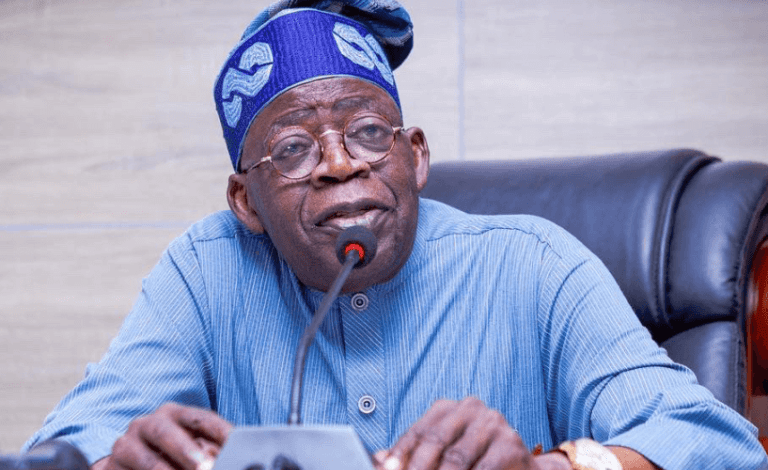
Speaking at the inauguration, the Executive Director of the Midstream and Downstream Gas Infrastructure Fund, Oluwole Adama, described the move as a major step toward advancing Nigeria’s gas-powered energy transition.

He noted that the facility goes beyond being just a refueling station, adding that it reflects progress, collaboration, and commitment to expanding domestic gas utilization in line with national energy goals.

“This project represents more than the commissioning of a refueling station. It symbolizes progress, partnership, and purpose in advancing Nigeria’s energy transition, promoting cleaner fuels, and deepening domestic gas utilization in line with national energy objectives,” Adama stated.

On his part, the Vice-Chancellor of Obafemi Awolowo University, Prof. Adebayo Simeon Bamire, praised the initiative, saying the facility will serve both the university community and residents of the surrounding area.

He added that the project would create opportunities for research, hands-on learning, and innovation in alternative energy solutions.

DAILY POST gathered that the federal government-backed initiative forms part of broader efforts to drive renewable energy adoption and support Nigeria’s transition to cleaner fuel sources.

Read The Full Article Here Now


👉 Are You A WhatsApp User? Do You Want To Get Our News As Fast As Possible On Daily Basis? 👉 Click This Link To Join WhatsApp Channel Now.
Art & Commercial students don’t fail JAMB because they’re dull. They fail because they’re taught like Science students. Science students calculate — JAMB rewards that. Art students explain — JAMB doesn’t. So you read hard, attend lessons, yet your score disappoints you. This online class fixes that. No theory overload. No confusion. Just real JAMB questions, clear breakdowns, and winning strategies. 📌 JAMB is not hard — you were just taught the wrong way.Click The Link To Reach Us Now 👉 https://wa.me/2349063958940

Continue Reading

Breaking News

BREAKING NEWS: MTN Nigeria invests N1trillion on fibre rollout, network upgrade

Published

on

MTN Nigeria said it invested N1tn in 2025 to expand fibre infrastructure, roll out additional base stations and strengthen network capacity nationwide, as the country’s biggest telco returned to profitability after a choking financial year marked by foreign exchange pressures and negative equity.....TAP TO CONTINUE READING

The capital expenditure, more than double the prior year’s spending, formed part of a broader recovery that saw the company post a profit after tax of N1.1tn for the year ended December 31, 2025. The rebound followed a difficult 2024 in which MTN suspended dividend payments and grappled with balance sheet strain.

Chief Executive Officer Dr Karl Toriola described 2025 as a defining year for the company, linking the improved earnings position to renewed long-term infrastructure investment.

“During the year, we invested N1tn in network expansion and modernisation, more than double the prior year’s capital expenditure. This investment translates to additional base stations, deeper fibre rollout, expanded capacity and improved network resilience across the country because sustaining critical digital infrastructure requires disciplined capital allocation and a deliberate long-term approach,” the executive said.

The telcos’ total subscriber base increased to 87.3 million, up 7.9 per cent, while active data subscribers rose to 53.2 million. Data traffic grew by 34 per cent during the year. These figures reflect sustained demand for digital services across the country and underscore the need for continued investment in network capacity and resilience.

“We are mindful that in a period of economic pressure, expectations from customers are heightened. When Nigerians purchase data or rely on our network for work, education, financial services or daily communication, they expect reliability, fairness and continuous improvement. That expectation is both legitimate and central to our responsibility, Toriola noted.

MTN’s service revenue rose 55.1 per cent to N5.2tn in 2025, while earnings before interest, tax, depreciation and amortisation more than doubled to N2.7tn. Earnings per share improved to N53.07 from a negative N19.05 a year earlier, reflecting the sharp turnaround in operational performance.

Chief Financial Officer Modupe Kadiri said the company’s financial recovery was built on deliberate balance sheet repair, disciplined capital allocation and reduced foreign exchange exposure.

“A year ago, MTN Nigeria was in negative equity. Today, we are declaring a N20 total dividend for the 2025 financial year,” Kadiri stated.

The board approved a final dividend of N15 per share, subject to shareholder approval at the annual general meeting, bringing the total dividend for the year to N20 per share, including an interim dividend of N5 already paid in the fourth quarter.

According to its report, MTN generated N1.2tn in free cash flow during the year and rebuilt shareholders’ equity to N548.7bn, with retained earnings standing at N400.4bn at year-end, signalling restored financial stability after the previous year’s market volatility.

Toriola said profitability would continue to underpin infrastructure expansion, noting that profit enables sustained reinvestment in network quality and broader coverage rather than serving as an end in itself.

“Profit, in our context, is not an end in itself. It is the mechanism that enables continued investment in network quality, broader coverage and enhanced customer experience. As Nigeria’s digital ecosystem continues to expand across fintech, small businesses, education and public services, resilient and future-ready telecommunications infrastructure remains foundational to national development,” he added.

Read The Full Article Here Now


👉 Are You A WhatsApp User? Do You Want To Get Our News As Fast As Possible On Daily Basis? 👉 Click This Link To Join WhatsApp Channel Now.
Art & Commercial students don’t fail JAMB because they’re dull. They fail because they’re taught like Science students. Science students calculate — JAMB rewards that. Art students explain — JAMB doesn’t. So you read hard, attend lessons, yet your score disappoints you. This online class fixes that. No theory overload. No confusion. Just real JAMB questions, clear breakdowns, and winning strategies. 📌 JAMB is not hard — you were just taught the wrong way.Click The Link To Reach Us Now 👉 https://wa.me/2349063958940

Continue Reading

Breaking News

Nigeria Civil Aviation Authority, NCAA orders airline to refund passengers charged VAT before January 1

Published

on

The Nigeria Civil Aviation Authority has directed Overland Airways to refund passengers who were wrongly charged Value Added Tax on flight tickets purchased before January 1, 2026.....TAP TO CONTINUE READING

The directive followed clarification issued by the Nigeria Revenue Service on the implementation of the new tax regime affecting airline tickets.

Passengers had complained to the regulators after an elderly woman was forced to pay the new tax in 2025, a fee that was expected to take effect on January 1, 2026.

The Director of Public Affairs and Consumer Protection at the NCAA, Michael Achimugu, in a statement on Saturday, disclosed that the matter had been resolved after regulatory engagement with the airline and the Nigeria Revenue Service.

“As directed by the NCAA, the operator, Overland Airways, has reverted with clarification from the Nigeria Revenue Service,” Achimugu said.

He clarified that passengers who bought tickets before the new tax laws came into force should never have been subjected to additional charges.

“Tickets purchased before January 1, 2026 were not affected by the new tax laws,” he said, adding that passengers who bought tickets in 2025 but were later made to pay VAT at check-in in 2026 were not supposed to have been charged.

According to the NCAA, the airline had initially implemented the VAT requirement based on its interpretation of the new fiscal policy, prompting complaints from affected travellers.

Achimugu explained that regulatory clarification became necessary to determine the correct application of the tax.

“The onus was on the NRS to clarify, which they have now done,” he said, noting that the aviation regulator had earlier communicated its position to the airline.

Following the clarification, Overland Airways agreed to correct the situation.

“The airline has committed to redress the situation by initiating a refund for affected passengers,” Achimugu added.

The controversy arose after several passengers complained that they were compelled to pay additional VAT charges at airport counters despite purchasing their tickets months before the tax provisions took effect.

Travellers described the development as unexpected and financially burdensome, especially during peak travel periods in December.

Read The Full Article Here Now


👉 Are You A WhatsApp User? Do You Want To Get Our News As Fast As Possible On Daily Basis? 👉 Click This Link To Join WhatsApp Channel Now.

Art & Commercial students don’t fail JAMB because they’re dull. They fail because they’re taught like Science students. Science students calculate — JAMB rewards that. Art students explain — JAMB doesn’t. So you read hard, attend lessons, yet your score disappoints you. This online class fixes that. No theory overload. No confusion. Just real JAMB questions, clear breakdowns, and winning strategies. 📌 JAMB is not hard — you were just taught the wrong way.Click The Link To Reach Us Now 👉 https://wa.me/2349063958940

Continue Reading

PURPOSE ONLINE ACADEMY

Trending

All Right Reserved | Copyright © 2026 3ppleloaded News | Powered by 3ppleloaded.ng |